

Gate Valves: Introduction, Types, Applicable Codes, and Standards
Gate Valves: Introduction, Types, Applicable Codes, and Standards
1. Introduction to Gate Valves
Gate valves are linear motion valves primarily used to start or stop fluid flow in a pipeline. They are not designed for throttling purposes, as partial opening can cause erosion and vibration. Instead, they are ideal for fully open or fully closed applications.
Key Features:
On/Off Service: Designed for isolation rather than flow control.
Low Pressure Drop: When fully open, the flow path is straight, minimizing pressure loss.
Bidirectional Flow: Can handle flow in either direction.
Slow Operation: Requires multiple turns to open or close, reducing water hammer effects.
2. Types of Gate Valves
Gate valves are classified based on:
A. Disc (Gate) Design
Most common type, suitable for most fluids (liquids, gases, slurries).
Robust but prone to thermal binding in high-temperature applications.
Has a cut around the perimeter to allow slight flexibility.
Reduces thermal binding risk in steam/hot fluid applications.
Split Wedge (Parallel Disc) Gate Valve
Two discs forced outward against seats by a spreader mechanism.
Good for non-condensing gases and corrosive liquids.
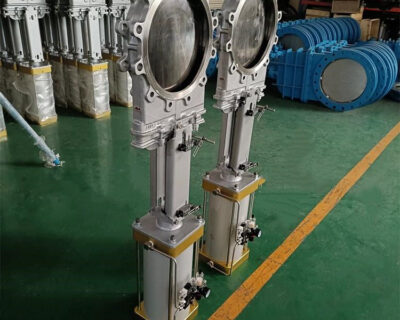
Knife Gate Valve
Thin, sharp-edged gate for thick fluids, slurries, and viscous media.
Used in pulp & paper, wastewater, and mining industries.
B. Stem Movement
Rising Stem (OS&Y – Outside Screw & Yoke)
Stem moves up/down while the handwheel remains stationary.
Visual indication of valve position.
Non-Rising Stem (NRS)
Stem rotates but does not move vertically.
Used where vertical space is limited.
C. Bonnet Design
Bolted Bonnet
Common for high-pressure applications.
Requires gaskets for sealing.
Pressure-Seal Bonnet
Used in high-pressure, high-temperature applications (e.g., power plants).
Sealing improves as internal pressure increases.
Welded Bonnet
Permanent sealing, used where leakage prevention is critical.
Screw-in Bonnet
Simple and economical, used in small valves.
3. Applicable Codes and Standards
Gate valves must comply with industry standards to ensure safety, reliability, and interchangeability. Some key standards include:
API (American Petroleum Institute)
API 600 – Steel gate valves (bolted bonnet, pressure seal).
API 602 – Compact steel gate valves (for small sizes).
API 603 – Corrosion-resistant gate valves (stainless steel).
API 6D – Pipeline valves (for oil & gas transmission).
ASME (American Society of Mechanical Engineers)
ASME B16.34 – Valve design, pressure-temperature ratings.
ASME B16.10 – Face-to-face dimensions of valves.
ASME B16.5 / B16.47 – Flange standards for valve connections.
ISO (International Organization for Standardization)
ISO 10434 – Bolted bonnet steel gate valves.
ISO 14313 (API 6D equivalent) – Pipeline valves.
MSS (Manufacturers Standardization Society)
MSS SP-70 – Cast iron gate valves.
MSS SP-80 – Bronze gate valves.
AWWA (American Water Works Association)
AWWA C500 – Metal-seated gate valves for water supply.
AWWA C509 – Resilient-seated gate valves for water.
4. Applications of Gate Valves
Oil & Gas: Pipeline isolation, refineries.
Water & Wastewater: Treatment plants, distribution systems.
Power Plants: Steam, cooling water systems.
Chemical & Petrochemical: Corrosive fluid handling.
Marine & Shipbuilding: Seawater, fuel lines.
Concluzie
Gate valves are essential for isolation in various industries. Their selection depends on design type, material, pressure-temperature requirements, and compliance with relevant standards. Proper maintenance ensures long-term reliability.