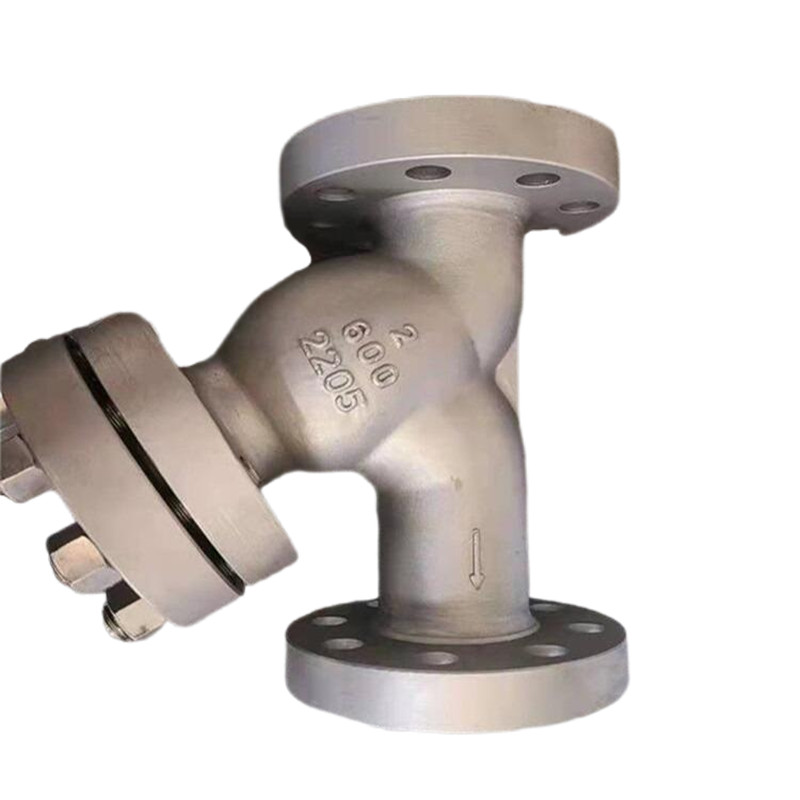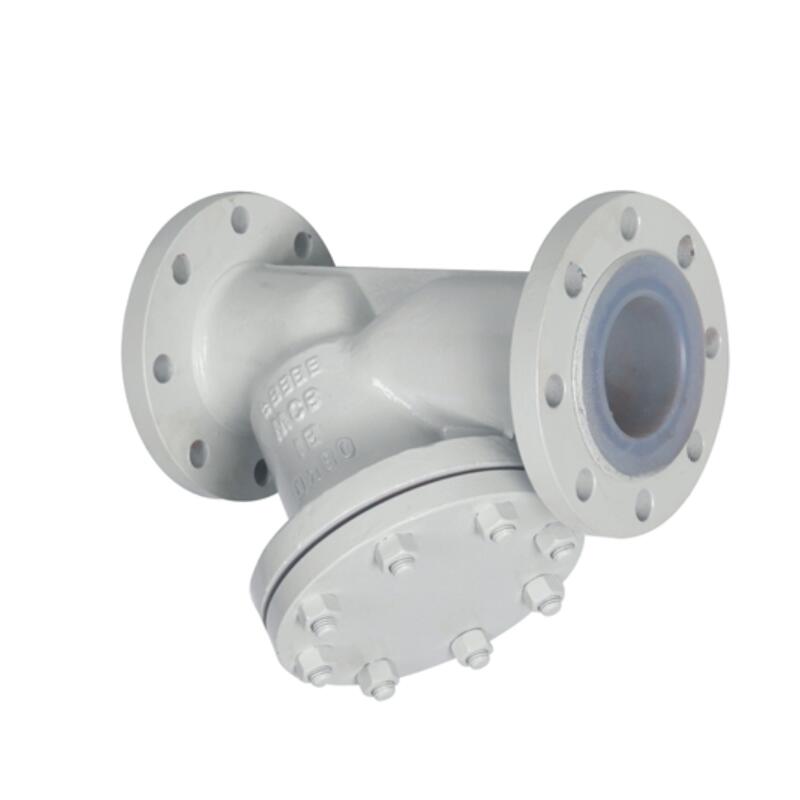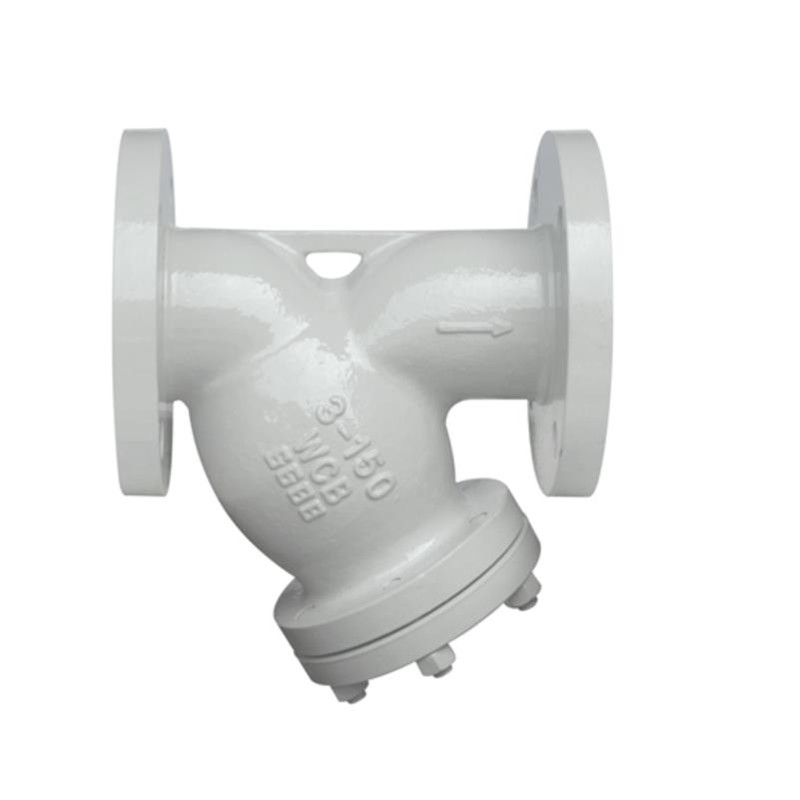


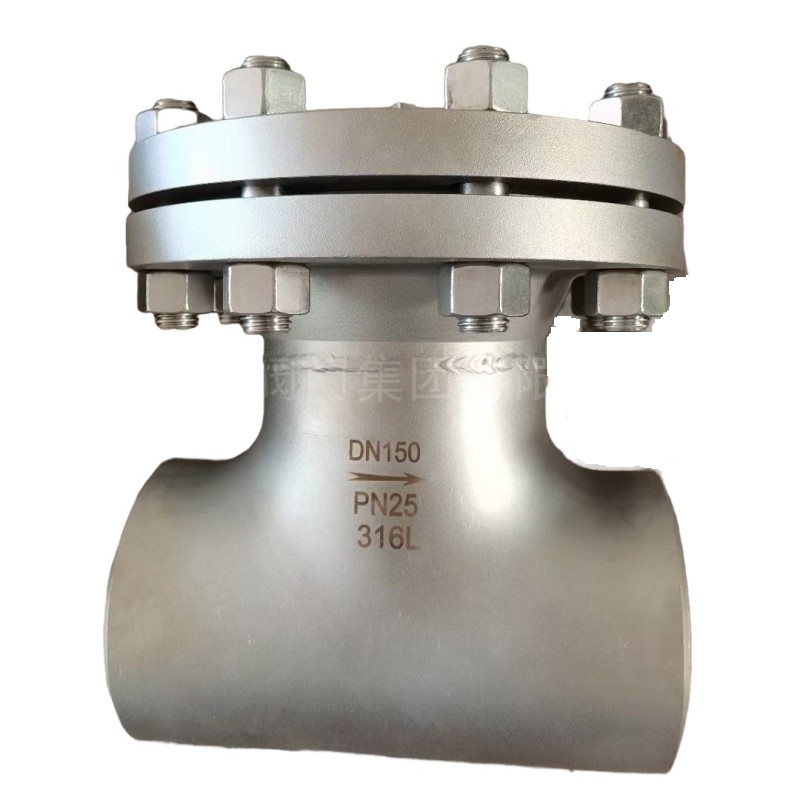
Filtro a T in acciaio inox 316L, PN25, estremità BW
China 316L T-type Strainer Manufacture,316L T-type Strainer Supplier,DN150 316L T-type Strainer,PN25 316L T-type Strainer, BW End 316L T-type Strainer.
Filtro di tipo T in acciaio fuso DN80 PN16
Dimensioni: 1/2″-24″(DN15~DN600)
Pressione nominale: 150LB-2500LB/PN16~PN160/10K~60K)
Materiale:A351CF8M/CF8/CF3/CF3M,A216WCB,A217 WC6 A352 LCB/LCC,A105,F304,F316,F51/F53,F11.F2.C3.C95800
Temperatura adatta: 425°C (temperature diverse scelgono materiali diversi). Mezzo adatto: acqua, vapore, petrolio e gas naturale ecc.
Descrizione:
Standard di progettazione: ASME B16.34
Lunghezza della struttura: ASME B16.10
Standard dimensioni connessione: ANSI B16.5
Standard di test e ispezione: API598
316L T-type strainer is a pipeline filtration device made of 316L stainless steel, shaped like the letter “T”, used to remove solid impurities from fluids and protect downstream equipment.
Core Parameters
- Materiale: 316L stainless steel, low carbon content, excellent corrosion resistance, suitable for chemical, marine, food, pharmaceutical and other corrosive environments.
- Structure: T-shaped three-way design, inlet, outlet and drain/inspection port; built-in filter screen/basket, precision 10–500 μm optional.
- Connessione: Flange, thread, clamp, welding; common specifications DN15–DN500, pressure PN10–PN420, temperature -200°C–450°C.
- Caratteristica: Low flow resistance, easy to disassemble and clean, can be drained and sampled without stopping.
Main Advantages
- ✅ Strong corrosion resistance: Resists acids, alkalis, salts and various chemical media, far better than 304.
- ✅ High reliability: Low carbon, good toughness, not easy to rust, long service life.
- ✅ Wide applicability: Suitable for water, oil, gas, steam, solvents, etc.; widely used in petrochemical, food and beverage, medicine, water treatment, power and other industries.
- ✅ Easy maintenance: Open the end cover to take out the filter element for cleaning, no need to remove the whole machine.
Applicazioni comuni
- Protect pumps, valves, meters, heat exchangers and other precision equipment from wear and blockage.
- Filtration in corrosive working conditions: seawater, brine, acid-base solution, chemical raw materials, etc..
- Sanitary grade occasions: food, beverage, pharmaceutical, biological engineering, requiring no pollution and easy sterilization.
-
Here is the complete specification, selection, and dimension guide for 316L T-type Strainer, organized for easy reference and engineering use.
📋 316L T-type Strainer – Full Technical Data
1. Common Model & Specification Table
📌 Pressure Rating: PN10 / PN16 / PN25 / PN40 | Class 150 / Class 300
| Nominal Diameter | DN15 – DN50 | DN65 – DN150 | DN200 – DN500 |
|---|---|---|---|
| Standard | GB, HG, ANSI, JIS | GB, HG, ANSI, JIS | GB, HG, ANSI, JIS |
| Tipo di connessione | Thread / Socket Weld / Flange | Flangia | Flangia |
| Materiale | Body: 316L / CF8M
Screen: 316L Perforated Plate + 316L Wire Mesh Gasket: PTFE / Graphite |
Body: 316L / CF8M
Screen: 316L Gasket: PTFE / Spiral Wound |
Body: 316L / CF8M
Screen: 316L Gasket: Spiral Wound / Metal |
| Filtration Precision | Standard: 20 / 40 / 80 / 100 / 200 mesh
Optional: 10–5000μm |
Standard: 20 / 40 / 80 / 100 / 200 mesh
Optional: 10–5000μm |
Standard: 20 / 40 / 80 / 100 / 200 mesh
Optional: 10–5000μm |
| Max Temperature | ≤ 450°C (depends on gasket) | ≤ 450°C | ≤ 450°C |
| Applicable Media | Water, Oil, Gas, Steam, Acids, Alkalis, Solvents, Seawater, Chemicals | Water, Oil, Gas, Steam, Acids, Alkalis, Solvents, Seawater, Chemicals | Water, Oil, Gas, Steam, Acids, Alkalis, Solvents, Seawater, Chemicals |
✅ Model Code Example:
ST-316L-16P-DN100-40M
→ ST = T-type Strainer | 316L = Material | 16P = PN16 Pressure | DN100 = Size | 40M = 40 Mesh
2. Installation Dimension Reference Table
▶ DN15 – DN50 (Small Bore)
| DN | NPS | Length (L) | Height (H) | End Cover Diameter | Weight (kg) |
|---|---|---|---|---|---|
| 15 | ½” | 150 mm | 110 mm | 89 mm | 2.1 |
| 20 | ¾” | 150 mm | 115 mm | 89 mm | 2.5 |
| 25 | 1″ | 160 mm | 125 mm | 108 mm | 3.2 |
| 40 | 1½” | 200 mm | 145 mm | 127 mm | 5.0 |
| 50 | 2″ | 230 mm | 155 mm | 140 mm | 6.8 |
| DN | NPS | Length (L) | Height (H) | End Cover Diameter | Weight (kg) |
|---|---|---|---|---|---|
| 200 | 8″ | 600 mm | 340 mm | 325 mm | 58.0 |
| 250 | 10″ | 730 mm | 390 mm | 377 mm | 85.0 |
| 300 | 12″ | 850 mm | 440 mm | 426 mm | 120.0 |
📝 Note: Dimensions vary slightly by manufacturer and pressure class. Above is standard industry data.
3. Selection Guide – Step by Step
✅ Step 1: Confirm Nominal Size & Pressure
- Match pipe diameter (DN / NPS)
- Confirm working pressure → Select PN10/16/25/40 or Class 150/300
- 316L is suitable for low-to-medium pressure; for high pressure >PN40, request reinforced design.
✅ Step 2: Choose Connection Type
- Thread (BSP / NPT): DN15–DN50, low pressure, easy installation
- Socket Weld: DN15–DN80, high pressure, high sealing
- Flange: DN50 and above, standard for industrial piping
✅ Step 3: Select Filtration Precision
- 20–40 Mesh (420–840μm): Protect pumps, compressors, large valves
- 60–100 Mesh (150–250μm): Heat exchangers, instruments, control valves
- 150–200 Mesh (75–100μm): Fine filtration, pre-treatment for precision equipment
- >200 Mesh: Custom fine filtration, food/pharma grade
⚠️ Rule: Select precision ½ ~ ⅓ of the smallest gap in downstream equipment.
✅ Step 4: Confirm Material Grade
- 316L = Low Carbon (<0.03%) → Best for corrosion resistance, welding performance, no intergranular corrosion risk.
- Application Priority:
- Chemical / Marine / Seawater → Must choose 316L
- Food / Pharma / Sanitary → 316L + Mirror Polished / Electro-Polished
- High temperature steam → 316L with graphite gasket
✅ Step 5: Flow Direction & Installation Style
- Standard: Inlet horizontal → Outlet horizontal → Drain/Inspection port downward
- Reverse / Angle type: Available upon request
- Pressure Drop: In genere 0.01–0.05 MPa when clean; clean screen when ΔP > 0.1 MPa
4. Material Performance Comparison
Material Corrosion Resistance Temperature Limit Cost Best For
304 Good (fresh water, air) ≤ 425°C Low General water, oil, non-corrosive
316 Excellent (acid, alkali) ≤ 450°C Medium Chemical, marine
316L Superior (best corrosion, welding) ≤ 450°C Medium-High Seawater, chloride, chemical, food, pharma
FAQ: 316L T-type Strainer
🧾 Material & Performance
A: 316L is a low-carbon version of 316 stainless steel (carbon content ≤ 0.03%).
- Compared to 304: It adds molybdenum (Mo), giving much better resistance to acids, alkalis, chlorides, and seawater.
- Compared to 316: Lower carbon eliminates the risk of intergranular corrosion after welding; no need for post-weld heat treatment.
✅ Best choice for marine, chemical, food, pharmaceutical, and high-humidity environments.
A: Suitable for water, oil, gas, steam, seawater, brine, weak acid/alkali solutions, solvents, and chemical fluids.❌ Not recommended for highly concentrated strong acids, fluorine-containing media, or molten alkali metals (will cause corrosion).
A:
- Pressure: Standard PN10/16/25/40 or Class 150/300; max ~4.0 MPa (40 bar).
- Temperature: -20°C to +450°C (depends on gasket material: PTFE ≤ 200°C, Graphite ≤ 450°C).
📏 Selection & Specification
A: Follow this rule: select precision equal to 1/2 ~ 1/3 of the smallest gap in downstream equipment.
- 20–40 Mesh (420–840 μm): Protect pumps, compressors, large-diameter valves.
- 60–100 Mesh (150–250 μm): Control valves, instruments, heat exchangers, nozzles.
- 150–200 Mesh (75–100 μm): Fine filtration, food/pharma grade, pre-filtration for precision systems.
- >200 Mesh: Custom fine filtration; note: higher precision = larger pressure drop.
A:
- Thread (BSP/NPT): DN15–DN50, low pressure, easy installation.
- Socket Weld: DN15–DN80, high pressure, zero leakage.
- Flange: DN50–DN500, standard industrial use (HG/T, ANSI, JIS, GB standards).
- Clamp: Sanitary grade (food/pharma), quick assembly.
A: ❌ No. T-type strainers have a fixed flow direction: Inlet → Horizontal → Outlet, with the drain port pointing downward. Installing backwards will block flow and damage the screen.
🔧 Installation & Operation
A:
- Install horizontally; keep the drain/inspection port facing straight down.
- Align flow direction with the arrow marked on the body.
- Leave enough space above/below for removing the screen and opening the end cover.
- Install pressure gauges before and after the strainer to monitor blockage.
- For high-temperature service, warm up slowly to avoid thermal shock.
A:
- Clean state: 0.01–0.05 MPa (0.1–0.5 bar).
- Clean or replace the screen when ΔP > 0.1 MPa (1.0 bar).
- High viscosity fluid or fine mesh will increase pressure drop — select a larger size if needed.
A: ❌ Not recommended. Vertical installation makes dirt settle directly back into the flow path, reduces filtration efficiency, and makes cleaning difficult. Only use special vertical-type designs if required.
🧹 Maintenance & Troubleshooting
A: Depends on fluid cleanliness:
- Clean media: Every 3–6 months.
- Slightly dirty: Every 1–4 weeks.
- Dirty / high impurity: Monitor pressure drop; clean immediately when ΔP rises.
✅ Best practice: Install a differential pressure gauge to know exactly when cleaning is needed.
A:
- Isolate the strainer, release pressure completely.
- Remove the end cover, take out the screen/basket.
- Rinse with water or steam; use a soft brush — do not scratch or deform the mesh.
- For heavy fouling: Soak in neutral detergent or dilute citric acid (suitable for 316L).
- Inspect screen for holes, deformation, or corrosion; replace if damaged.
- Replace gasket every time you open the cover to prevent leakage.
A: Common causes:
- Gasket aging, damaged, or improperly installed → Replace gasket.
- Bolts not tightened evenly → Tighten in cross pattern.
- Sealing surface scratched or dirty → Clean and repair surface.
A:
- Mesh precision is too high for the fluid → Use coarser mesh or larger size.
- Fluid contains excessive solids → Add pre-filtration.
- Screen installed backwards → Reinstall correctly.
A: Normally no. But it may show spots if:
- Exposed to high chloride environments (e.g., seawater > 50°C) → Use higher alloy grade (2507) if needed.
- Contaminated by iron particles or other metals → Clean regularly.
- Exceeded temperature/pressure limits → Operate within rated conditions.
📦 Application & Standard
A: Petrochemical, oil & gas, marine & offshore, food & beverage, pharmaceutical, water treatment, desalination, power generation, and fine chemical industries.
A: Design: GB/T, HG/T, ANSI B16.34; Material: ASTM A351 CF8M / A276 316L; Test: API 598, GB/T 13927.