

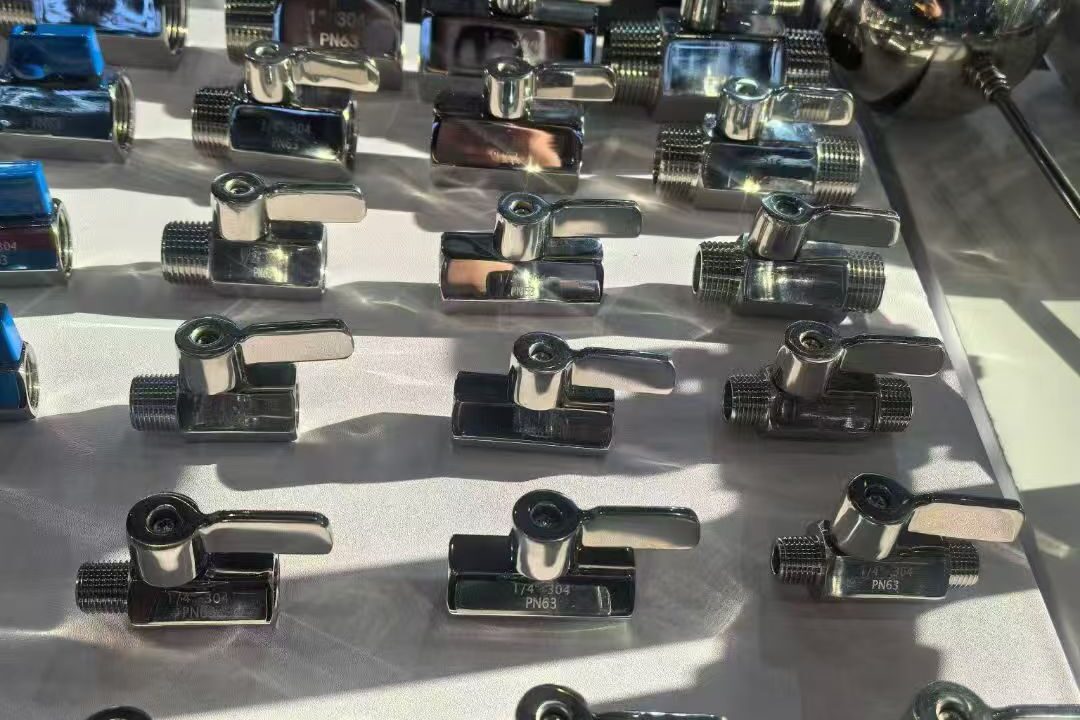
Globe Valve vs Ball Valve
System operating pressure, media characteristics, thermal variations, and mechanical actuation speed dictate which mechanical design provides reliable, long-term performance. Neither valve design suits every industrial or commercial application, making mechanical alignment with fluid dynamics essential.
Construction and Operating Principles
The internal geometry of a valve dictates how fluid moves through the body and how mechanical components handle line stress. Globe valves and ball valves use distinct internal mechanisms to control process media.
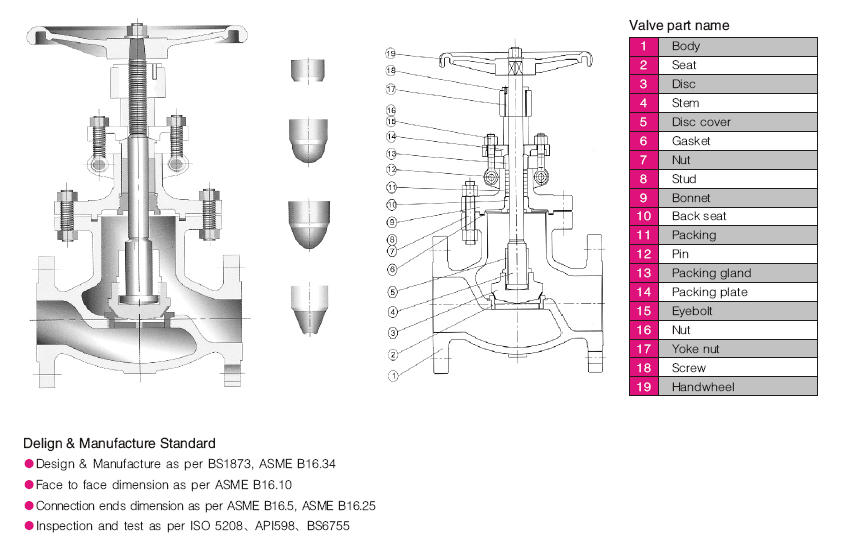
Globe valves operate via a linear stem motion that moves a plug, disk, or needle perpendicular to the valve seat. As the handwheel or linear actuator turns, the stem raises or lowers the disk relative to an internal horizontal or angled orifice. Fluid entering the valve body must change direction twice, moving through an S-shaped flow path that creates intentional resistance.
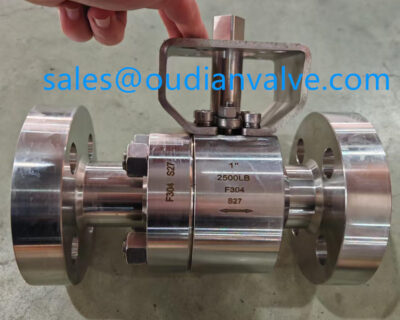
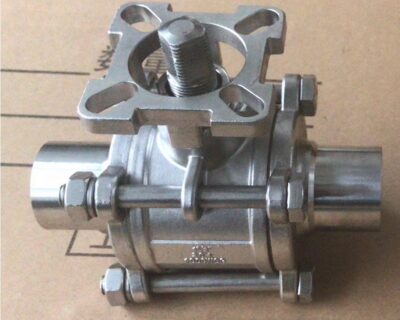
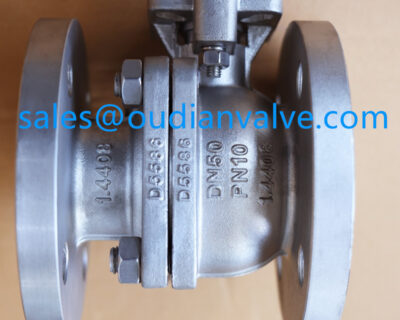
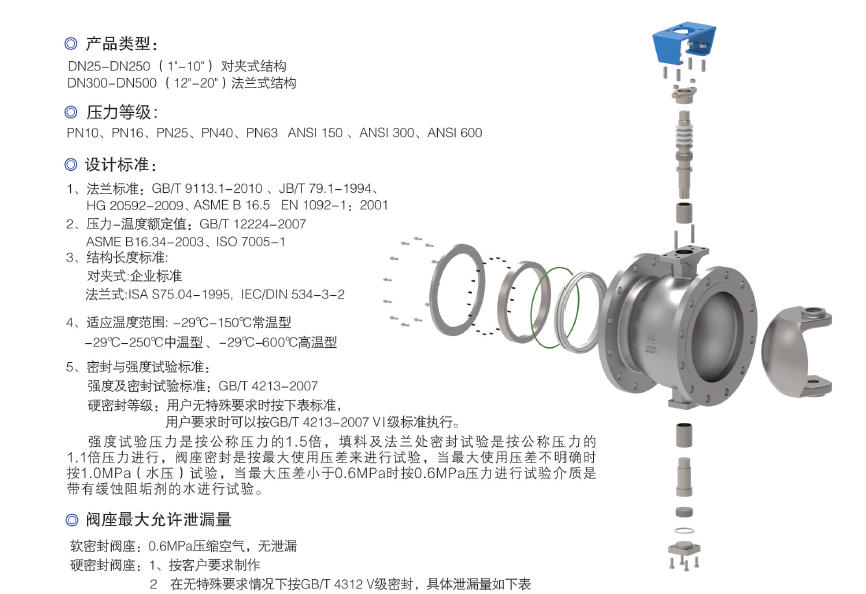
Ball valves operate using a rotary, quarter-turn mechanism centered on a hollow, perforated sphere supported by resilient or metallic seats. When the bore aligns with the pipeline axis, fluid flows unobstructed through the valve body in a straight line. Rotating the ball ninety degrees positions the solid spherical wall perpendicular to flow, stopping stream advancement completely.
Globe Valve Construction
- Linear rising or non-rising threaded stem assembly
- Movable plug or disk positioned over an internal seat ring
- Tortuous flow cavity requiring directional fluid changes
- Multi-turn manual handwheel or linear pneumatic actuator
Ball Valve Construction
- Rotational stem connected to a machined spherical ball
- Central cylindrical bore matching pipeline internal diameter
- Elastomeric, thermoplastic, or metal valve seat rings
- Quarter-turn lever handle or rotational pneumatic actuator
Flow Control Capabilities, Throttling, and Head Loss
Throttling performance represents the primary operational divide between these two valve categories. Valve geometry directly governs flow coefficients, fluid velocity, and system energy loss.
Globe valves excel at precise flow regulation because the annular opening between the disk and seat changes proportionately with stem travel. Operators can modulate fluid volume accurately, maintaining consistent intermediate flow rates without creating localized mechanical flutter. The disk design can be contoured into parabolic, equal-percentage, or quick-opening profiles to match specific process control curves.
Ball valves are fundamentally designed for full-open or full-closed isolation. While characterized V-port ball valves can regulate flow, standard round-port ball valves perform poorly in throttling service. Partially opening a standard ball valve exposes the edge of the port to intense fluid velocity, causing cavitation, severe vibration, and uneven seat erosion.
The straight-through path of a full-port ball valve results in negligible resistance and minimal head loss, maintaining downstream line pressure efficiently. In contrast, the internal directional shifts inside a globe valve body produce a permanent pressure drop across the seat orifice. This inherent energy dissipation makes globe valves unsuitable for systems requiring high flow efficiency and low pump head loss.
Globe valves are engineered specifically for continuous flow modulation and fine pressure regulation. Standard ball valves should remain fully open or fully closed to avoid seat destruction caused by localized fluid velocity.
Shutoff Performance and Valve Seat Integrity
Achieving a reliable, tight seal depends on the mechanical interaction between the closure element and the stationary valve seat. The type of seal determines valve performance during static isolation.
Ball valves deliver dependable shutoff performance, frequently achieving bubble-tight zero-leakage standards. Line fluid pressure pushes a floating ball against the downstream seat ring, compressing soft elastomer or PTFE materials to form a tight seal. In trunnion-mounted designs, spring-loaded seat rings drive against the ball surface to maintain sealing contact across varying line pressures.
Valvole a globo rely on perpendicular thrust applied through the stem to press the plug directly into the valve seat. Because closure does not rely on fluid drag across the sealing surface, the disk lands squarely without shearing friction. This perpendicular contact reduces sliding wear, allowing globe valves to maintain reliable metal-to-metal seating in high-temperature or severe-duty environments.
When high-velocity media carries entrained particulates, abrasive grit can wedge between sliding surfaces. In ball valves, abrasive particles can score the polished sphere or cut soft seats during rotation. In globe valves, fluid velocity across a cracked-open seat can wire-draw the metal, compromising tight shutoff over extended service intervals.
Partially opening a standard ball valve under high differential pressure creates localized jetting that erodes thermoplastic seat rings, resulting in internal bypass leakage when fully closed.
Durability, Service Life, and Maintenance Demands
Operational frequency, media corrosiveness, and packing integrity influence the total service lifespan of process valves. Ease of mechanical maintenance determines long-term operating costs.
Ball valves feature a compact body profile with fewer internal dynamic wear points under routine cycling. Because the stem rotates within the packing box without axial translation, stem packing experiences minimal frictional displacement. This rotational movement limits fugitive emissions and extends the operational life of the stem seal during frequent on-off cycles.
Globe valves require multi-turn stem translation, repeatedly drawing the metal stem up and down through the packing gland. This linear sliding motion increases wear on packing rings, requiring periodic gland tightening or repacking to prevent external leakage. However, top-entry globe valve designs allow technicians to access internal disks and seats without removing the valve body from the piping system.
Globe Valve Service Life
Globe valves support straightforward seat resurfacing and disk replacement directly through a bolted bonnet. While stem packing requires regular maintenance, internal components withstand high thermal cycling effectively.
Ball Valve Service Life
Ball valves provide long seat life in clean service without packing adjustments. However, repairing damaged internal seats typically requires removing welded or flanged two-piece and three-piece bodies from service lines.
Actuation Options and Operating Speed
The mechanical force required to actuate a valve governs automation options, actuator sizing, and operating cycle speeds. The fundamental motion of the closure member determines actuation complexity.
Ball valves require only a ninety-degree rotation to transition from fully open to fully closed. This quarter-turn action enables fast shutoff speeds using compact pneumatic, hydraulic, or electric actuators. However, rapid closure on liquid lines can induce hydraulic shock, commonly known as water hammer, which damages upstream piping, pipe supports, and instrumentation.
Globe valves utilize a threaded stem that requires multiple full rotations to cycle between open and closed positions. This mechanical design inherently prevents rapid closure, eliminating the risk of water hammer in liquid transport lines. Automated operation requires linear thrust actuators or multi-turn rotary actuators fitted with threaded drive nuts, which occupy a larger physical footprint.
Quarter-Turn Ball Actuation
- Enables immediate isolation during emergency system shutdowns
- Requires compact quarter-turn rotary pneumatic actuators
- Simplifies mechanical position indication via handle alignment
Actuation Limitations
- Rapid valve closure introduces water hammer risks in liquid piping
- Breakaway seating torque requires high-output actuator sizing
- Continuous modulating duty causes accelerated pneumatic cylinder wear
Side-by-Side Comparison: Globe Valves vs Ball Valves
Direct mechanical and operational comparison clarifies the performance differences across core engineering parameters. The optimal valve design aligns with process objectives, flow characteristics, and spatial constraints.
| Design Factor | Valvola a globo | Valvola a sfera | Operational Summary |
| Stem Motion | Linear Multi-Turn | Rotary Quarter-Turn | Ball valves cycle faster with a single quarter-turn handle motion. |
| Flow Modulation | Accurate Linear | Poor On-Off | Globe valves provide dependable throttling without mechanical vibration or seat erosion. |
| Caduta di pressione | High Head Loss | Minimal Loss | Full-port ball valves maintain process line pressure with unobstructed flow paths. |
| Sealing Style | Perpendicular Disk | Floating Rotary | Ball valves provide tight shutoff using compressed elastomeric or metal seat rings. |
| Internal Repair | Top-Entry Inline | Requires Removal | Globe valves allow inline seat refurbishment through a removable bolted bonnet. |
| Actuator Size | Large Linear | Compact Rotary | Quarter-turn actuators require less spatial clearance above the piping centerline. |
| Water Hammer | Low Risk | Moderate Risk | Multi-turn operation slows liquid deceleration, preventing destructive hydraulic shock. |

Selecting the Right Valve for Common System Requirements
Process conditions determine whether a globe or ball valve represents the technically appropriate installation choice. Matching mechanical capabilities to operational demands preserves process stability.
- Precision Throttling Applications: Globe valves are the preferred choice for cooling water regulation, chemical dosing, and steam flow modulation where fine control overrides head loss concerns.
- Main Pipeline Isolation: Ball valves serve as the standard choice for main process shutoff, fuel lines, and general utility isolation due to low flow resistance and bubble-tight sealing.
- High-Frequency Cycling: Ball valves withstand continuous cycling in automated batch processes, as quarter-turn rotation minimizes stem packing degradation and actuation cycle times.
- Steam and High-Temperature Service: Globe valves maintain seating integrity in high-temperature steam lines, as direct perpendicular plug seating tolerates thermal expansion without binding.
- Slurry and Particulate Transport: Ball valves equipped with metal seats and scraper rings handle viscous fluids and light slurries more effectively than the tortuous chambers of globe valves.
- Residential and Commercial Plumbing: Ball valves dominate domestic water shutoff and gas isolation lines due to compact size, low cost, and clear handle position indication.
Key Engineering Selection Factors: Media, Pressure, and Budget
Evaluating operating parameters prior to valve procurement helps avoid premature field failure and excessive energy consumption. Engineers must balance initial mechanical cost against lifecycle maintenance needs.
Media and Temperature
Clean gases and low-viscosity fluids suit ball valves. High-temperature steam, condensate, and thermal oils benefit from globe valve geometry, which avoids seat deformation under thermal stress.
Operating Pressure
High differential pressures during throttling induce cavitation. Globe valves distribute pressure drops across contoured plugs, whereas ball valves experience extreme localized seat erosion if operated partially open.
Space and Budget
Ball valves offer a lighter, compact envelope at lower acquisition costs for general isolation. Globe valves demand higher initial investment and support framing due to heavy cast bodies and elevated actuators.
Domande frequenti
Can a standard ball valve be used for throttling flow?
Standard ball valves should not be used for regular flow throttling. Operating a standard ball valve in a partially open position causes rapid seat erosion, cavitation, and localized vibration that degrades shutoff capabilities.
Why does a globe valve produce a significant pressure drop?
A globe valve produces high pressure drop because fluid must alter direction twice through an internal S-shaped cavity. This tortuous path generates internal friction and turbulence that dissipates fluid energy across the seat orifice.
Which valve design provides longer service life in high-temperature steam systems?
Globe valves typically deliver longer operational life in high-temperature steam service. Perpendicular plug seating and durable metal-to-metal contact tolerate thermal expansion and wire-drawing forces more effectively than standard soft valve seats.
Can globe valves be repaired while remaining inline?
Most industrial globe valves feature top-entry bolted bonnets that allow internal components to be inspected, lapped, or replaced without removing the valve body from the pipeline. This inline capability simplifies routine seat refurbishment.
How does operating speed differ between globe and ball valves?
Ball valves cycle between open and closed positions with a rapid quarter-turn rotation of ninety degrees. Globe valves rely on a threaded multi-turn stem that requires several manual or automated handwheel rotations to travel full stroke.
Choosing the Right Valve for the Piping System
Ball valves provide efficient on-off isolation with minimal pressure drop, rapid quarter-turn actuation, and tight sealing for general fluid transport. Globe valves remain indispensable for accurate flow regulation, steam modulation, and severe-duty throttling where head loss is acceptable. Aligning valve mechanical design with specific process dynamics supports long-term operational safety and system reliability.