


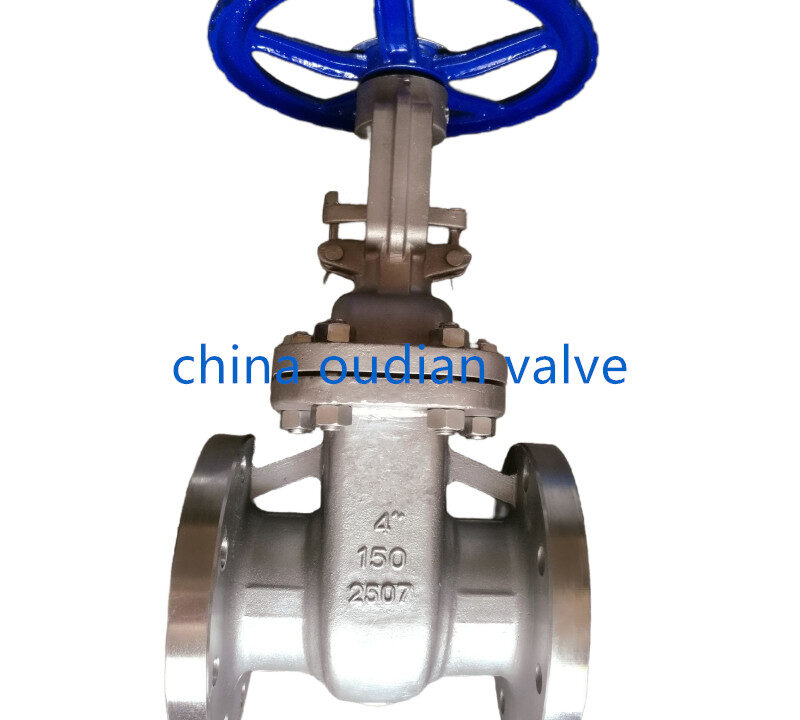
Full Bore Gate Valve Design and Pipeline Applications
Selecting the proper configuration depends on process media characteristics, operating pressure class, piping diameter, and whether the line requires mechanical cleaning devices. Matching valve materials and design standards to specific pipeline conditions helps maintain operational integrity across varied industrial environments.

Operating Mechanics and Internal Structure
Full bore gate valves operate via a linear-motion closing element that enters the flow path perpendicularly to halt media movement. Turning the handwheel or mechanical actuator raises or lowers the wedge across precision-machined seat faces inside the valve body.
When the disc is fully raised, the flow channel matches the inner diameter of the pipe. This straight-through bore architecture eliminates internal shoulders, pockets, and flow restrictions that otherwise create localized eddy currents.
Full port valves designed in accordance with API 600 for cast steel or API 602 for forged steel provide full-diameter opening clearance to accommodate scraper pigs and inspection gauges without seat interference.
We produce configurations featuring rising stem mechanisms where stem threads stay outside the fluid media. This architecture isolates sensitive drive components from corrosive process fluids and allows technicians to visually confirm valve position from a distance.

Flow Performance and Operational Advantages
The primary engineering merit of a full bore gate valve is its minimal resistance to fluid transfer. The unobstructed passage maintains uniform pipeline velocity, which helps control pumping energy consumption across long transport lines.
Because the internal geometry introduces virtually no constriction, fluid systems experience negligible pressure drop compared to reduced bore alternatives. This makes full port construction a practical choice for heavy crude, viscous chemicals, and high-velocity steam.
Преимущества
- Virtually unrestricted flow with negligible pressure drop across the body.
- Unobstructed conduit enables inline scraper pigging and cleaning operations.
- Bi-directional sealing capability simplifies line design and installation.
Ограничения
- Larger physical footprint and heavier body weight require adequate pipe support.
- Multi-turn handwheel operation requires more time to complete full stroke cycles.
- Strictly designed for isolation service; unsuitable for throttling or regulating flow.
Additionally, the symmetric seat and wedge interface provides dependable bi-directional shutoff. Piping designers can route fluid in either direction without compromising pressure containment or sealing contact.

Material Specifications and Body Configurations
We configure full bore gate valves using specialized metallurgical grades suited to process temperatures, chemical compatibility, and pressure classes. Forged steel bodies serve compact, high-pressure utility lines, while cast steel accommodates larger process mains.
Common body materials include cast carbon steel ASTM A216 WCB for standard refining service, alongside forged austenitic stainless steel ASTM A182 F304 for corrosive fluids. End connections range from raised-face flanged joints to butt-weld and threaded ends.
| Material Grade | Design Standard | Body Construction | Primary Application Service |
| ASTM A216 WCB | API 600 | Cast Flexible Wedge | General hydrocarbon refining and high-pressure steam distribution mains. |
| ASTM A182 F304 | API 602 | Forged Solid Wedge | Corrosive chemical injection, marine utility, and low-temperature process lines. |
| Углеродистая сталь | API 600 | Bolted Bonnet Cast | High-capacity crude transmission pipelines requiring periodic inline tool pigging. |
Wedge architectures include flexible wedge styles that compensate for thermal binding in high-temperature lines. For small forged valves, solid wedge designs provide high mechanical rigidity across high-differential shutoff conditions.
Suitable Pipeline Systems and Operating Environments
Full bore gate valves serve critical infrastructure where pressure loss must remain low and line maintenance requires physical access. Oil and gas transmission networks rely heavily on these units for isolation manifolds and gathering headers.
Refining units, petrochemical facilities, and chemical processing plants integrate full port gate valves into feed lines carrying viscous or slurry-prone media. Removing internal flow steps minimizes media stagnation, particulate buildup, and localized erosion around the seat pocket.
- Crude oil gathering headers and natural gas transport pipelines requiring pigging passages.
- Petrochemical distillation columns and cracking unit isolation circuits.
- High-pressure utility steam networks, boiler feedwater circuits, and cooling loops.
- Marine transfer lines, offshore platform piping, and specialized ballast handling systems.
In offshore and marine applications, corrosion-resistant alloy selections help withstand saline atmospheric conditions. Our manufacturing options support reliable isolation across both surface facilities and processing plants.

Full Bore Gate Valves Compared with Alternative Valve Types
Evaluating piping components requires comparing the operating traits of gate valves against other prevalent quarter-turn and linear options. Each design provides distinct advantages depending on flow requirements, actuation cycles, and space limitations.
While ball valves share full port capabilities, full bore gate valves offer cost advantages in large nominal diameters and high pressure classes. In contrast, globe valves introduce tortuous flow paths that create deliberate pressure drops suited for regulation rather than bulk transport.
Full Bore Ball Valve
Offers fast quarter-turn operation and tight soft or metal seating. However, large diameter high-pressure units involve higher manufacturing costs and substantial actuator envelopes.
Шаровой клапан
Features an internal baffle that directs flow across an adjustable plug, enabling precise throttling. This design inherently causes significant head loss and prevents pipeline pigging.
High Performance Butterfly Valve
Presents a compact, lightweight body suitable for tight plant spaces. The central disc remains directly in the flow path, creating higher turbulence than a gate valve.
A full bore gate valve remains practical where operators prioritize unobstructed full-diameter conduit access and cost-effective construction in larger nominal pipe sizes. The linear wedge retracts completely out of the stream into the valve bonnet.
Operational Limitations and Engineering Trade-Offs
Despite their flow efficiency, full bore gate valves require careful operational handling to prevent premature seat damage. They are engineered strictly as on-off isolation devices and must never serve as flow control or throttling valves.
Operating a gate valve in a partially open position causes high-velocity fluid to strike the unsupported wedge edge. This induces destructive chatter, wire drawing across seating faces, and localized cavitation that ruins tight shutoff capabilities.
Partially opening a full bore gate valve accelerates erosion on both the wedge disc and body seat rings. Always cycle the valve to its fully open or fully closed position to protect the machined sealing faces.
Additionally, multi-turn threaded stems require substantial vertical clearance above the pipeline for rising stem travel. Operators must account for handwheel access and overhead pipe rack clearances during structural piping layout planning.
Pipeline Installation and Inspection Guidelines
Proper installation and routine inspection help preserve valve service life and maintain positive shutoff integrity. Piping crews should flush lines thoroughly before bolting or welding valves into place to eliminate slag, scale, and foreign debris.
Tightening flange fasteners using cross-pattern torque procedures prevents uneven stress on the valve neck and seat rings. For welded-end valves, following welding procedure specifications protects the heat-affected zone near critical seat rings.
- Clean connecting pipe ends and remove foreign particles before positioning the valve.
- Support adjacent piping adequately to prevent heavy bending stresses on the valve body.
- Cycle the handwheel through a complete stroke before introducing line pressure to verify smooth stem travel.
- Perform hydrostatic and low-pressure air seat tests in accordance with API 598 protocols.
- Inspect stem packing periodically and adjust gland bolting evenly to prevent packing leaks.
Regular maintenance involves greasing stem threads with compatible lubricants and verifying that bonnet bolting remains properly torqued. Routine inspections reduce the likelihood of stem binding and keep the valve ready for isolation cycles.
Frequently Asked Questions
Can a full bore gate valve accommodate pipeline scraper pigs?
Yes, full bore gate valves feature an internal diameter that matches the connecting pipe, allowing mechanical pigs and cleaning tools to pass through without obstruction. The fully retracted wedge clears the bore completely.
Why does a full bore gate valve produce minimal pressure loss?
Because the fully opened port provides a straight, full-diameter cylindrical path that eliminates flow restriction. This straight-through design prevents the turbulence and head loss typical of tortuous valve bodies.
What is the difference between a flexible wedge and a solid wedge?
A flexible wedge features a machined circumferential groove that allows the sealing faces to flex slightly under pipeline thermal expansion. A solid wedge is a rigid single-piece casting or forging used primarily in smaller sizes and uniform temperature service.
Why should a full bore gate valve never be used for throttling?
Throttling causes high-velocity fluid to erode the bottom edge of the partially exposed wedge and seat faces. The resulting flow vibration and cavitation cause seat leakage and compromise shutoff reliability.
How does API 600 differ from API 602 for gate valves?
API 600 governs heavy-duty bolted bonnet cast steel gate valves commonly used in larger process pipelines. API 602 specifies compact forged steel gate valves designed for smaller nominal sizes and higher pressure ratings.
Selecting Reliable Full Bore Gate Valves
Full bore gate valves provide dependable full-stream isolation with low flow resistance across critical industrial pipelines. Matching material specifications, wedge styles, and pressure classes to project conditions supports long-term operational efficiency. We manufacture custom and standard industrial valves to meet precise engineering standards for global projects.
Request Valve Specifications and Quotations
Connect with our engineering sales team to discuss sizing, pressure ratings, metallurgy, and delivery schedules for your piping project.



