


Process conditions such as chemical reactivity, operating temperature, and containment standards determine whether a piping system requires a metallic bellows assembly rather than traditional compression packing alone. Selecting the appropriate design helps maintain pipeline integrity and protects personnel from exposure to hazardous media.
Bellows Sealing Mechanism and Core Components
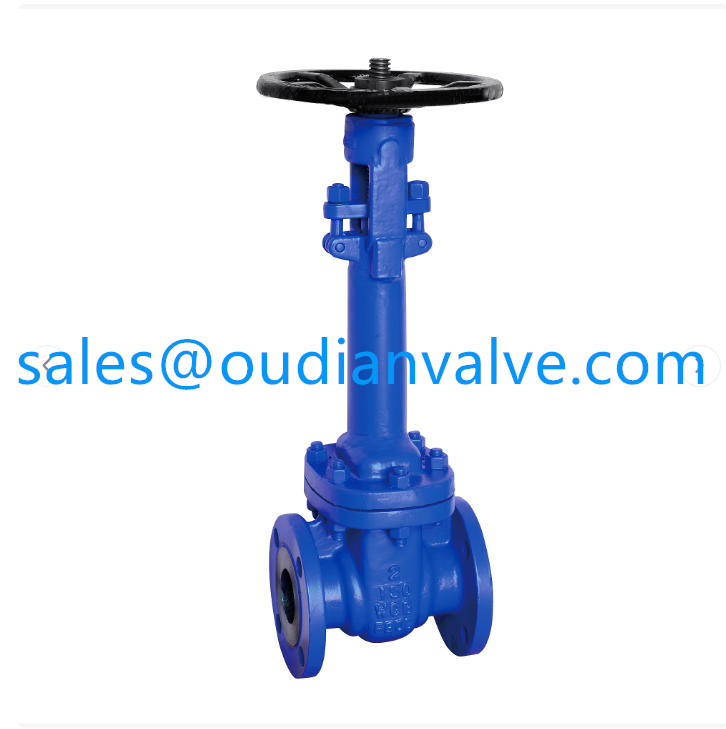
The defining characteristic of this valve design is the metallic bellows assembly that encloses the valve stem. While a standard valve relies entirely on dynamic friction between compressed packing rings and the reciprocating stem, the bellows creates a seamless physical boundary that flexes during actuation.
The lower end of the bellows is welded to the stem, while the upper end is welded to the bonnet or an intermediate collar. As the handwheel or actuator rotates to raise or lower the wedge, the bellows expands or contracts axially. An internal guide prevents torsional stress from twisting the thin metallic folds during linear travel.
Bellows Cartridge
Manufactured from hydroformed or edge-welded metallic alloys, the accordion-shaped tube absorbs cyclic linear strokes while maintaining pressure containment.
Valve Body and Bonnet
Cast or forged pressure boundaries house the wedge and seat rings, joined by a bolted bonnet joint that holds the internal bellows assembly in precise alignment.
Stem and Backseat
A non-rotating linear stem transfers operating thrust to the closure element, often supported by an integral backseat that isolates the packing chamber when fully open.
Secondary compression packing sits above the bellows cartridge within the stuffing box. This dual-sealing arrangement acts as a redundant barrier should the metallic bellows suffer fatigue or mechanical compromise over extended duty.
Operational Advantages and Technical Limitations
Deploying a bellow gate valve provides substantial containment benefits over sliding-stem alternatives, though specific operating boundaries apply. Evaluating these trade-offs supports proper system design and reliable service performance.
Because the metallic boundary eliminates sliding friction at the primary seal interface, stem wear and fugitive emissions remain exceptionally low. This mechanism proves advantageous in high-temperature steam lines, thermal oil circuits, and toxic chemical headers where routine maintenance access is restricted.
Преимущества
- Eliminates stem leakage paths to achieve strict fugitive emission compliance.
- Reduces routine maintenance requirements by removing the need for frequent gland packing adjustments.
- Protects external stem threads and packing materials from contact with corrosive line fluids.
- Maintains secondary containment through backup graphite packing rings above the bellows cartridge.
Ограничения
- Finite fatigue life dictated by mechanical cycling and pressure fluctuations.
- Susceptible to torsional damage if anti-rotation mechanisms become misaligned or worn.
- Higher initial acquisition cost compared to conventional cast or forged gate valves.
- Difficult in-line repairs requiring specialized replacement cartridges and precise welding.
Design engineers must account for the mechanical limitations of thin-walled metallic convolutions. Solid particulates or crystallization in the line fluid can lodge between the convolutions, hindering full compression and accelerating fatigue failure.
Comparison with Conventional Gate Valves
Conventional gate valves rely entirely on gland packing compressed within a stuffing box around a polished stem. Over repetitive strokes, thermal expansion and mechanical friction wear down the packing fibers, creating micro-gaps that permit fugitive leaks.
In contrast, the bellow gate valve incorporates a dynamic hermetic seal that converts sliding contact into elastic metal deformation. The table below outlines how these structural differences influence routine operation and process suitability.
| Design Feature | Standard Gate Valve | Bellow Gate Valve | Operational Significance |
| Primary Stem Seal | Compression Packing | Metallic Bellows | The metallic barrier prevents fluid migration along the reciprocating stem. |
| Неконтролируемые выбросы | Moderate Risk | Hermetic Containment | Minimizes external atmospheric discharge of hazardous vapors and volatile organic compounds. |
| Stem Friction | High Friction | Low Friction | Elastic expansion replaces continuous dynamic rubbing at the primary sealing boundary. |
| Потребности в техническом обслуживании | Regular Retorquing | Periodic Monitoring | Removes routine manual gland adjustments until secondary packing intervention is required. |
| Initial Cost | Standard Economy | Premium Investment | Complex internal fabrication and specialized alloy construction increase procurement expense. |
While standard gate valves remain cost-effective for benign water or utility services, severe process duties justify the specialized design. Facilities handling flammable or toxic chemicals offset the initial purchase cost through lowered product loss and reduced downtime.
Selection, Installation, and Maintenance Guidelines
Proper valve specification depends on matching process fluid characteristics with compatible metallurgy. Stainless steel, nickel alloys, or titanium bellows materials are selected according to chemical aggressiveness, fluid temperature, and operating pressure.
During installation, technicians must ensure that piping loads do not transmit bending moments into the valve body. Misalignment can deflect the stem, forcing the internal anti-rotation guides out of line and placing destructive torsional stress across the thin bellows convolutions.
Avoid turning the valve handwheel using cheater bars or excessive torque, as over-torquing can deform the non-rotating stem mechanism and tear the welded metallic bellows.
Routine inspection focuses on monitoring the secondary packing area for moisture, vapor, or pressure buildup. A leak-off port located between the bellows and the secondary packing chamber allows operators to detect early bellows fatigue before process fluids breach the secondary boundary.
Operating protocols should prioritize gradual thermal warm-up in steam and heat transfer services. Rapid thermal shock can cause uneven expansion between the thick bonnet casting and the thin bellows metal, leading to localized stress cracking.
Frequently Asked Questions
What process fluids require a bellow gate valve?
These valves are commonly specified for hazardous, flammable, toxic, and high-temperature media such as thermal oils, superheated steam, chlorine, and volatile chemical intermediates. They are also favored in vacuum systems where atmospheric ingress must be avoided.
How does an operator detect a damaged bellows assembly?
Monitoring the optional leak-off port between the bellows and the secondary packing chamber provides direct indication of a bellows rupture. Process media accumulating in this intermediate chamber signals that the bellows has lost containment integrity.
Can a bellow gate valve be repaired in the field?
Field maintenance is generally limited to replacing the secondary packing rings and bonnet gaskets. Replacing the bellows cartridge itself requires factory-calibrated welding and alignment procedures, making complete cartridge or valve replacement standard practice.
Why is secondary packing included above the bellows?
The secondary packing chamber serves as a redundant fail-safe barrier. In the event of mechanical fatigue or corrosion causing a rupture in the metal bellows, the compressed packing helps contain line media within the valve body.
Summary of Bellow Gate Valve Engineering
A bellow gate valve combines robust linear shut-off capabilities with a hermetic metallic barrier that resolves persistent stem leakage challenges. By pairing high-grade bellows metallurgy with protective secondary packing, this valve configuration supports strict environmental standards and process reliability in demanding industrial infrastructure



