


How to Choose the Right Industrial Valve in China
Core Industrial Valve Types Available from Chinese Manufacturers
Chinese valve manufacturers produce a comprehensive spectrum of mechanical flow-control designs engineered for isolation, throttling, backflow prevention, and pressure management. Matching the mechanical geometry of the internal closure member to your operational requirements is the first step in building a reliable system.
Each valve style provides unique fluid mechanics, seat configurations, and pressure containment boundaries. The following overview details the primary valve categories commonly specified across chemical, water treatment, mining, and oil processing sectors.
| Tipul de supapă | Primary Function | Rezistență la curgere | Operational Characteristics |
| Supapă de poartă | Full Isolation | Foarte scăzut | Linear motion wedge sliding between seats for on-off service without throttling. |
| Valvă cu bilă | Isolation or Divert | Negligible | Quarter-turn spherical closure member delivering tight sealing and rapid manual operation. |
| Valvă globulară | Precise Throttling | Ridicat | Linear disc moving perpendicular to the seat ring to regulate flow with high accuracy. |
| Valvă fluture | Isolation and Regulation | Low to Moderate | Compact quarter-turn disc rotating within the flow path, saving space in large lines. |
| Supapă de sens invers | Backflow Prevention | Low to Moderate | Self-actuating closure driven by upstream fluid pressure to protect upstream pumps. |
| Diaphragm Valve | Slurry and Sanitary | Moderat | Flexible membrane isolating the operating mechanism from corrosive or particulate-laden fluids. |
| Plug Valve | Tight Isolation | Scăzut | Cylindrical or tapered plug rotating within a body cavity for severe slurries and chemical streams. |
| Control Valve | Automated Modulation | Variable | Powered modulating valve responding to external sensor loops for dynamic flow management. |
Selecting among these options requires reviewing whether your line requires bidirectional sealing, self-draining contours, or low torque profiles. Chinese foundries provide these valve bodies in both cast and forged variants to suit differing pressure envelopes.
Matching Valve Types to Flow Control and Service Demands
Different piping circuits impose distinctly different mechanical stresses on closure members. We recommend categorizing each valve location by its core process role before refining dimensional or metallurgical variables.
Understanding whether a valve must hold a tight seal for long intervals or cycle continuously under automated control dictates internal trim selection. Misapplying an on-off valve to throttling duty leads to rapid seat erosion and cavitation damage.
Isolation Services
Gate, ball, and plug designs offer unobstructed flow pathways when fully open. These units minimize pressure drops across transport mains and pump suction headers.
Regulation and Throttling
Globe valves and specialized modulating butterfly valves offer predictable flow coefficients across variable stroke positions. They manage turbulent pressure drops without severe flutter.
System Protection
Check valves and relief devices respond instantly to line anomalies. They prevent water hammer, pump reverse rotation, and catastrophic piping overpressurization.
Process slurries, entrained solids, and viscous commodities demand specialized consideration. Diaphragm and lined plug valves keep particulate matter away from stems and bonnet packing, preserving functional cycling life in abrasive mining applications.
Critical Technical Specifications for Industrial Pipeline Systems
Clear communication with manufacturing facilities begins with an exhaustive technical data sheet. When sourcing industrial valves, vague specifications invite operational mismatch and procurement delays.
Every engineering order should clearly specify the full operational envelope rather than nominal design values alone. We consistently verify the following parameters with engineering teams prior to initiating casting or machining:
- Process Media and Fluid State: Chemical composition, vapor presence, viscosity, solids concentration, and potential for solids crystallization.
- Operating Pressure and Temperature: Maximum allowable working pressure, regular operating pressure, vacuum exposure, and ambient thermal extremes.
- Flow Coefficient and Velocity: Volumetric flow rate, pipe internal diameter, acceptable head loss, and cavitation index.
- Connection Configuration: Raised-face flanges, ring-type joints, butt-weld ends, socket welds, or threaded connections aligned with piping schedules.
- Cycling Frequency and Shutoff Class: Expected stroke cycles, soft seat versus metal-to-metal seating, and standardized seat leakage classifications.
- Actuation Method: Bare-stem provision, handwheel with locking device, pneumatic cylinder with positioner, or electric multi-turn actuator.
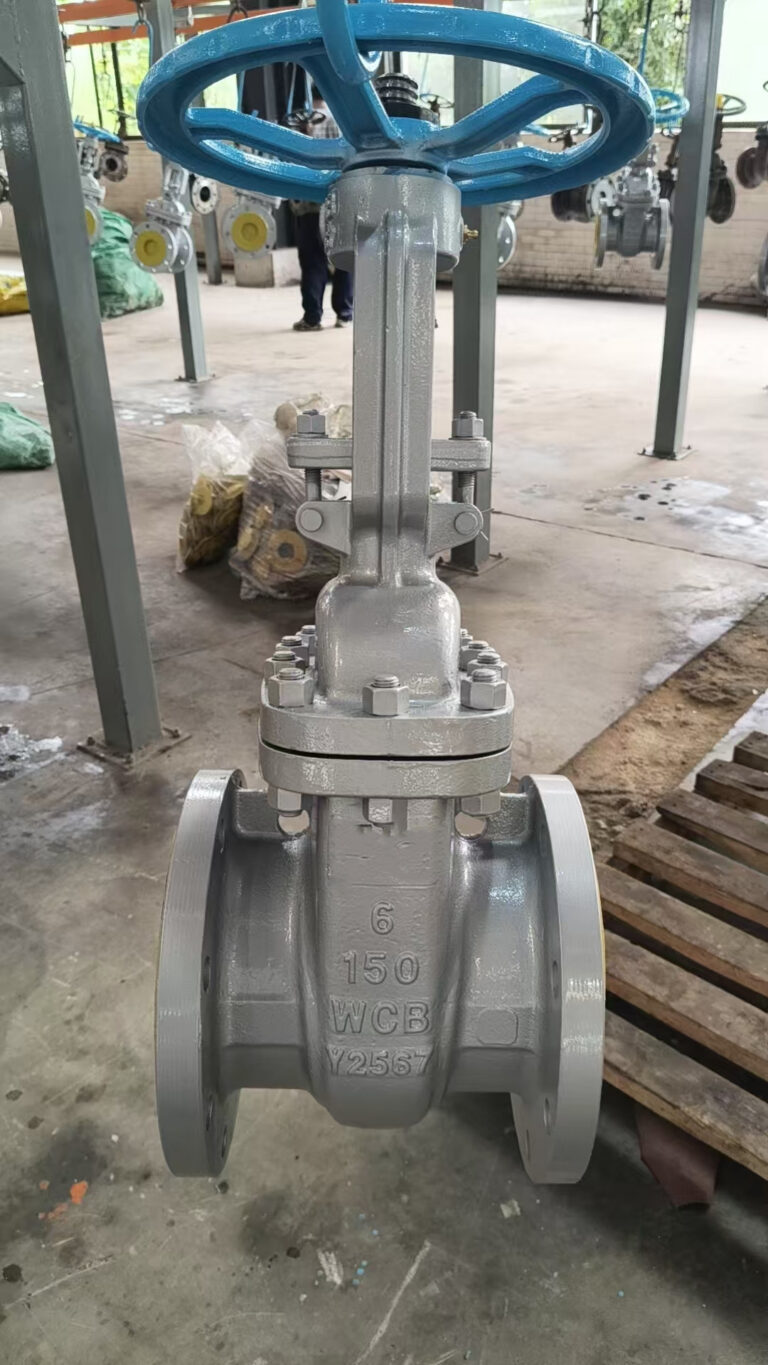
Matching actuation torques and connection standards to actual line conditions prevents site assembly rework.
Accounting for operating frequency prevents actuator undersizing. Valves cycled multiple times per hour require larger safety torque margins than valves that remain stationary for months at a time.
Selecting Pipeline Materials for Corrosive, High-Temperature, and Sanitary Fluids
Selecting appropriate body and trim metallurgy safeguards your installation against stress corrosion cracking, erosion, and galvanic degradation. Chinese industrial valve manufacturers offer an expansive range of materials ranging from basic carbon steel to exotic duplex alloys.
Wetted components, including the valve stem, disc, ball, and seat rings, must be chemically compatible with the line contents across the entire temperature spectrum. A material that performs well at ambient temperatures may rapidly corrode under elevated process heat.
Matching body and trim metallurgy to both the fluid chemistry and external site atmosphere prevents premature pitting, galvanic corrosion, and valve stem seizure in coastal or chemically aggressive processing plants.
Standard carbon steel grades like ASTM A216 WCB provide structural strength for steam, non-corrosive hydrocarbons, and cooling water circuits. In contrast, austenitic stainless steels like CF8M and 316 handle acidic streams and corrosive chemicals effectively.
For seawater intake lines and concentrated chloride environments, super duplex stainless steels or nickel alloys resist severe crevice attack. For sanitary food, beverage, or pharmaceutical lines, mechanically polished stainless steels with USP Class VI elastomer diaphragms prevent product contamination and bacteria buildup.
Standards, Certifications, and Quality Documentation to Request
Global flow-control operations rely on harmonized manufacturing codes to ensure dimensional interchangeability and pressure retention safety. Requesting verification against relevant technical standards before issuing purchase orders keeps off-spec valves out of your supply chain.
Reputable Chinese suppliers fabricate valves conforming to major American, European, and international piping codes. We advise buyers to explicitly state design, manufacturing, and face-to-face standards in every request for quotation:
- Design and Construction Codes: API 600 for steel gate valves, API 608 or API 6D for ball valves, and ASME B16.34 for pressure-temperature ratings.
- Flange and End Dimensions: ASME B16.5 for pipe flanges, ASME B16.25 for buttwelding ends, and EN 1092-1 for metric flange dimensions.
- Pressure Testing Protocols: API 598 or ISO 5208 covering shell test pressures, backseat tests, and seat closure leakage rates.
- Fugitive Emissions and Fire Testing: API 622/624 or ISO 15848 for stem packing emissions, alongside API 607 for fire-safe performance.
- Material Test Reports: EN 10204 Type 3.1 inspection certificates detailing chemical composition, heat numbers, and mechanical tensile tests.
Comprehensive inspection certificates confirm that delivered valve bodies match declared chemical and mechanical specifications.
Always verify that testing documentation references traceable heat numbers cast or stamped directly into each valve body. Traceability prevents uncertified scrap metal from entering critical pressure-containing assemblies.
How to Evaluate Chinese Valve Manufacturers
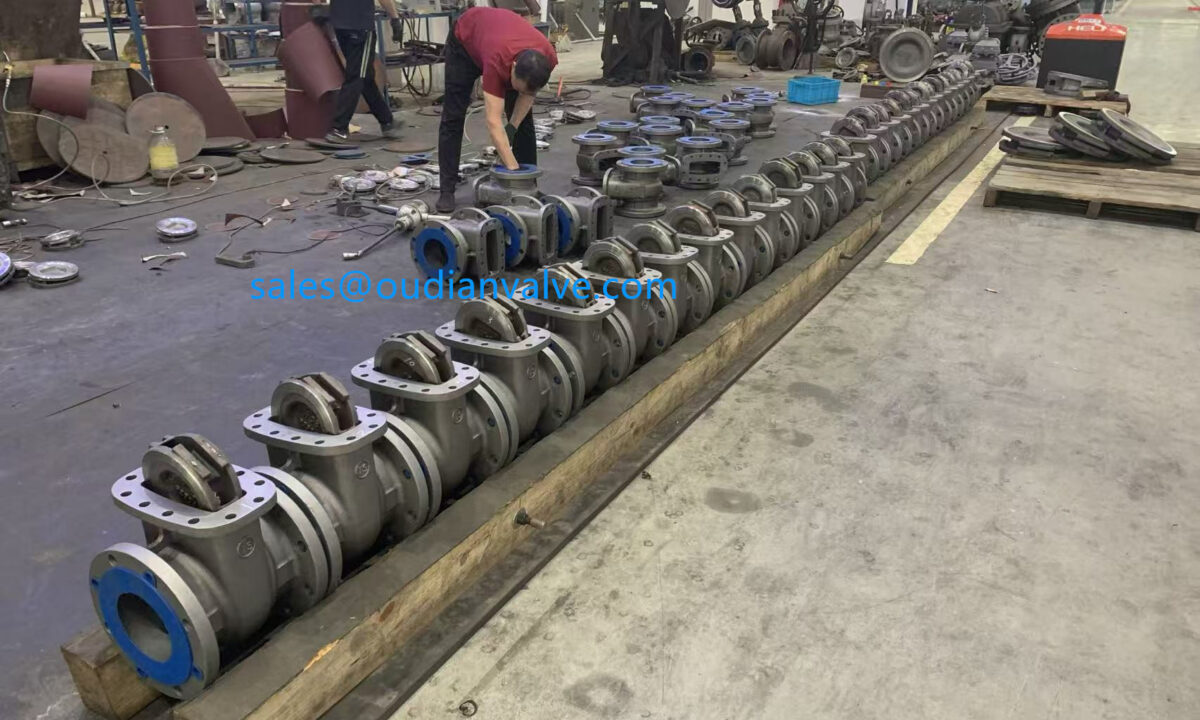
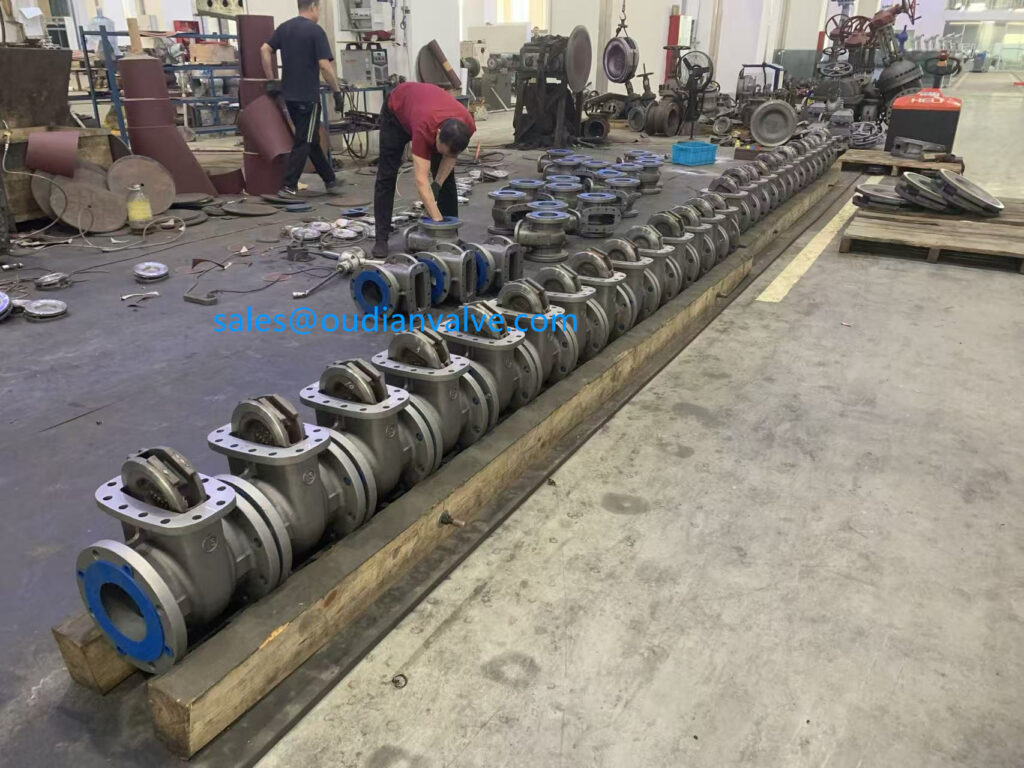
The valve manufacturing landscape in China includes both tier-one foundries with integrated computerized machining and small assembly shops. Thorough vendor vetting helps industrial buyers partner with credible facilities capable of sustained quality.
An effective evaluation reviews in-house manufacturing capabilities, welding procedures, and quality-management systems rather than sales literature alone. Direct manufacturer audits reveal whether critical processes are managed on-site or subcontracted across unmonitored third-party workshops.
Signs of a Capable Manufacturer
- Integrated foundry or dedicated partnership with certified casting suppliers.
- In-house CNC machining centers, automated welding, and pressure testing bays.
- Documented ISO 9001 quality systems and valid international valve certifications.
- Dedicated engineering team capable of producing detailed CAD and 3D modeling drawings.
Indicators of Elevated Supply Risk
- Reluctance to provide raw casting origin details or foundry test bars.
- Absence of on-site non-destructive testing and pressure-testing equipment.
- Vague replies regarding compliance with API, ASME, or Australian standards.
- Excessive reliance on external subcontractors for basic machining operations.
Investigating export history reveals whether a supplier understands overseas documentation, export packaging standards, and international maritime logistics. Experienced factories readily navigate custom crating and fumigation requirements without prompting.
Direct Manufacturers Versus Intermediaries
Procuring valves from China can involve dealing directly with the manufacturing facility, working through an export trading company, or utilizing third-party sourcing agents. Each commercial model offers distinct benefits depending on procurement volume and internal engineering bandwidth.
We work with international clients to evaluate supply chain structures, matching order complexity with the appropriate vendor relationship. Direct interaction with manufacturers offers technical depth, whereas intermediaries can simplify multi-product procurement.
| Partner Type | Engineering Depth | Pricing Structure | Operational Suitability |
| Direct Factory | High Technical Focus | Direct Factory Cost | Ideal for large projects, custom engineering, and standard valve package runs. |
| Trading Company | Variable to Moderate | Commercial Margin Added | Helpful for consolidating mixed commodity items from multiple small production lines. |
| Local Distributor | Regional Knowledge | Higher Markup Applied | Suitable for rapid delivery of stock valve models with local customer service. |
| Sourcing Agent | Logistics and Auditing | Fee or Commission | Useful for independent factory audits, language translation, and expediting. |
When purchasing complex actuated packages or valves intended for severe duty, working directly with the factory engineering team lowers the risk of communication gaps. Direct access allows your engineers to clarify tolerances and wall thickness details without intermediary misinterpretation.
Comparing Industrial Valve Quotations Beyond Price
The lowest purchase price rarely equates to the most economical procurement decision over a valve’s operational lifecycle. A low quote often reflects stripped-down casting weights, lower-grade packing seals, or skipped non-destructive testing steps.
When analyzing commercial offers, normalize every line item against identical mechanical specifications. A quote that includes heavy-duty packing rings, stainless steel fasteners, and comprehensive painting systems offers far better durability than an austere bare-metal alternative.
Review commercial proposals by comparing wall thickness calculations, trim metallurgy, testing inclusions, warranty provisions, and sea-freight packaging methods rather than headline purchase numbers.
Verify whether testing fees, hydrostatic witnessing, and standard export crating are included in the baseline figure. Furthermore, confirm the inclusion of operational spare parts, such as replacement seat inserts, stem packing sets, and bonnet gaskets, to simplify maintenance after site installation.

Pressure testing verification confirms body casting soundess and seat seal performance prior to export packaging.
Lead times should be reviewed alongside payment milestones. Realistic production schedules allow adequate windows for pattern making, casting pouring, heat treatment, precision machining, and multiple assembly tests.
Essential Quality Assurance and Pre-Shipment Inspection Protocols
Implementing a clear quality assurance protocol mitigates risk when sourcing industrial valves from China. Leaving testing and verification until equipment arrives at your destination port invites costly project delays if non-conforming items are uncovered.
We advise structuring purchase contracts around explicit inspection hold points. The following sequence establishes practical quality governance throughout the manufacturing and dispatch cycles:
- Technical Drawing and Datasheet Sign-Off: Review general arrangement drawings, bill of materials, and pressure-boundary wall thicknesses prior to production release.
- Raw Material Verification: Inspect EN 10204 Type 3.1 material test certificates and conduct positive material identification testing on castings and forgings.
- In-Process Factory Audits: Verify machining tolerances, seat surface grinding finishes, welding procedure qualifications, and welder certifications.
- Pre-Shipment Pressure Testing: Witness or commission independent third-party hydrostatic shell tests and low-pressure air seat tests per API 598.
- Coating and Packaging Review: Verify surface preparation, dry film paint thickness, flange face protective covers, and moisture-sealed wooden crating.
Third-party inspection agencies based in major manufacturing hubs like Wenzhou, Suzhou, or Shanghai can witness critical pressure tests and dimensional checks on your behalf. Receiving signed inspection release notes prior to commercial payment balances accountability across the transaction.
Common Sourcing Pitfalls and Preventive Measures
International valve buyers frequently encounter avoidable delays and operational challenges due to minor omissions during the bidding stage. Identifying these recurring failure modes allows your team to tighten procurement specifications.
One prevalent misstep involves specifying standard commercial valves for aggressive media without detailing trace chemical constituents. Even minor concentrations of dissolved chlorides, entrained sand, or dissolved gases can cause rapid pitting or seat tearing if internal trims are unsuited for the application.
Specifying incomplete process fluid data or neglecting to verify seat elastomer compatibility risks sudden pipeline leaks, environmental discharge, and costly unscheduled system shutdowns.
Another common mistake is overlooking actuator sizing margins. Valves operating under elevated differential pressures or handling particulate slurries require larger torque buffers to overcome breakaway resistance, particularly after remaining idle for extended periods.
Failing to specify flange face surface finishes can lead to mating gasket leaks during pipeline commissioning. Ensure drawings state whether raised faces require spiral serrated or smooth finishes matching your facility’s gasket standards.
Step-by-Step Selection Checklist and Supplier Inquiry Guide
A structured selection methodology keeps procurement operations aligned with piping design rules. Use this practical reference to guide technical inquiries when contacting valve manufacturers in China.
Applying this checklist before requesting bids helps streamline technical reviews and clarifies expectations between purchasing teams and engineering staff:
- Define Process Requirements: Document media composition, phase, normal operating pressure, peak surge pressure, temperature range, and flow velocity.
- Select Valve Body and Trim: Choose closure geometry, seating material (resilient soft seat vs. hardfaced metal), and compatible body metallurgy.
- Determine Piping Connection Standards: Confirm nominal pipe size, schedule, flange pressure class, facing finish, or weld preparation bevels.
- Clarify Actuation Mechanics: Specify manual handwheel, geared operator, pneumatic actuator, or electric motorized drive with required fail-safe mode.
- Mandate Testing and Certifications: Require API 598 hydrostatic testing, fugitive emissions compliance, fire-safe certification, and material traceability.
- Establish Shipping and Packaging Terms: Define crating requirements, desiccants, flange protectors, and Incoterms responsibilities.
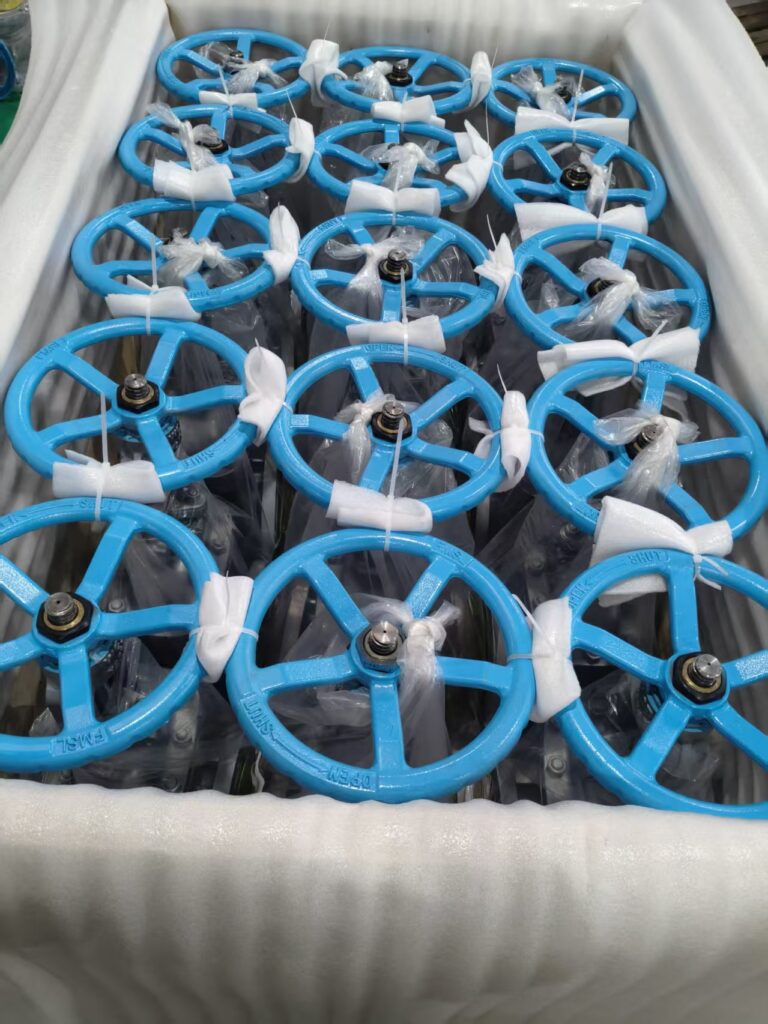
Proper end protection covers and durable crating preserve critical seating surfaces and flange faces during maritime transit.
When opening dialogue with potential suppliers, submit precise technical questions. Inquire directly about in-house pressure-testing capacities, foundry origins for pressurized castings, and typical turnaround times for custom engineering submittals.
Engineering Consultation for High-Pressure and Hazardous Systems
Flow systems handling lethal media, volatile hydrocarbons, cryogenic liquids, or extreme steam pressures carry significant operational risks. In these severe applications, standard catalogue valve selections are insufficient to prevent catastrophic containment losses.
We advise engineering teams to consult a qualified piping engineer or flow-control specialist whenever designing safety-critical installations. Professional engineering reviews identify complex mechanical phenomena, such as water hammer, thermal expansion binding, and acoustic vibration, before fabrication begins.
Systems involving toxic chemicals, severe cyclic fatigue, or elevated pressure classes demand thorough piping stress analysis and independent third-party design verification by a certified professional engineer.
Qualified engineers evaluate safety integrity levels, relief valve sizing calculations, and automated emergency shutdown protocols. Engaging professional technical support protects plant personnel, regional environments, and capital infrastructure over the entire service life of the piping system.
Frequently Asked Questions
What is the difference between a direct valve manufacturer and a trading company?
A direct manufacturer owns production facilities, machine shops, and testing bays, providing direct technical control over fabrication. A trading company acts as an intermediary consolidating items from independent factories, offering broader catalogs but less direct engineering oversight.
Which material test certificates should buyers request from Chinese suppliers?
Buyers should request EN 10204 Type 3.1 material test certificates showing documented chemical analysis and mechanical tensile test results. These certificates link specific foundry heats directly to the heat numbers stamped or cast on each valve body.
Why are pressure testing standards like API 598 critical during procurement?
Standards like API 598 define mandatory test pressures, durations, and permissible leakage thresholds for both valve shell and internal seat seals. Mandating this protocol verifies that valve assemblies contain pipeline pressures safely before leaving the manufacturing floor.
How does operating frequency influence industrial valve selection?
Valves cycled repeatedly experience higher seat friction, packing wear, and mechanical fatigue, requiring durable stem packing systems and larger actuator sizing margins. Valves left open or closed for extended periods require corrosion-resistant trims to avoid stem seizure when operated.
What steps help prevent shipping damage when sourcing valves from overseas?
Specifying heavy-duty wooden crating, internal desiccant bags, sealed plastic wrapping, and rigid plastic flange face covers prevents corrosion and mechanical damage during maritime transit. Requiring photo documentation of export packaging prior to container loading confirms proper preparation.
Building Reliable Industrial Flow Systems
Selecting appropriate industrial valves in China relies on disciplined technical specification, material compatibility analysis, and rigorous quality auditing throughout production. Matching internal closure mechanics to real pipeline operating demands preserves process stability while controlling total lifecycle maintenance costs. By partnering with vetted manufacturing facilities and mandating standardized pressure testing protocols, engineering teams construct safe, efficient, and dependable flow-control infrastructure.



