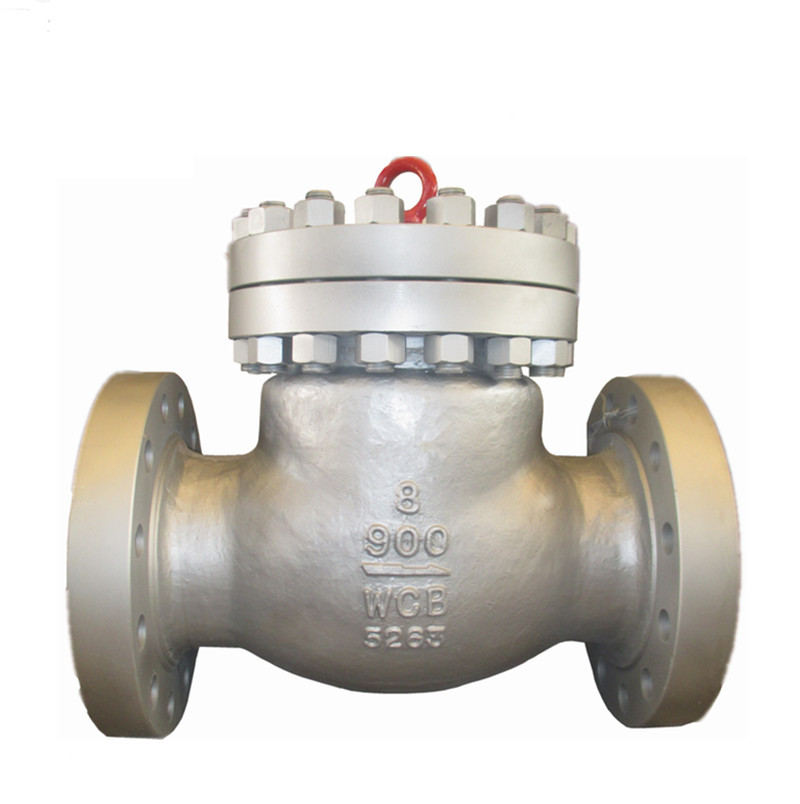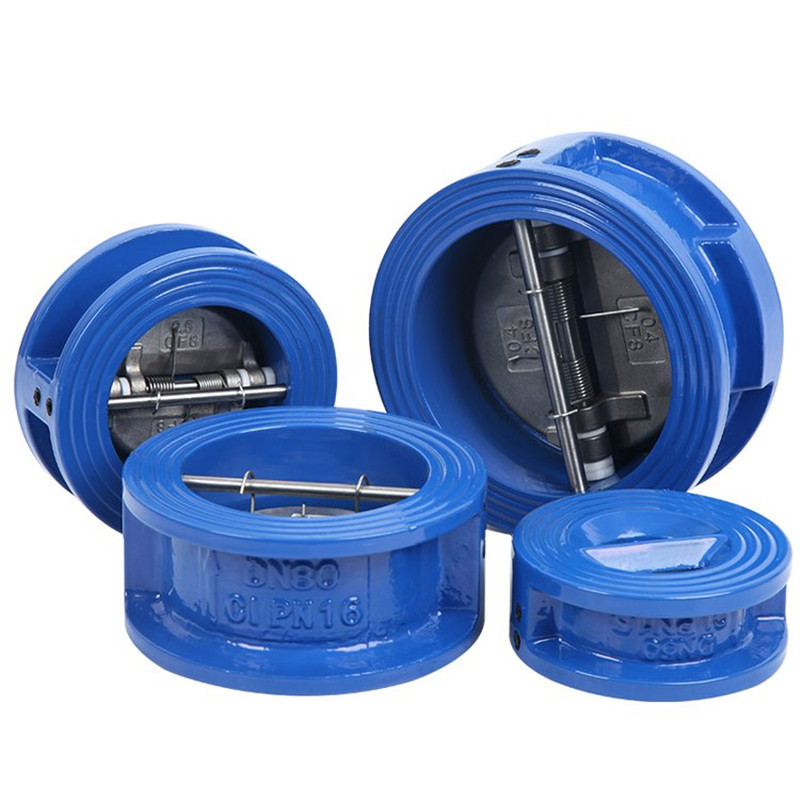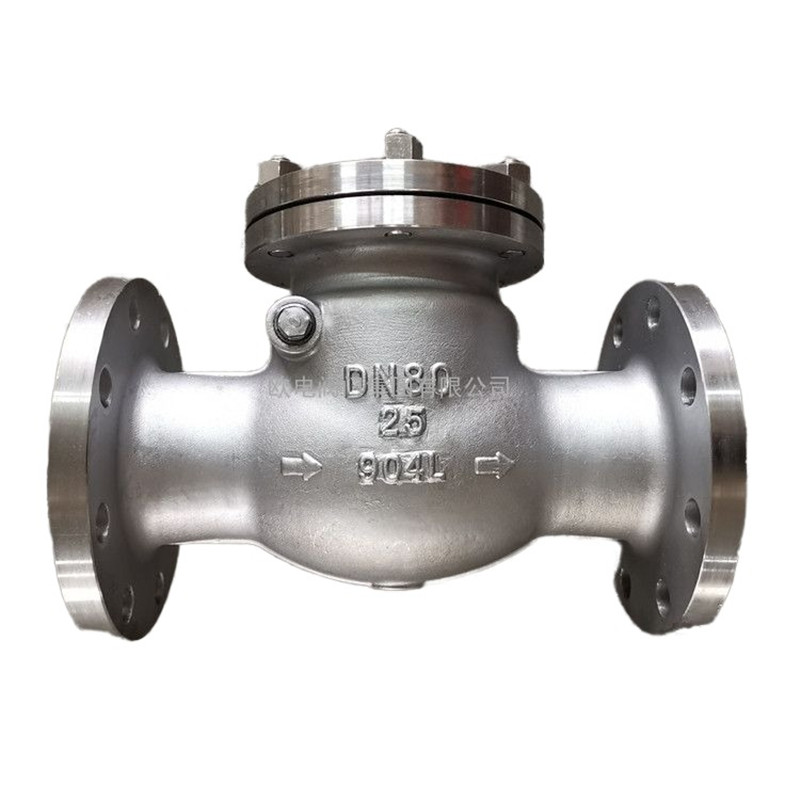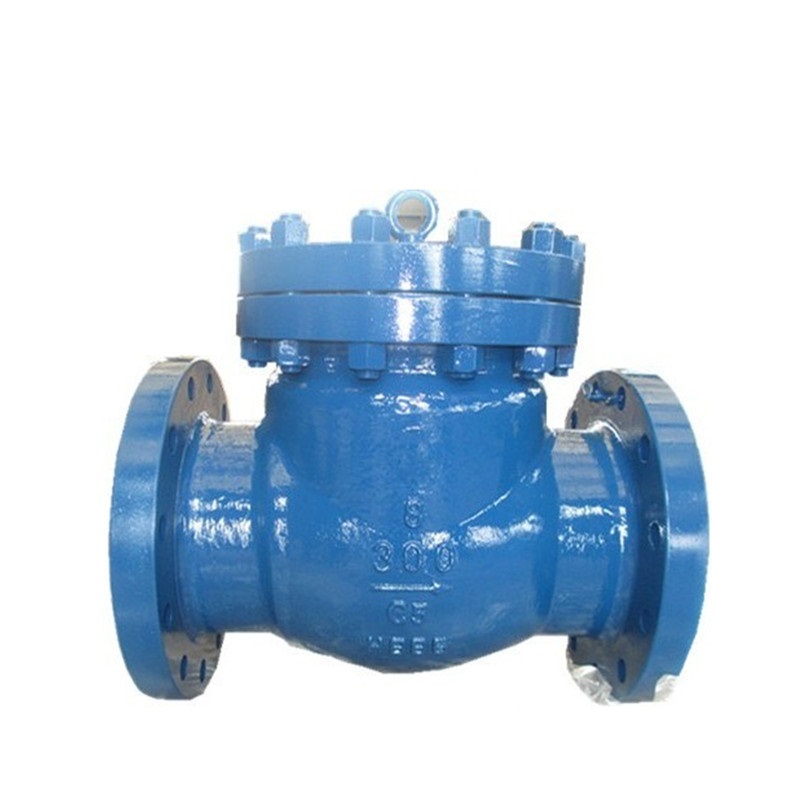


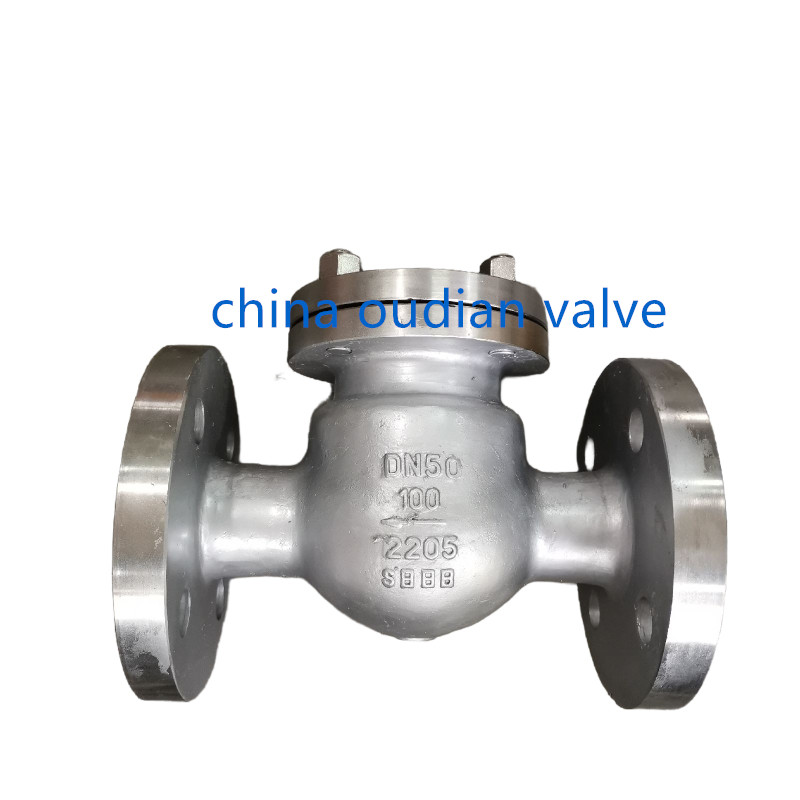
PN100 2205 Check Valve,DN50,RF End
China 2205 Check Valve, PN100 2205 Check Valve,DN50 2205 Check Valve,RF End 2205 Check Valve,2205 Check Valve Factory
PN100 2205 Check Valve
Material: 2205 Duplex Stainless Steel
- Standard: UNS S32205, EN 1.4462, ASTM A182 F51 / A351 CD4MCU
- Composition: Cr 22%, Ni 5%, Mo 3%, N 0.14–0.20% — dual‑phase microstructure (50% austenite + 50% ferrite)
- Core Advantages:
High Strength: Yield strength ≥ 450 MPa — 2× stronger than 316L → thinner wall, compact design, safe for PN100 high pressure
Superior Corrosion Resistance: PREN ≈ 35–38 — far better pitting & crevice resistance than 316L/317L; excellent in chlorides, seawater, brine, brackish water, H₂S/sour service, dilute acids
Stress Corrosion Cracking (SCC) Resistance: Highly resistant to chloride & sulfide SCC — main reason for choosing over 316L
Interval de temperatură: ‑50°C ~ +300°C; avoid >320°C (risk of embrittlement)
- Limit: Not suitable for strong reducing acids (pure HCl, dilute H₂SO₄ <70°C) or concentrated oxidizing media; avoid <‑50°C (low‑toughness risk)
Full Specifications
Basic Data
- Model:
- H41W‑100 2205: Lift‑type check valve (flanged, vertical/horizontal)
- H44W‑100 2205: Swing‑type check valve
- H42W‑100 2205: Axial flow / Piston / Spring‑loaded check valve (best for high pressure PN100)
- H45W: Y‑type check valve
- Pressure Rating: PN100 (100 bar / 10.0 MPa) — heavy‑duty high‑pressure class
- Dimensiune: DN15 – DN300 (½″ – 12″); PN100 available up to DN200 as standard
- Standarde de proiectare:
- DIN 3356, EN 12516, API 6D, ASME B16.34, GB/T 12236
- Face‑to‑Face: DIN 3202, ASME B16.10
- Flange: DIN 2543–2545, EN 1092‑1, ASME B16.5 (PN100 = thick‑wall, high‑strength flanges, RTJ/RF face)
- Test Standard: API 598, EN 12266‑1, ISO 5208
- Shell test: 150 bar; Seat test: 110 bar; Leakage Rate A (zero leakage)
Standard Material BOM
| Part | Material | Note |
|---|---|---|
| Body / Bonnet / Cover | 2205 Duplex (S32205 / 1.4462) | Forged preferred for PN100; cast CD4MCU available for larger sizes |
| Disc / Gate / Piston / Seat | 2205 | Solid; Stellite 6 hardface optional for high‑wear / high‑velocity service |
| Spring | Alloy C‑276 / X‑750 / 2507 | 316L spring will fail rapidly — high pressure + corrosion |
| Gasket | Spiral‑wound: 2205 winding + graphite filler or solid 2205 gasket | Never use 316L — galvanic risk |
| Seal / O‑Ring | PTFE, Graphite, Kalrez® (FFKM) | ≤ 200°C: PTFE; > 200°C: Graphite/metal |
| Fasteners | 2205 / 2507 / Alloy 718 | Carbon steel / 304/316 forbidden |
| Pin / Shaft / Trunnion | 2205 or 2507 | Anti‑galling, high strength |
Key Advantages for PN100 Service
- High Pressure + Corrosion Resistance Combined:
- PN100 requires very high material strength — 2205 delivers this while resisting corrosion that carbon steel or 316L cannot handle
- Perfect for high‑pressure pipelines with chlorides, brine, or sour gas
- Compact & Lightweight:
- Higher strength means thinner wall thickness vs 316L/904L → smaller footprint, easier installation, lower weight
- Fast & Reliable Non‑Return:
- Spring‑loaded / axial‑flow design preferred for PN100: closes instantly, minimizes water hammer
- Bidirectional sealing capability; zero reverse leakage
- Cost‑Performance Leader:
- ~60–80% more expensive than 316L, but 1/2 to 1/3 the cost of 2507 / C4 / Titanium
- Best balance of strength, corrosion resistance, and price for high‑pressure chloride service
Recommended Valve Type for PN100
- Axial Flow / Piston / Spring‑Loaded (H42W) — TOP CHOICE:
- Compact, short face‑to‑face, suitable for any installation position
- Spring‑assisted closing → very low pressure drop, fast response, minimal water hammer
- Best for high pressure, high velocity, gas/liquid mixed service
- Lift‑Type (H41W): Good, but higher pressure drop; best for horizontal lines
- Swing‑Type (H44W): Not ideal for PN100 — bulky, slow closing, heavy, high torque; use only for large DN low‑velocity
Comparison: 2205 vs 316L / 904L / 2507 / TA2 (PN100 Rating)
| Parametru | 316L | 904L | 2205 | 2507 | TA2 |
|---|---|---|---|---|---|
| Strength (Yield) | 170 MPa | 215 MPa | 450 MPa | 550 MPa | 275 MPa |
| PN100 Suitability | Too weak | Too weak | Excellent | Best | Needs special design |
| Chloride Resistance | Poor | Good | Very Good | Excellent | Excellent |
| Sour Service (H₂S) | Fail | Limited | Good | Excellent | Fail |
| Reducing Acids | Poor | Excellent | Fair | Fair | Fail |
| Relative Cost | 1.0x | 3.0x | 2.2x | 4.0x | 5.0x |
| Best For PN100 | — | — | Standard choice | Severe corrosion | — |
Rule:High pressure (≥ PN63) + chloride / seawater / sour gas → 2205 is default selection; upgrade to 2507 only if chloride > 10,000 ppm or extreme corrosion
Installation & Operation Rules
- Flow Direction: Arrow marked on body — install strictly in flow direction
- Orientation:
- Spring‑loaded / Axial: Any orientation (horizontal/vertical)
- Swing‑type: Install only horizontal, pin axis horizontal
- Galvanic Isolation: 2205 is noble alloy. Do NOT connect directly to carbon steel. Use insulating gaskets or 2205 spool pieces.
- Welding: Use filler ER2205 / 1.4462; controlled heat input (10–25 kJ/cm); interpass temp < 150°C; NO post‑weld heat treatment needed
- Temperature: ≤ 300°C continuous; above this, strength drops and embrittlement risk increases
- Avoid: Media containing hydrofluoric acid, pure hydrochloric acid, or strong reducing acids
FAQ: PN100 2205 Check Valve
A: 316L yield strength is only 170 MPa — to reach PN100 it would need extremely thick walls (heavy, expensive, still low corrosion resistance). 2205 = 2× strength + far better corrosion → perfect match for PN100.
A: In most cases YES. 2205 covers 80% of duplex applications at ~55% cost of 2507. Upgrade to 2507 only if: chloride > 15,000 ppm, high‑temperature brine, or extreme sour service.
A: Standard: DN15 – DN200. DN250–DN300 PN100 is custom forged, available but higher cost.
A: In high‑pressure seawater/brine: 10–15 years; 3–4× longer than 316L.
PN100 2205 Check Valve is the standard industry solution for high‑pressure corrosion service. It offers the optimal mix of strength, corrosion resistance, availability, and economy — exactly what you need for pipelines where pressure is high and stainless steel would corrode.