


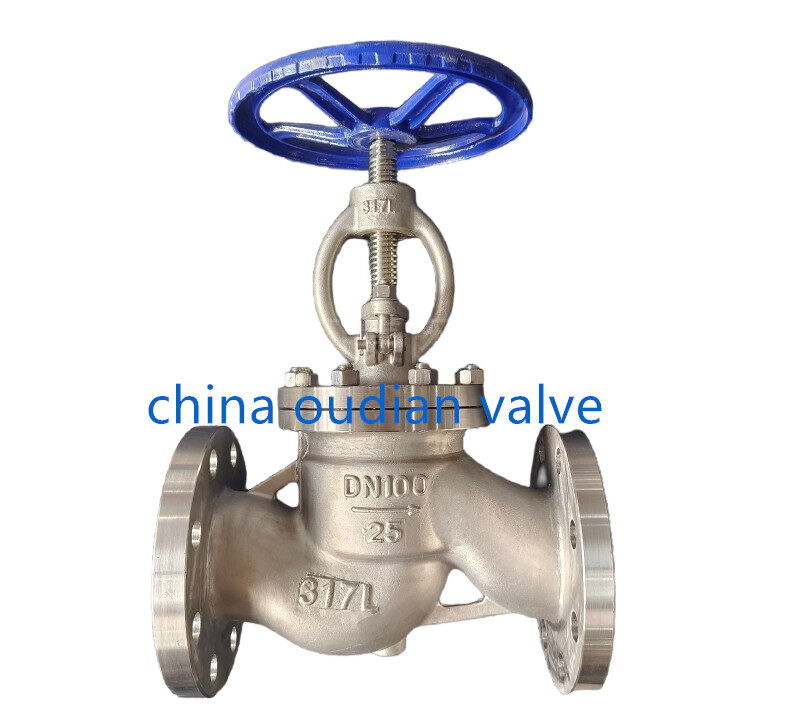
How Does a Globe Valve Work? Flow Path & Shutoff
Introdução
Globe valves are one of the most commonly used valves in industrial piping systems, especially in applications requiring accurate flow regulation and reliable shutoff performance. Known for their excellent throttling capability, globe valves are widely used in steam systems, chemical plants, oil and gas facilities, power stations, HVAC systems, and water treatment applications.
Understanding how a globe valve works is essential for engineers, maintenance personnel, and system designers. The valve’s internal flow path and shutoff mechanism directly influence pressure drop, control accuracy, sealing performance, and operational efficiency.
This article explains the working principle of globe valves, their internal flow path, shutoff operation, major components, and common applications.
What Is a Globe Valve?
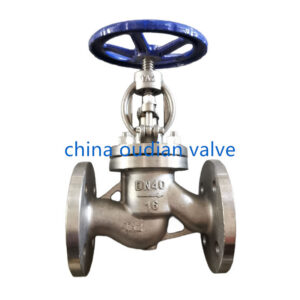
A globe valve is a linear motion valve designed to regulate, start, or stop fluid flow. The valve uses a movable disc or plug that travels perpendicular to the seat to control the opening inside the valve body.
Unlike quarter-turn valves such as ball or butterfly valves, globe valves operate through multiple stem rotations that gradually move the disc toward or away from the seat.
The name “globe valve” comes from the original spherical shape of the valve body, although modern designs are available in many body configurations.
Main Components of a Globe Valve
To understand how a globe valve works, it is important to know its primary components.
1. Valve Body
The valve body is the pressure-containing outer shell that houses all internal components and directs fluid flow.
2. Bonnet
The bonnet connects to the valve body and encloses the stem and packing assembly.
3. Stem
The stem transfers motion from the actuator or handwheel to the disc.
4. Disc or Plug
The disc moves up and down to regulate or stop flow.
5. Seat Ring
The seat provides the sealing surface where the disc closes to stop fluid flow.
6. Handwheel or Actuator
The handwheel or actuator operates the valve manually or automatically.
How Does a Globe Valve Work?
A globe valve controls flow by moving the disc vertically relative to the seat opening.
When the handwheel rotates:
- The stem moves upward or downward
- The disc either lifts away from the seat or presses against it
- The flow area changes accordingly
This linear movement allows precise control over fluid flow rates.
Globe Valve Open Position
When the valve is opened:
- The stem lifts the disc away from the seat
- Fluid flows through the opening between the disc and seat
- Increasing the opening increases flow rate
The degree of opening determines how much fluid passes through the valve.
Because globe valves allow gradual opening adjustments, they are excellent for throttling applications.
Globe Valve Closed Position (Shutoff)
When the valve closes:
- The stem pushes the disc downward
- The disc contacts the seat ring
- The flow path becomes sealed
This shutoff mechanism blocks fluid flow through the pipeline.
The sealing effectiveness depends on:
- Seat material
- Disc design
- Surface finish
- Operating pressure
- Proper alignment
Globe valves are capable of providing very tight shutoff performance when properly maintained.
Understanding the Globe Valve Flow Path
One of the defining characteristics of a globe valve is its internal flow path.
Unlike straight-through valves, the fluid changes direction inside the valve body.
A typical globe valve flow path involves:
- Fluid entering beneath the seat
- Flow changing direction upward through the seat opening
- Fluid changing direction again before exiting the valve
This complex flow path creates turbulence and pressure drop.
Why the Flow Path Matters
The internal flow path affects several important performance factors.
1. Excellent Throttling Control
The restricted flow area allows precise flow modulation.
Small stem movements create controlled changes in flow rate.
2. Higher Pressure Drop
The multiple directional changes increase flow resistance and energy loss.
Compared to gate or ball valves, globe valves generate greater pressure drop.
3. Improved Shutoff Performance
The perpendicular seating action creates strong sealing force between the disc and seat.
This helps achieve reliable shutoff capability.
Types of Globe Valve Body Designs
Different globe valve body patterns affect flow characteristics and pressure drop.
1. Z-Pattern Globe Valve
The Z-pattern is the most common design.
Characteristics:
- Highest pressure drop
- Excellent shutoff performance
- Good throttling capability
Applications:
- General industrial service
- Steam systems
2. Y-Pattern Globe Valve
The Y-pattern reduces flow resistance by angling the stem and seat.
Vantagens:
- Lower pressure drop
- Better flow efficiency
Applications:
- High-pressure service
- High-temperature systems
3. Angle Globe Valve
The angle pattern changes the outlet direction by 90 degrees.
Vantagens:
- Simplified piping layout
- Reduced number of fittings
Applications:
- Pulsating flow systems
- Boiler feedwater systems
Flow Direction in Globe Valves
Globe valves are often designed with a preferred flow direction indicated by an arrow on the valve body.
Two common configurations include:
Flow Under the Seat
Fluid enters beneath the disc.
Vantagens:
- Easier opening
- Reduced stem load
Common in throttling service.
Flow Over the Seat
Fluid enters above the disc.
Vantagens:
- Better shutoff at high pressure
- Reduced disc lifting during closure
Common in high-temperature and high-pressure applications.
Correct installation is essential for proper valve performance.
Globe Valves for Throttling Applications
One of the main reasons globe valves are widely used is their excellent throttling capability.
They are ideal for:
- Flow regulation
- Pressure control
- Steam control
- Cooling water systems
- Chemical dosing
The linear movement of the disc provides accurate and repeatable control.
Advantages of Globe Valves
Globe valves offer several important benefits:
Precise Flow Control
Ideal for throttling and regulating applications.
Reliable Shutoff
Provides strong sealing performance.
Good Pressure Control
Handles varying process conditions effectively.
Wide Material Availability
Available in materials suitable for corrosive, high-temperature, and high-pressure applications.
Limitations of Globe Valves
Despite their advantages, globe valves also have some disadvantages.
Higher Pressure Drop
The internal flow path creates greater resistance compared to straight-through valves.
Larger Operating Force
More force is required to open and close the valve under pressure.
Slower Operation
Linear motion requires multiple turns for full operation.
Common Applications of Globe Valves
Globe valves are commonly used in:
- Steam systems
- Power plants
- Chemical processing
- Oil and gas facilities
- HVAC systems
- Water treatment plants
- Fuel oil systems
- Boiler feedwater systems
They are especially useful where precise flow control is critical.
Maintenance Considerations
Proper maintenance helps ensure reliable globe valve operation.
Important maintenance tasks include:
- Inspecting seat and disc surfaces
- Monitoring packing leakage
- Lubricating moving components
- Checking actuator performance
- Replacing worn trim parts
Routine maintenance extends valve service life and improves sealing performance.
Conclusão
Globe valves work by moving a disc vertically against a seat to regulate or stop fluid flow. Their unique internal flow path provides excellent throttling capability and reliable shutoff performance, making them one of the most important valves in industrial flow control systems.
Although the directional flow changes create higher pressure drop, the advantages of accurate flow regulation and dependable sealing often outweigh this limitation.
By understanding the flow path, shutoff mechanism, and design variations of globe valves, engineers can select the right valve configuration for efficient and reliable system operation.
Frequently Asked Questions (FAQ) About Globe Valve Selection
1. What is a globe valve used for?
A globe valve is primarily used for regulating, throttling, and controlling fluid flow in a piping system. It can also provide reliable shutoff service in applications requiring accurate flow control.
Common industries using globe valves include:
- Oil and gas
- Power generation
- Chemical processing
- Water treatment
- HVAC systems
- Steam distribution
2. Why are globe valves preferred for throttling applications?
Globe valves are designed with a linear motion disc and seat arrangement that allows precise adjustment of the flow opening.
Advantages for throttling include:
- Accurate flow regulation
- Stable control performance
- Smooth operation
- Reliable pressure management
This makes globe valves ideal for modulating service.
3. What are the main types of globe valves?
The three common globe valve body designs are:
Z-Pattern Globe Valve
- Most common design
- Excellent shutoff capability
- Maior queda de pressão
Y-Pattern Globe Valve
- Lower pressure drop
- Better flow efficiency
- Suitable for high-pressure systems
Válvula globo angular
- Changes flow direction by 90°
- Reduces piping fittings
- Good for pulsating flow systems
4. What factors should be considered when selecting a globe valve?
Important selection factors include:
- Fluid type
- Operating pressure
- Faixa de temperatura
- Required flow rate
- Pressure drop
- Valve size
- Material compatibility
- End connection type
- Actuation method
Proper evaluation ensures reliable long-term performance.
5. How does pressure drop affect globe valve selection?
Globe valves naturally create higher pressure drop because the fluid changes direction inside the valve body.
Excessive pressure drop may cause:
- Increased energy consumption
- Pump overload
- Cavitation
- Noise and vibration
Engineers must balance control performance with acceptable flow resistance.
6. What is Cv in globe valve selection?
Cv, or flow coefficient, measures the valve’s flow capacity.
It indicates how much fluid can pass through the valve under a specific pressure drop.
A properly selected Cv helps achieve:
- Stable control
- Efficient flow regulation
- Reduced wear
- Improved energy efficiency
7. How do I choose the correct globe valve size?
Valve sizing depends on:
- Flow rate
- Pressure conditions
- Fluid properties
- Desired control range
Oversized valves may reduce control accuracy, while undersized valves may create excessive pressure drop.
Most control valves perform best when operating between 20% and 80% open.
8. Which materials are commonly used for globe valves?
Common body materials include:
- Cast iron
- Ductile iron
- Carbon steel
- Stainless steel
- Bronze
- Alloy steel
Material selection depends on pressure, temperature, and corrosion resistance requirements.
9. What is the difference between soft-seated and metal-seated globe valves?
Soft-Seated Globe Valves
- Use elastomer or PTFE seating
- Provide tight shutoff
- Suitable for lower temperatures
Metal-Seated Globe Valves
- Designed for high temperatures and severe service
- More resistant to wear and erosion
- Common in steam and high-pressure systems
10. Can globe valves be used for on/off service?
Yes. Globe valves can provide reliable shutoff performance. However, they are primarily designed for throttling and flow regulation.
For applications requiring minimal pressure drop in full-open conditions, gate or ball valves may be more efficient.
11. What end connections are available for globe valves?
Common globe valve end connections include:
- Flanged ends
- Threaded ends
- Socket weld ends
- Butt weld ends
The correct choice depends on system pressure, temperature, and maintenance requirements.
12. What is the difference between manual and actuated globe valves?
Manual Globe Valves
- Operated by handwheel
- Suitable for infrequent adjustments
Actuated Globe Valves
Use:
- Pneumatic actuators
- Electric actuators
- Hydraulic actuators
Suitable for automated process control systems.
13. Are globe valves suitable for high-temperature applications?
Yes. Metal-seated globe valves made from alloy steel or stainless steel are commonly used in:
- Steam systems
- Power plants
- High-temperature industrial processes
Proper material selection is essential for thermal resistance.
14. What causes globe valve leakage?
Common causes include:
- Worn seat or disc
- Damaged packing
- Corrosion
- Improper installation
- Excessive pressure or temperature
- Debris accumulation
Routine maintenance helps prevent leakage issues.
15. How do I reduce pressure drop in a globe valve system?
Pressure drop can be minimized by:
- Choosing Y-pattern globe valves
- Proper valve sizing
- Using smooth piping layouts
- Avoiding excessive throttling
- Selecting optimized trim designs
These measures improve system efficiency.
16. What industries commonly use globe valves?
Globe valves are widely used in:
- Power generation
- Oil and gas
- Petrochemical plants
- Water treatment
- HVAC systems
- Marine applications
- Pharmaceutical industries
They are especially useful where accurate flow control is required.
17. What is cavitation in a globe valve?
Cavitation occurs when pressure drops below the fluid vapor pressure, creating vapor bubbles that collapse violently.
This can cause:
- Noise
- Vibration
- Trim erosion
- Reduced valve lifespan
Proper valve sizing and trim selection help minimize cavitation.
18. How often should globe valves be maintained?
Maintenance frequency depends on:
- Operating conditions
- Media type
- Temperature and pressure
- Cycle frequency
Critical control valves may require regular inspections and preventive maintenance schedules.
19. What are the advantages of globe valves compared to gate valves?
Globe valves provide:
- Better throttling capability
- More accurate flow control
- Improved shutoff performance
However, gate valves generally offer lower pressure drop in fully open service.
20. How do I know which globe valve is best for my application?
The best globe valve depends on:
- Process conditions
- Fluid characteristics
- Control requirements
- Pressure and temperature ratings
- Maintenance expectations
- Budget
Working with valve manufacturers or engineering specialists can help ensure proper valve selection and long-term reliability.