

Globe Valve Pressure Drop and Cv: Why Flow Resistance Matters in Valve Selection
Introdução
In industrial fluid control systems, valve selection is far more than choosing the correct size or pressure rating. Engineers must also evaluate how a valve influences flow resistance, energy consumption, and overall process efficiency. Among the many valve types used in piping systems, globe valves are widely recognized for their excellent throttling performance and precise flow regulation. However, they also generate a relatively high pressure drop compared to other valve designs.
Understanding the relationship between pressure drop and flow coefficient (Cv) is essential when selecting a globe valve for any application. An incorrect valve choice can lead to excessive energy loss, unstable control performance, increased operating costs, and premature equipment wear.
This article explores how globe valves create flow resistance, explains the importance of Cv values, and discusses why pressure drop matters in valve selection.
What Is a Globe Valve?
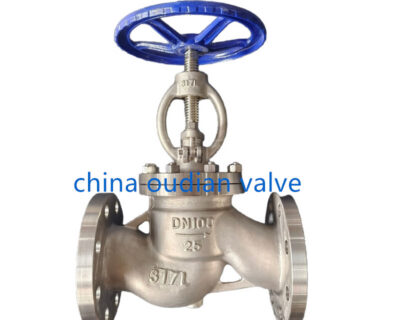
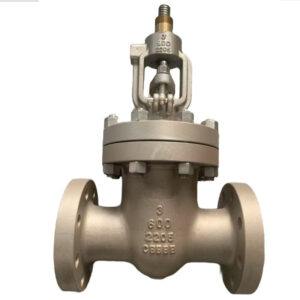
A globe valve is a linear motion valve designed primarily for regulating flow. Its internal structure forces fluid to change direction as it passes through the valve body, allowing precise throttling and flow control.
The main components include:
- Valve body
- Bonnet
- Disc or plug
- Seat ring
- Tronco
- Actuator or handwheel
Unlike gate valves, which are mainly used for on/off isolation, globe valves are specifically engineered for modulating service. They are commonly found in:
- Sistemas de vapor
- Cooling water lines
- Chemical processing plants
- Instalações de petróleo e gás
- Power generation systems
- HVAC applications
Because of their internal flow path design, globe valves naturally create more resistance to fluid flow.
Understanding Pressure Drop in Globe Valves
Pressure drop refers to the reduction in fluid pressure as the fluid passes through a valve. It occurs because the valve restricts and redirects the flow, causing friction and turbulence.
In a globe valve, the fluid typically changes direction multiple times:
- Entering the valve body
- Passing through the seat opening
- Exiting through another directional turn
These directional changes create turbulence and energy loss, resulting in a higher pressure drop compared to valves such as ball valves or gate valves.
The pressure drop can be represented as:
\Delta P = P_1 – P_2
Where:
- ΔP = Pressure drop
- P₁ = Upstream pressure
- P₂ = Downstream pressure
A higher pressure drop means the system requires more pumping power or compressor energy to maintain the desired flow rate.
What Is Cv (Flow Coefficient)?
Cv, or flow coefficient, is one of the most important parameters in valve sizing and selection. It indicates how much flow can pass through a valve under specific conditions.
By definition:
Cv is the number of U.S. gallons of water per minute that will flow through a valve with a 1 psi pressure drop at 60°F.
The basic relationship is:
Q = C_v \sqrt{\frac{\Delta P}{SG}}
Where:
- Q = Flow rate
- Cv = Flow coefficient
- ΔP = Pressure drop
- SG = Specific gravity of the fluid
A larger Cv value means the valve allows greater flow with less resistance.
Why Globe Valves Have Lower Cv Values
Compared to ball valves or butterfly valves, válvulas globo generally have lower Cv values for the same pipe size. This is due to their internal geometry.
Several design factors contribute to lower Cv:
1. Tortuous Flow Path
The fluid must change direction inside the valve body, increasing turbulence and friction losses.
2. Restricted Seat Opening
The seating arrangement narrows the flow area, especially during throttling operation.
3. Flow Obstruction
The plug and seat remain partially within the flow stream, creating additional resistance.
As a result, globe valves trade higher pressure loss for superior control accuracy.
The Relationship Between Pressure Drop and Valve Performance
Pressure drop directly affects system efficiency and valve behavior. Engineers must balance control performance with energy consumption.
Stable Flow Control
A moderate pressure drop across a globe valve improves controllability and flow stability. This is why globe valves are preferred in control applications.
Without sufficient pressure drop:
- Flow control may become unstable
- The valve may operate near closed position
- Small stem movements may cause large flow variations
Excessive Energy Consumption
Too much pressure drop increases pump or compressor workload, leading to:
- Higher energy costs
- Reduced system efficiency
- Increased equipment wear
Cavitation and Flashing Risks
When pressure drops too rapidly, fluid vapor bubbles may form and collapse violently inside the valve.
This phenomenon, known as cavitation, can cause:
- Noise
- Vibration
- Seat damage
- Reduced valve lifespan
Proper Cv selection helps minimize these risks.
How to Select the Right Globe Valve Cv
Choosing the correct Cv is critical for achieving both process control and energy efficiency.
Step 1: Determine Process Conditions
Collect operating data including:
- Taxa de fluxo
- Inlet pressure
- Outlet pressure
- Tipo fluido
- Temperature
- Pipe size
Step 2: Calculate Required Cv
Use the standard Cv formula to estimate the required valve capacity.
Step 3: Avoid Oversized Valves
Oversized globe valves often operate nearly closed, reducing control accuracy and increasing vibration risk.
A properly sized valve typically operates between 20% and 80% open during normal conditions.
Step 4: Consider Future Operating Conditions
Systems may experience changing flow demands. Engineers should evaluate:
- Startup conditions
- Maximum flow scenarios
- Partial load operation
Comparing Globe Valves with Other Valve Types
| Tipo de válvula | Flow Resistance | Cv Value | Throttling Performance |
|---|---|---|---|
| Válvula globo | Alto | Mais baixo | Excellent |
| Válvula de esfera | Baixo | Alto | Limited |
| Válvula de gaveta | Muito baixo | Very High | Poor |
| Válvula borboleta | Moderate | Moderate to High | Good |
This comparison highlights why globe valves are favored for precise control despite their higher pressure drop.
Applications Where Pressure Drop Is Acceptable
In many industries, precise flow regulation is more important than minimizing pressure loss.
Typical globe valve applications include:
- Steam pressure reduction
- Boiler feedwater control
- Chemical dosing systems
- Cooling water regulation
- Fuel flow control
- HVAC balancing systems
In these systems, stable control performance outweighs the disadvantage of higher flow resistance.
Tips for Minimizing Unnecessary Pressure Loss
Although globe valves inherently create pressure drop, engineers can reduce unnecessary losses through proper design.
Choose the Correct Valve Pattern
Different globe valve body designs offer varying resistance levels:
- Z-pattern: Highest pressure drop
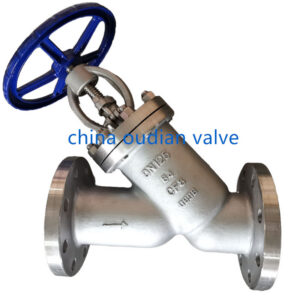
- Y-pattern: Lower pressure drop
- Angle pattern: Moderate pressure drop
Use Proper Pipe Sizing
Undersized piping increases overall system resistance.
Avoid Excessive Throttling
Operating continuously at nearly closed positions increases turbulence and wear.
Select Advanced Trim Designs
Modern low-noise and anti-cavitation trims can improve flow performance while protecting valve internals.
Conclusão
Pressure drop and Cv are fundamental considerations in globe valve selection. While globe valves provide outstanding throttling accuracy and process control, they inherently create higher flow resistance due to their internal flow path design.
Understanding how Cv relates to pressure drop allows engineers to:
- Improve system efficiency
- Achieve stable flow control
- Reduce energy consumption
- Prevent cavitation damage
- Extend equipment lifespan
The best valve selection is always a balance between control precision, operating efficiency, and long-term reliability. By carefully evaluating pressure drop and Cv requirements, engineers can ensure optimal valve performance across a wide range of industrial applications.
Frequently Asked Questions About Globe Valve Pressure Drop and Cv
1. What is pressure drop in a globe valve?
Pressure drop is the difference between the inlet pressure and outlet pressure as fluid passes through a globe valve. It occurs because the valve restricts and redirects the flow, creating friction and turbulence inside the valve body.
2. Why do globe valves have higher pressure drop than other valves?
Globe valves force the fluid to change direction multiple times while flowing through the valve. This tortuous flow path increases resistance and energy loss, resulting in a higher pressure drop compared to ball valves, gate valves, or butterfly valves.
3. What does Cv mean in valve sizing?
Cv, or flow coefficient, measures a valve’s flow capacity. It indicates how many gallons of water per minute can flow through the valve with a 1 psi pressure drop at 60°F.
A higher Cv value means the valve allows more flow with less resistance.
4. Why is Cv important when selecting a globe valve?
Cv helps engineers determine whether a valve can deliver the required flow rate under specific operating conditions. Selecting the correct Cv ensures:
- Stable flow control
- Proper throttling performance
- Reduced energy consumption
- Lower risk of cavitation and vibration
5. How do you calculate Cv for a globe valve?
The standard formula is:
Q = C_v \sqrt{\frac{\Delta P}{SG}}
Where:
- Q = Flow rate
- Cv = Flow coefficient
- ΔP = Pressure drop
- SG = Specific gravity of the fluid
This equation helps estimate the required valve size for a given application.
6. Is a higher Cv always better?
No. A higher Cv means lower resistance, but an oversized valve may reduce control accuracy and create unstable flow conditions. The best choice is a valve properly sized for the actual operating range.
7. What happens if the pressure drop is too high?
Excessive pressure drop can cause:
- Aumento do consumo de energia
- Sobrecarga da bomba
- Ruído e vibração
- Cavitation damage
- Reduced system efficiency
Proper valve sizing helps prevent these problems.
8. What is cavitation in a globe valve?
Cavitation occurs when the fluid pressure drops below its vapor pressure, forming vapor bubbles that collapse violently inside the valve. This can damage valve trim, create noise, and shorten valve life.
Globe valves operating under high pressure drop conditions are more susceptible to cavitation.
9. Are globe valves good for throttling applications?
Yes. Globe valves are widely considered one of the best valve types for throttling and flow regulation because they provide precise control over flow rate and pressure.
10. Which globe valve design has the lowest pressure drop?
Among common globe valve designs:
- Z-pattern globe valves have the highest pressure drop
- Y-pattern globe valves have lower pressure drop
- Angle globe valves offer moderate pressure loss
Y-pattern globe valves are often selected when reduced flow resistance is important.
11. How does valve size affect pressure drop?
A smaller valve opening increases fluid velocity and resistance, resulting in higher pressure drop. Proper valve sizing is essential to balance flow control and system efficiency.
12. Can globe valves be used for on/off service?
Yes, but they are primarily designed for throttling and regulating flow. For full open/full close applications with minimal pressure loss, gate valves or ball valves are often more efficient choices.
13. What industries commonly use globe valves?
As válvulas globo são comumente usadas em:
- Petróleo e gás
- Geração de energia
- Processamento químico
- Sistemas de vapor
- Sistemas HVAC
- Estações de tratamento de água
They are especially useful where accurate flow control is required.
14. How can pressure drop be reduced in globe valve systems?
Pressure loss can be minimized by:
- Choosing the correct valve pattern
- Using properly sized piping
- Avoiding oversized or undersized valves
- Selecting low-resistance trim designs
- Operating the valve within its recommended range
15. What is the ideal operating position for a globe valve?
For best control performance, globe valves typically operate between 20% and 80% open during normal process conditions. This range provides stable regulation and reduces wear on valve components.