

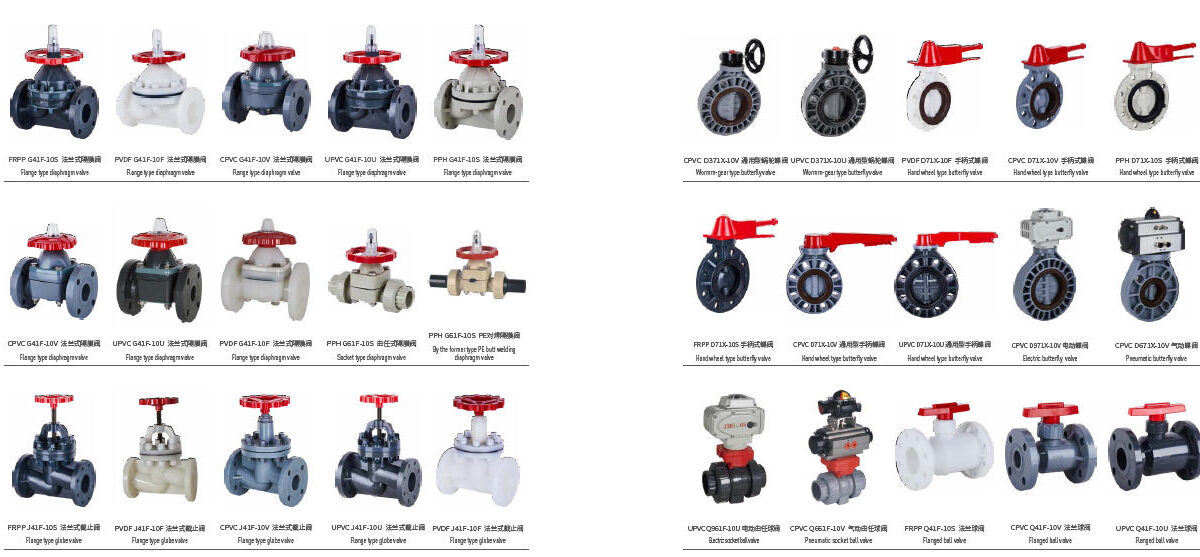
Plug Valve vs Ball Valve: Industrial Performance and Selection
Selecting between these two rotary designs requires evaluating fluid viscosity, particulate presence, cycling frequency, and long-term maintenance resources. System geometry, actuator sizing, and space constraints also determine which valve mechanism delivers safe, leak-free isolation over years of continuous operation.
Operating Mechanism and Design of Plug Valves
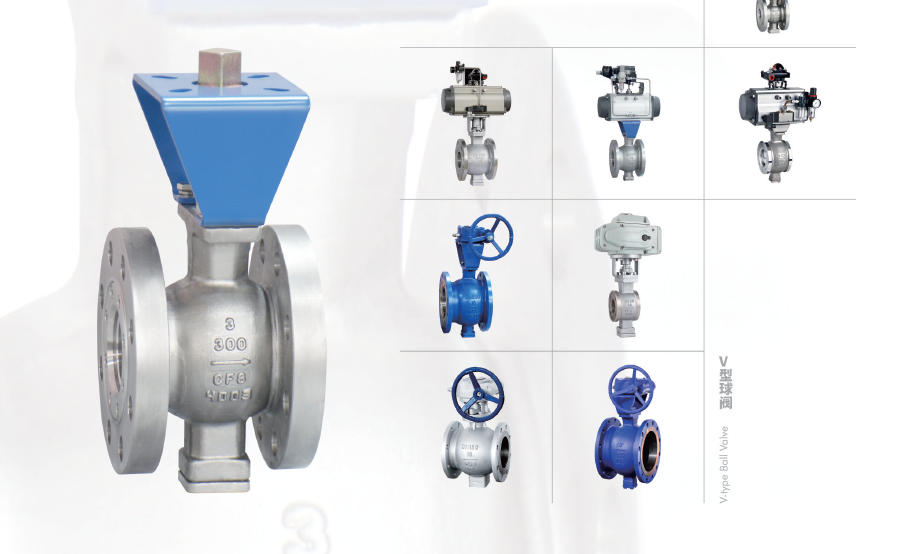
A plug valve controls fluid passage through a cylindrical or conically tapered plug positioned inside the valve body. A central flow port runs directly through the plug, aligning with the pipe axis in the open position to permit fluid motion. When the operating mechanism rotates the plug across a quarter-turn arc, the solid face of the plug blocks the pipe bore to arrest upstream line pressure.
Because the sealing surfaces of the plug remain in intimate contact with the inner walls of the valve body or sleeve, fluid cannot easily penetrate behind the seating area. Lubricated designs incorporate grease injection channels that distribute sealant across the mating surfaces to reduce friction and maintain a tight seal. Non-lubricated variants utilize elastomeric or fluoropolymer sleeves, such as polytetrafluoroethylene, fitted snugly around the tapered plug to eliminate the need for routine greasing.
The continuous contact area between the plug and the valve body sleeve leaves no internal cavities where suspended solids, pulp, or crystallizing chemicals can settle and solidify.
Sleeved plug valves provide reliable shutoff by keeping sealing surfaces shielded from flowing solids.
Operating Mechanism and Design of Ball Valves
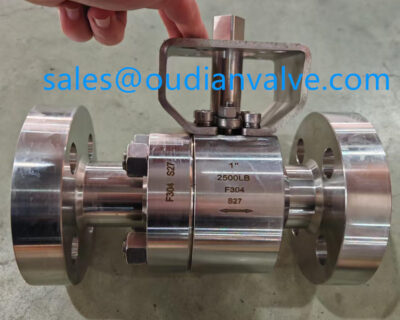
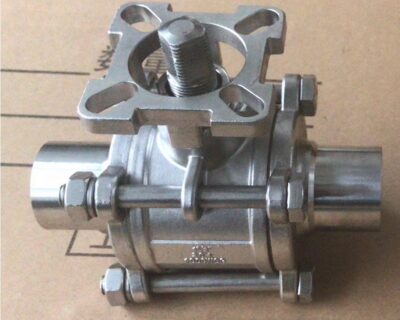
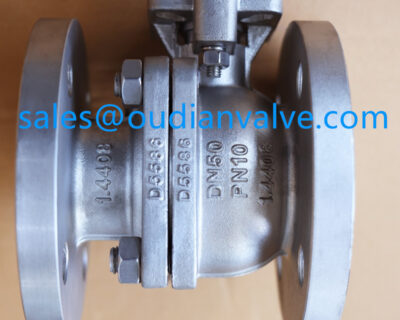
A ball valve relies on a polished spherical closure element containing a precision-machined bore through its center. Flow moves freely through the piping when the bore aligns with the flow axis. Rotating the stem ninety degrees places the solid spherical surface perpendicular to the flow path, pressing the ball against resilient or metal seats to provide tight shutoff.
The internal arrangement of ball valves generally falls into two distinct mechanical configurations, each suited to specific operating regimes:
- Floating ball designs suspend the sphere between two elastomeric or metallic seat rings, allowing upstream line pressure to press the ball against the downstream seat for tight closure.
- Trunnion-mounted designs anchor the ball at the top and bottom with mechanical shafts, utilizing spring-energized seat assemblies to maintain positive contact under severe operating pressures.
- Full-bore designs maintain an internal diameter matching the connected piping, minimizing turbulence, fluid friction, and operational energy losses.
- Reduced-bore designs employ a smaller internal opening to lower overall valve body weight and reduce the torque needed for manual or automated cycling.
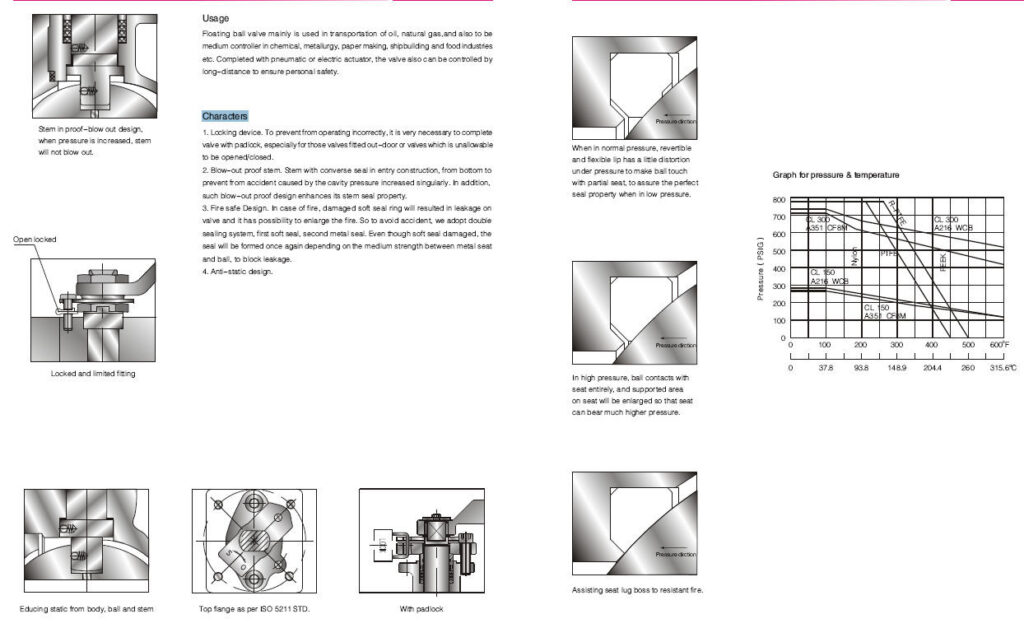
Spherical ball designs provide smooth flow passages with minimal internal flow restriction.
Flow Characteristics and Sealing Performance
Flow efficiency and seating dynamics differ significantly due to the geometric profiles of plugs and spheres. Ball valves with full-port construction provide an unobstructed, circular conduit that presents virtually zero resistance to the moving stream. Standard plug valves, by contrast, frequently incorporate rectangular, trapezoidal, or diamond-shaped internal ports that constrict flow and generate moderate pressure drops across the soupape body.
Sealing performance depends on the contact surface area between moving components and structural seats. Ball valves concentrate sealing force along a narrow, circular contact ring against elastomeric or metal seats, producing high unit loading that delivers bubble-tight shutoff with low operational effort. Plug valves distribute seating force across an expansive conical or cylindrical surface area, producing robust bidirectional sealing that resists physical wiping damage from suspended particulates.
Ball Valve Sealing Mechanics
Narrow line contact against preloaded seat rings yields tight shutoff while minimizing frictional resistance during rotational cycling.
Plug Valve Sealing Mechanics
Broad surface contact shields the seat interface from direct fluid impingement, preventing seat displacement in heavy abrasive applications.
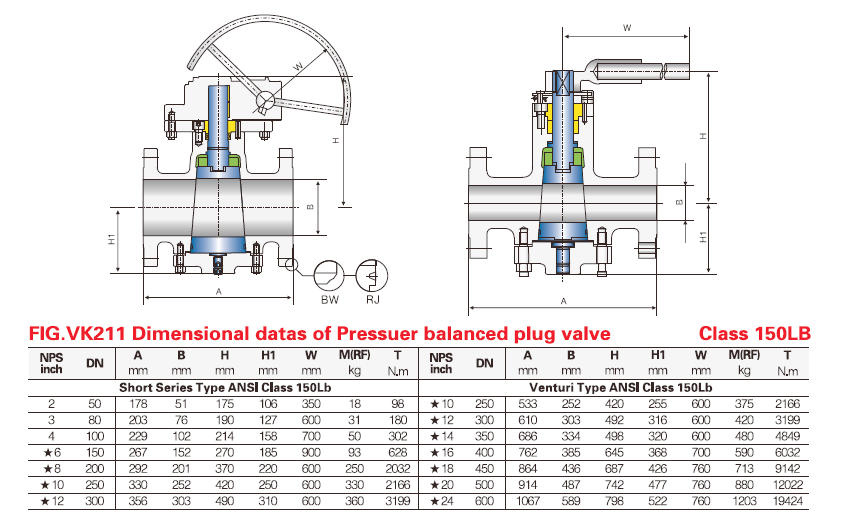
Proper seat geometry and surface contact determine long-term containment integrity under pressure.
Operating Torque and Mechanical Actuation
Operating torque dictates the physical effort needed for manual operation and the mechanical rating required for automated actuators. Ball valves operate with significantly lower breakout and running torque because the polished sphere only contacts narrow circumferential seating bands. This reduced rotational resistance allows engineers to install smaller, lighter pneumatic or electric actuators, keeping capital and power costs manageable.
Plug valves require substantially higher operational torque due to extensive surface-to-surface contact between the entire plug body and its matching sleeve or wall. Fluid pressure, temperature fluctuations, and extended static periods can cause the plug to wedge tightly into the tapered body bore. Consequently, plug valve automation demands heavy-duty gear operators or oversized pneumatic cylinders capable of overcoming substantial breakaway friction.
Lubricated plug valves require periodic grease replenishment to keep operating torque manageable and prevent mechanical binding during manual cycling.
Pressure, Temperature, and Durability Capabilities
Both valve designs handle rigorous pressure classifications, but thermal swings and abrasive environments highlight their functional limits. Standard floating ball valves perform exceptionally well within moderate thermal bands, yet soft elastomeric seats can degrade or creep when exposed to elevated operating temperatures. Metal-seated ball valves withstand severe thermal environments, though particulate buildup around delicate seat springs can cause binding over time.
Plug valves provide exceptional structural durability in harsh, erosive environments where fluid streams carry sand, catalyst fines, or heavy mineral scale. The heavy metallic body and thick plug construction withstand significant mechanical vibration, hydraulic shock, and thermal expansion cycles without warping. Because the sealing sleeve or body wall remains isolated from the direct flow stream when the valve is open, erosive wear across sealing boundaries remains minimal.
Rapid thermal transitions in rigid plug valves can cause differential expansion between the plug and the valve body, increasing rotational resistance or causing operational jamming.

Robust body construction protects internal seating elements against mechanical fatigue and thermal stress.
Maintenance Requirements and Long-Term Operating Cost
Ongoing maintenance regimes diverge sharply between these two technologies over their operating lifecycles. Ball valves generally function as low-maintenance units throughout their service life, requiring little attention until internal seat degradation causes downstream leakage. When soft seats fail, ball valves typically require complete removal from the pipeline for shop overhaul or full replacement.
Plug valves provide distinct advantages for facilities prioritizing in-line serviceability without disrupting connected pipe spools. Many top-entry plug valve designs permit technicians to remove the bonnet, inspect internal components, and replace worn sleeves or plugs directly in the field. Lubricated plug valves require disciplined preventative maintenance routines, including regular sealant injection, to preserve smooth movement and seal integrity.
Ball Valve Lifecycle
Minimal preventative attention is needed during operation, but internal seat replacement often requires line depressurization and valve extraction.
Plug Valve Lifecycle
Top-entry access enables rapid in-line rebuilding, though lubricated variants demand routine manual or automated grease servicing.
Media Handling and Industrial Suitability
The physical composition of the fluid stream is often the deciding factor in soupape selection. Ball valves represent the industry standard for clean fluids, compressed air, industrial gases, and light hydrocarbon fuels where low pressure loss and quick quarter-turn action are paramount. However, when handling slurries or crystallizing media, particulates can become trapped within the dead space between the ball and valve body, leading to seat abrasion or jammed mechanisms.
Plug valves excel in demanding services that cause conventional seated valves to fail prematurely. Wastewater processing plants, paper mills, and mining operations rely on plug valves to manage thick sludge, fibrous suspensions, and gritty tailing lines. The wiping action of the plug wipes away deposited materials as it closes, preventing solids from compromising the sealing surface.
- Refining and petrochemical facilities employ sleeved plug valves for hazardous chemicals, chlorine service, and hydrofluoric acid alkylation units.
- Municipal wastewater facilities use eccentric plug valves to pass stringy solids, raw sewage, and grit without clogging the flow channel.
- Oil and gas transmission pipelines utilize full-port ball valves to allow mechanical pigging, line inspection, and high-volume product movement.
- Cryogenic gas processing networks depend on extended-bonnet ball valves to deliver tight vapor shutoff at sub-zero temperatures.
Wastewater and slurry handling applications benefit from the cavity-free interior of plug valves.
Plug Valve vs Ball Valve Comparison and Trade-Offs
Evaluating trade-offs between plug valves and ball valves clarifies which engineering strengths align with facility operating goals. While ball valves provide superior energy efficiency and lower automation costs, plug valves offer unmatched resilience in abrasive or cavity-sensitive applications.
Plug Valve Advantages
- Cavity-free internal geometry prevents solid buildup and media stagnation.
- Large sealing surface area resists abrasive wear from particulate matter.
- Top-entry designs permit in-line maintenance without pipe removal.
Plug Valve Limitations
- Significantly higher operating torque requires larger, costlier actuators.
- Constricted port geometries cause higher pressure drops in standard models.
- Lubricated configurations require ongoing maintenance and grease injection.
| Performance Factor | Plug Valve | Robinet à boisseau sphérique | Engineering Evaluation |
| Fluid Resistance | Modéré | Très faible | Full-bore ball valves produce minimal pressure loss across systems. |
| Operating Torque | Haut | Faible | Ball valves permit smaller manual levers and compact automated packages. |
| Slurry Handling | Excellent | Fair | Plug mechanisms wipe surfaces clean without trapping solids in body cavities. |
| Cavity Accumulation | None | Modéré | Standard ball valves retain fluid pockets around the ball when closed. |
| In-Line Rebuild | Common | Rare | Top-entry plug bonnets permit sleeve and plug renewal in position. |
| Actuator Cost | Plus haut | Inférieur | Lower breakout torque reduces pneumatic and electric actuator investment. |
Practical Application Examples and Valve Selection
Selecting the optimal valve type requires aligning mechanical attributes with fluid behavior and plant maintenance capabilities. Reviewing operational priorities systematically helps engineers avoid premature component failure and unexpected plant downtime.
- Evaluate the presence of solids, slurries, or crystallizing polymers in the process stream, selecting plug valves whenever dead pockets could collect stagnant media.
- Analyze allowable pressure drop across the valve station, opting for full-bore ball valves when pumping power conservation and high flow velocity are critical.
- Assess automation requirements and power availability, utilizing ball valves when compact actuator sizing and low electrical draw are required.
- Verify in-line maintenance procedures, choosing top-entry plug valves for hazardous chemical lines where unbolting pipe flanges introduces containment hazards.
- Determine whether the fluid media can tolerate trace lubricant contamination, specifying non-lubricated sleeved plug valves or soft-seated ball valves for high-purity processes.
Matching valve geometry to process fluid characteristics prevents unexpected downtime and maintenance expenses.
Frequently Asked Questions
Which valve provides better tight shutoff in clean fluid services?
Ball valves provide superior tight shutoff in clean liquid and dry gas applications because their narrow seat rings create high unit contact stress against the polished sphere. This focused sealing line achieves reliable bubble-tight isolation with lower operating torque.
Why are plug valves preferred for abrasive slurries and wastewater?
Plug valves lack the interior body cavities found in floating ball valves, preventing sand, pulp, and sludge from settling behind internal components. The rotational motion of the plug wipes the sealing face clean of debris during every operating cycle.
How does operating torque differ between plug valves and ball valves?
Plug valves generate significantly higher operating torque due to extensive surface contact between the plug body and surrounding sleeve. Ball valves experience far less frictional drag because contact is limited to the circumferential seat rings.
Can ball valves replace plug valves in corrosive chemical piping?
Ball valves can replace plug valves in corrosive chemical service only when the fluid is free of suspended solids and the seats are compatible with the media. If the chemical crystallizes or carries particulates, a sleeved plug valve remains the more durable selection.
Do plug valves always require manual grease lubrication?
Non-lubricated plug valves utilize fluoropolymer sleeves or elastomeric linings that provide self-lubricating operation without grease injection. Lubricated plug valves remain primarily reserved for high-pressure, abrasive, or extreme hydrocarbon services.
Summary of Valve Selection Decisions
Ball valves deliver efficient fluid movement, lower torque demands, and exceptional isolation for clean liquid and gas networks. Plug valves provide the mechanical resilience, cavity-free body construction, and in-line serviceability required for abrasive slurries, heavy solids, and harsh chemical processes. Selecting the right valve type safeguards fluid handling infrastructure, reduces operational torque loads, and minimizes unplanned piping maintenance.