


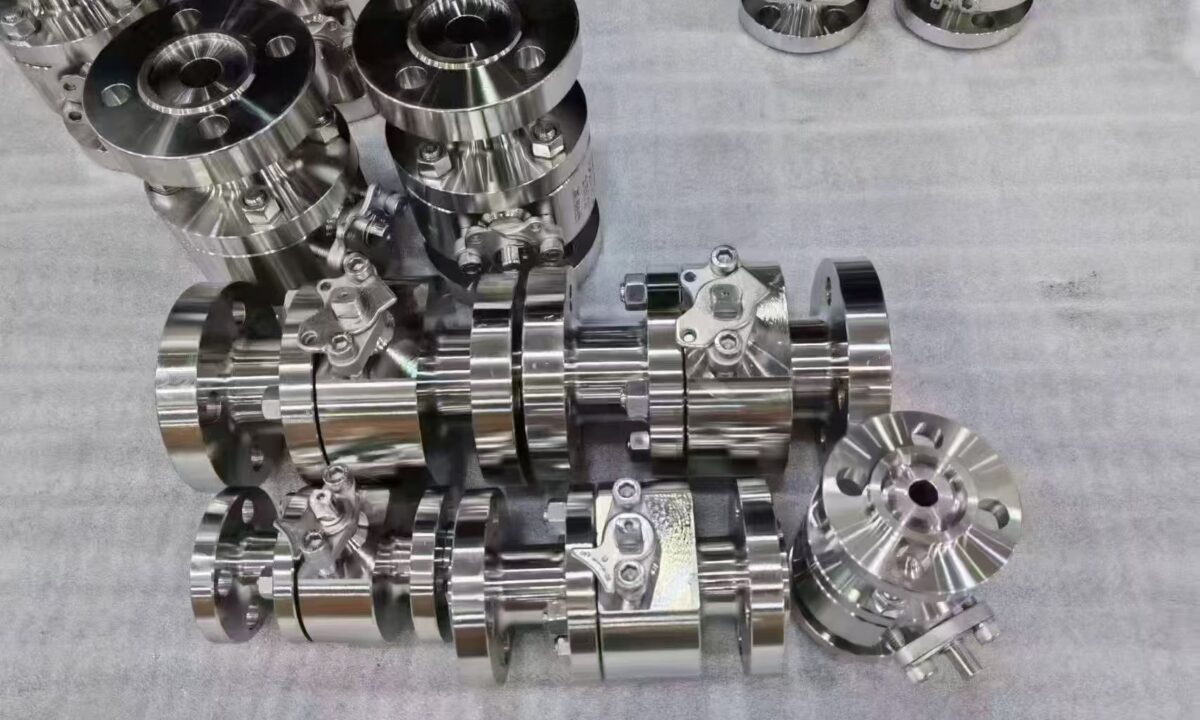
API 6D Ball Valve vs API 608 Ball Valve: Key Differences and How to Choose
Selecting the appropriate valve model depends on pipeline isolation requirements, valve size, system pressure ratings, and operating media characteristics. Project specifications dictate whether transmission-grade double block and bleed functionality or compact process boundary isolation delivers the correct balance of safety and lifecycle performance.
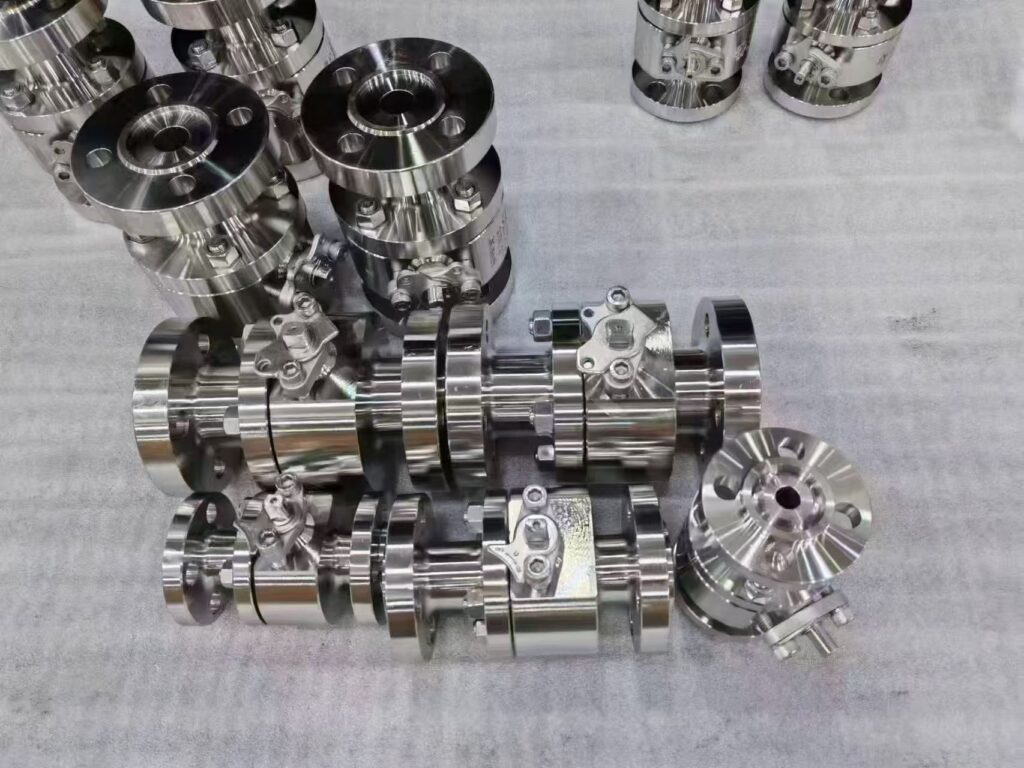
Understanding the Core Scope of API 6D and API 608
The American Petroleum Institute maintains separate valve standards to address the disparate technical demands of pipeline transport systems and petrochemical process plants. API 6D acts as the primary specification for pipeline and piping valves, encompassing ball, gate, plug, and check configurations used in liquid and gas transport. API 608 focuses exclusively on metal ball valves with flanged, threaded, socket-welding, and butt-welding ends utilized in general process plant piping.
API 6D valves frequently operate in remote locations, cross-country rights-of-way, offshore platforms, and custody-transfer metering stations. In contrast, API 608 valves populate dense chemical plants, refinery crude units, utility manifolds, and batch chemical reactors. The structural demands of buried or subsea pipeline service require distinct mechanical features that differ markedly from compact process piping systems.
API 6D Pipeline Scope
Covers valves for pipeline transportation systems, focusing on throughput, in-line maintenance, pigging compatibility, and advanced seat sealing.
API 608 Process Scope
Establishes supplementary requirements for ASME B16.34 metal ball valves deployed in refinery, chemical, and general industrial plant piping.
Valve Construction: Floating and Trunnion-Mounted Designs
The mechanical architecture of a ball valve determines how the closure member manages upstream line pressure and seals against process fluid. Floating ball designs rely on upstream fluid pressure to push an unanchored ball against the downstream seat ring to create a tight seal. Trunnion-mounted designs secure the ball on fixed mechanical pivots, transferring hydrodynamic loads directly into the body bearings while spring-loaded seats seal against the ball.
Neither standard universally mandates only a single mounting style across all sizes and pressure classes. API 608 process valves commonly employ floating ball construction in smaller bore sizes, transitioning to trunnion-mounted construction as nominal pipe sizes and pressure classes escalate. API 6D applications predominantly feature trunnion-mounted construction across large diameters to limit operating torque, although smaller pipeline valves also employ floating ball architecture.
Internal ball mounting configurations determine mechanical torque demand, seat load distribution, and operational longevity under high differential pressures.
Wall thickness rules further separate the two standards. API 608 uses ASME B16.34 as its design baseline, specifying minimum wall thicknesses tailored to plant piping stresses and thermal cycling. API 6D incorporates distinct pipeline stress allowances, corrosion margins, and body drive train calculations suited for high tensile soil loads and external pipeline bending moments.
- Floating ball mechanisms deliver dependable shutoff in smaller process lines by leveraging differential pressure across flexible seat materials.
- Trunnion support arrangements lower mechanical actuator torque demands in high-pressure transport lines by absorbing fluid thrust loads.
- Drive train component design under API 6D accounts for extended stem extensions, buried service soil stresses, and heavy actuator thrust.
- API 608 stem retention configurations emphasize anti-blowout engineering aligned with stringent process plant piping design codes.
Pipeline Isolation and Cavity Pressure Relief Features
Cavity isolation capabilities represent one of the sharpest distinctions between pipeline valves and general process valves. Liquid trapped in a closed valve body cavity experiences thermal expansion when solar radiation or ambient temperatures rise, creating intense internal hydraulic pressure. API 6D establishes formal seat testing definitions to verify how seat mechanisms relieve or contain this internal cavity overpressure.
Pipeline operators utilize specific API 6D isolation designations including Double Block and Bleed (DBB), Double Isolation and Bleed with dual bi-directional seats (DIB-1), and Double Isolation and Bleed with mixed seat designs (DIB-2). These configurations allow technicians to vent the body cavity to verify seat integrity while the pipeline remains under full operating pressure. Self-relieving seats automatically vent overpressure back into the pipeline flow bore when cavity pressure exceeds line pressure.
API 6D valves frequently integrate dedicated body drain ports, vent valves, and emergency sealant injection fittings directly into the body forging to enable inline maintenance, whereas standard API 608 process valves rarely feature these tapping connections unless custom project specifications mandate them.
API 608 valves operating in process units generally handle thermal cavity expansion through dedicated upstream pressure relief holes drilled into the ball or self-relieving flexible seat geometry. Because process plant piping often features external bypass loops, manual drain connections, and distinct isolation manifolds, the valve body itself does not routinely carry auxiliary injection or vent fittings. Understanding whether the application demands inline cavity venting helps prevent purchasing an inadequate valve assembly.
Pressure Classes, Sizing Considerations, and End Connections
Valve dimensions, pressure ratings, and pipe joining techniques reflect the physical environments of transmission lines versus refining facilities. API 6D valves follow face-to-face dimensions defined in the standard or ASME B16.10, accommodating massive nominal pipe sizes required for cross-country hydrocarbon transport. API 608 valves strictly adhere to ASME B16.10 face-to-face dimensions, prioritizing compact footprints to fit within tight industrial pipe racks.
Flow path geometry also differs according to system requirements. Transmission pipelines require full-bore valves with completely unobstructed circular openings to allow the passage of cleaning pigs, dimensional inspection scrapers, and smart diagnostic tools. API 6D explicitly specifies full-opening diameters matching pipeline inside dimensions, alongside reduced-bore variants. API 608 provides standardized reduced-port and full-port configurations, where reduced-port models frequently serve general throttling or on-off isolation to reduce initial capital expenditure.
Pipeline installations demand welded joint integrity to reduce potential leak pathways across miles of terrain, making weld-end API 6D valves standard practice, whereas refinery process piping routinely favors raised-face flanged or threaded connections for rapid valve replacement during turnarounds.
End connections in API 608 encompass raised face flanged, flat face flanged, socket weld, butt weld, and threaded connections, catering to standard ASME B31.3 process piping systems. API 6D applications emphasize heavy raised face flanges, ring joint flanges (RTJ) for elevated ASME classes, and extended butt-weld ends prepared for automated field welding rigs. Sizing and end style selections must align directly with the primary piping design code governing the facility.
Testing and Inspection: API 6D Hydrostatic vs API 598 Regimes
Factory acceptance testing and inspection criteria highlight the functional expectations of pipeline and process hardware. API 608 does not contain an independent, self-contained testing procedure; instead, it designates API 598 (Valve Inspection and Testing) as the mandatory testing standard for shell and seat tightness. API 6D contains its own exhaustive, mandatory pressure testing annex that governs hydrostatic shell tests, hydrostatic seat tests, and high-pressure gas tests.
Test durations under API 6D reflect the large physical internal volumes and critical isolation responsibilities of pipeline infrastructure. Holding times during hydrostatic shell tests and high-pressure seat tests in API 6D are substantially longer than those outlined in API 598 for equivalent nominal diameters. These extended durations allow quality inspectors to detect minute pressure decay or micro-leakage across heavy cast or forged body boundaries.
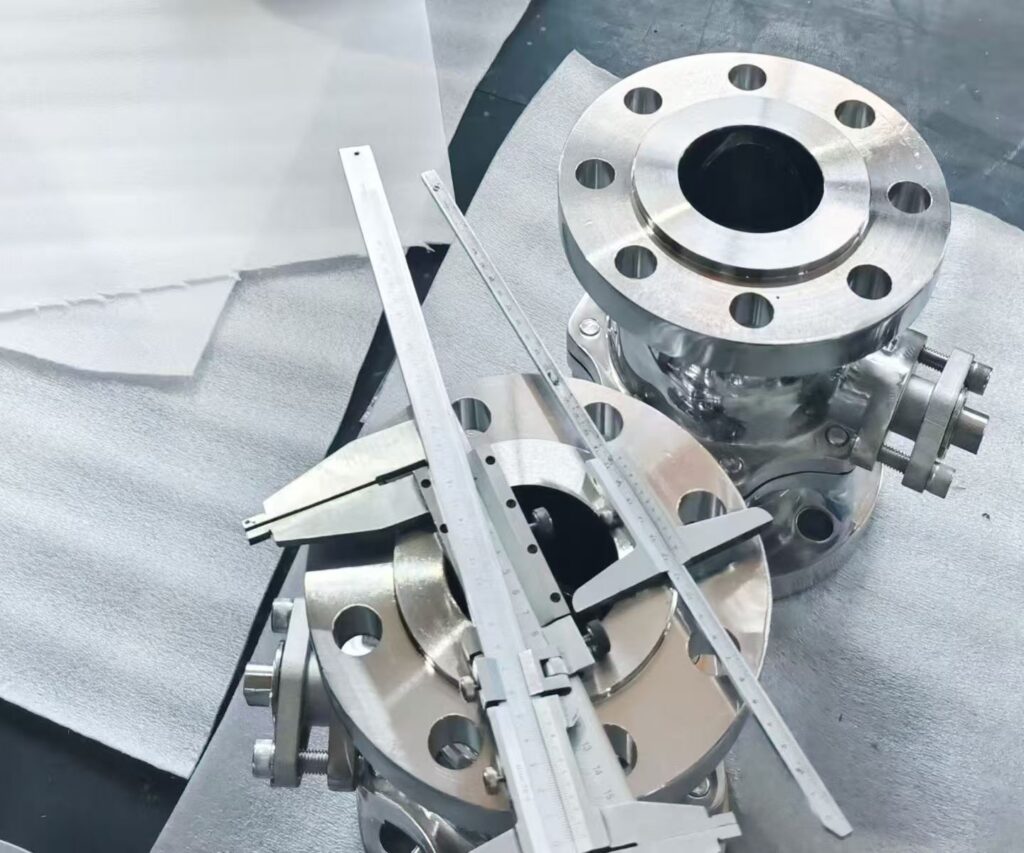
Pressure testing protocols establish verifiable seat integrity, cavity sealing limits, and shell strength prior to field commissioning.
Seat leakage allowances also demonstrate clear divergence between the two standards. API 6D standardizes zero visible leakage or specific volumetric thresholds depending on seat material classification, offering optional low-pressure and high-pressure gas testing regimes. API 598 sets standardized liquid and gas leakage thresholds tailored for broad process plant duties, distinguishing between resilient soft seats and metal-to-metal seating surfaces.
Treating an API 598 factory test certificate as equivalent to an API 6D hydrostatic and pneumatic test package creates compliance conflicts during commissioning, as API 6D mandates longer holding durations and distinct seat leakage verification procedures.
Fugitive Emissions and Fire-Safe Considerations
Environmental containment and thermal survivability represent vital safety benchmarks in modern hydrocarbon processing and transport. When exposed to fire, soft seals decompose, requiring secondary metal-to-metal seating surfaces to arrest uncontrolled downstream leakage and external packing loss. Both standards prioritize fire-tested designs, referencing specialized industry standards including API 607 and API 6FA.
API 607 typically qualifies soft-seated quarter-turn valves tested under external flame conditions, making it the dominant fire-test standard for API 608 process ball valves. API 6FA applies broadly to pipeline valves, featuring test parameters that evaluate end loads, thermal expansion stresses, and structural integrity suited for API 6D pipeline equipment. Specifiers must define the precise fire-safe testing qualification required by local fire protection codes and project loss-prevention guidelines.
- API 608 installations emphasize compliance with fugitive emission standards such as API 641 and ISO 15848 to mitigate volatile organic compound releases.
- Stem packing systems in API 608 valves often incorporate live-loaded Belleville spring washers to maintain constant packing stress through thermal cycling.
- API 6D valves feature extended stem housings designed to accommodate below-ground insulation, external waterproofing, and specialized secondary sealant injection.
- Secondary metal seat lips in both standards provide backup containment when soft polymeric seat inserts burn away during a fire incident.
Common Misconceptions Around Quality and Interchangeability
A persistent misconception in procurement is that an API 608 ball valve represents a lower-quality alternative to an API 6D valve. This assumption misinterprets the purpose of standard engineering specifications. API 608 provides a rigorous, highly specialized set of mechanical requirements built upon ASME B16.34 specifically for complex chemical refining and utility processes, demanding exceptional stem sealing, corrosion resistance, and fugitive emission management.
Another frequent error involves assuming dual compliance without complete verification against both standard documents. A manufacturer cannot claim that a valve certified solely to API 608 automatically satisfies API 6D, nor does an API 6D valve inherently meet all dimensional, wall thickness, and stem retention details of API 608. While dual-certified valves exist in specific small-diameter sizes, they must undergo the complete testing, dimensional verification, and quality audit procedures prescribed by each independent specification.
API 6D Characteristics
- Designed for mainline transportation systems
- Standardized double block and bleed options
- Long hydrostatic test hold durations
- Integrated vent and drain tapping points
API 608 Characteristics
- Optimized for process unit piping layouts
- Built strictly on ASME B16.34 foundation
- Compact face-to-face envelope dimensions
- Focused on stringent stem emission control
Field interchanging without engineering approval invites operational risk. Installing a valve without pigging clearance into a transmission line halts pig operations, while installing an over-dimensioned API 6D valve into a tight refinery rack can overload piping supports and create excessive mechanical stress on adjacent process equipment.
API 6D Ball Valve vs API 608 Ball Valve Comparison
Direct evaluation of key technical criteria demonstrates how these standards divide across design philosophies, mechanical boundaries, and service demands. Sourcing teams and piping designers must evaluate these parameters against the facility design code prior to procurement.
| Fonctionnalité | API 6D Standard | API 608 Standard and Impact |
| Primary Scope | Pipeline Systems | Petrochemical plant and refinery process piping. |
| Target Industry | Oil Gas Transport | Chemical processing, refining, and plant utilities. |
| Design Baseline | API 6D Code | Directly supplements ASME B16.34 design rules. |
| Mounting Styles | Trunnion Common | Floating designs common, with trunnion for large sizes. |
| Seat Isolation | DBB and DIB | Standard shutoff, with cavity relief venting options. |
| Pigging Clearance | Full Bore True | Standard full and reduced bores without scraper profiling. |
| Testing Regime | API 6D Protocol | Tested under API 598 standard pressure regimes. |
| Drain Vent Ports | Standard Fitting | Omitted unless explicitly ordered in project specs. |
| Emission Control | Pipeline Packing | Strict alignment with API 641 and ISO 15848 limits. |
| Relative Cost | Higher Investment | Lower baseline cost with compact dimensional profile. |
Total lifecycle expenditure varies significantly between these valve categories. The added raw material mass, specialized body tappings, trunnion bearing plates, and extensive testing requirements of API 6D valves lead to higher initial procurement costs. However, that investment provides essential isolation, inline flushing capabilities, and extended service life under continuous cross-country hydraulic flows.
Practical Framework for Selecting the Right Ball Valve
Selecting between these two valve categories requires an orderly review of operational parameters, safety targets, and piping design boundaries. Specifiers should evaluate the system through a structured decision workflow to ensure mechanical alignment with operational demands.
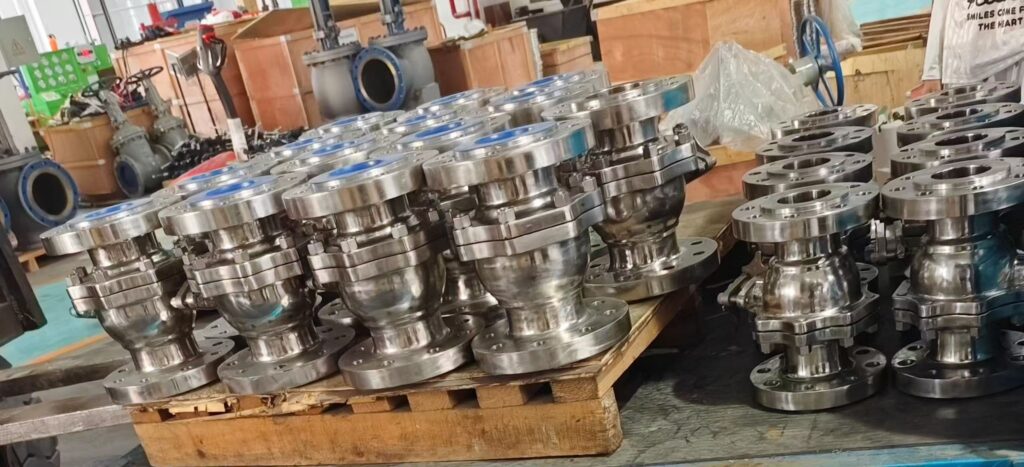
Operational factors including line size, fluid corrosiveness, and maintenance access dictate the appropriate valve specification.
- Identify the governing code boundary, establishing whether ASME B31.3 process piping or ASME B31.4/B31.8 pipeline transportation codes govern the facility.
- Establish isolation requirements, selecting API 6D when verifiable double block and bleed or in-service cavity bleeding is mandatory for downstream safety.
- Assess pipeline pigging requirements, opting for API 6D full-bore models when intelligent scrapers or physical cleaning tools must traverse the valve bore.
- Evaluate space constraints and structural weight limits, choosing API 608 to preserve space and limit pipe hanger loads inside modular skid units.
- Determine operating torque and valve size, utilizing trunnion-mounted API 6D valves in large nominal sizes to prevent actuator over-sizing.
- Review fugitive emission mandates, favoring API 608 valves with certified packing systems in petrochemical services subject to clean air enforcement.
- Analyze procurement budgets against required documentation packages, balancing the comprehensive inspection records of API 6D against API 608 process economics.
Verifying Standards, Documentation, and Project Specifications
Proper valve procurement requires diligent verification of engineering documentation before purchase orders are issued. Project engineers must confirm the latest edition of API 6D or API 608 cited in contract documents, as standards organizations periodically update test durations, material allowances, and marking mandates. Relying on outdated revisions can result in equipment rejections during site receipt inspections.
Manufacturer data sheets, Mill Test Reports (MTRs), and quality certifications must undergo systematic review. When API Monogram licensing is required by the project specification, procurement teams must verify that the manufacturing facility maintains an active API license for the specific product category. Reviewing material traceability documentation supports verification that alloy components comply with NACE MR0175/ISO 15156 limits for sour service applications.
Always verify jurisdictional requirements, local environmental mandates, and facility engineering standards against manufacturer data sheets before approving valve submittals, as client-specific piping classes often enforce restrictions beyond base API requirements.
Purchasers should clarify non-destructive examination (NDE) requirements, factory acceptance testing hold points, and preservation painting procedures. Aligning customer inspection expectations with standard manufacturer workflows early in the specification stage prevents project schedule delays during final testing.
Frequently Asked Questions
Can an API 6D ball valve replace an API 608 ball valve in a refinery?
An API 6D ball valve can physically isolate flow in a refinery, but its larger physical envelope, heavier weight, and differing face-to-face dimensions may conflict with ASME B16.10 process rack spacing. Plant engineers must evaluate piping stress calculations, hanger capacities, and fugitive emission certifications before substituting an API 6D valve into ASME B31.3 process piping.
Does API 608 require valves to be floating or trunnion mounted?
API 608 covers both floating and trunnion-mounted ball valve designs. Manufacturers routinely utilize floating ball construction for smaller diameters and moderate pressure classes, transitioning to trunnion-mounted architecture for larger nominal pipe sizes or elevated pressure classes to manage stem operating torque.
Why do API 6D ball valves feature body drain and vent connections?
Body drain and vent connections allow technicians to bleed trapped fluid from the internal valve cavity to verify seat isolation integrity while the pipeline remains pressurized. These tappings also permit the safe venting of hazardous fluids prior to maintenance and enable inline flushing of accumulated sediment.
What testing standard governs API 608 ball valves?
API 608 ball valves are inspected and pressure tested in accordance with API 598. This testing standard defines shell test pressures, hydrostatic seat leak rates, and pneumatic test criteria for standard industrial process valves.
Are API 608 ball valves considered lower quality than API 6D valves?
API 608 ball valves are high-quality, engineered components tailored specifically for refinery, chemical, and industrial process applications. The standard enforces stringent wall thickness, anti-static, anti-blowout stem, and fugitive emissions performance rules suited for complex plant piping networks.
Summary and Next Steps for Valve Specification
Selecting between an API 6D and an API 608 ball valve requires matching the mechanical capabilities of the valve to the operational scope of the piping system. Transmission lines, pigging routines, and double isolation duties demand the structural framework of API 6D, while chemical processes, refinery units, and compact skid piping depend on the ASME B16.34 foundation of API 608. Review current editions of project engineering specifications, verify manufacturer technical data sheets, and consult jurisdictional codes to confirm the correct valve selection for the intended service.



