


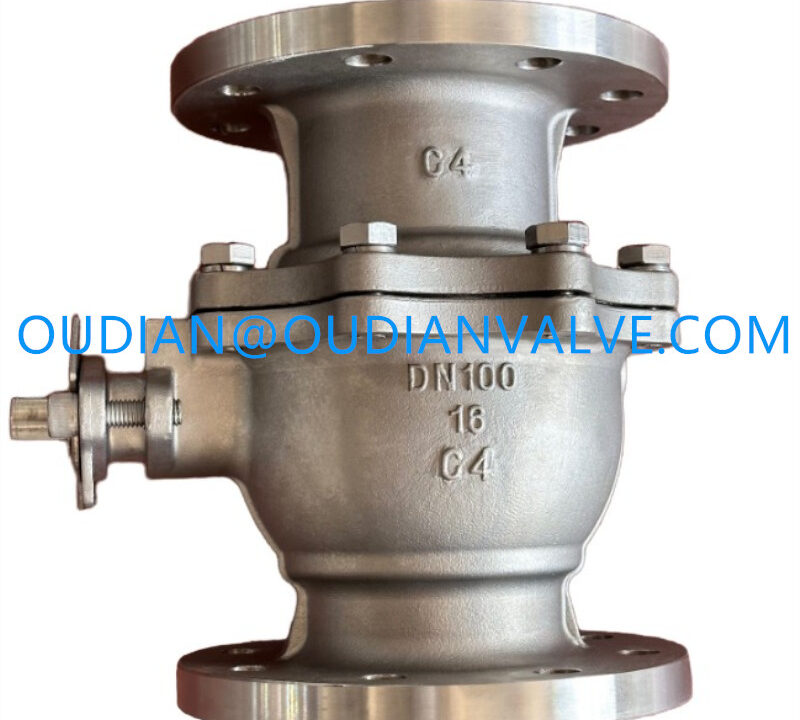
Why Use a Ball Valve Versus a Globe Valve?
Fluid properties, operating pressure, system head loss limits and routine cycling frequency dictate the appropriate design for each service line. Matching the mechanical strengths of each valve profile to operating demands prevents seat cavitation, unwanted line friction and premature component fatigue.
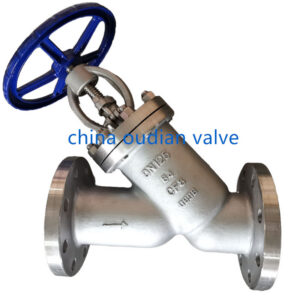
Mechanical Design and Operating Principles
The structural geometry and internal drive mechanics define the fundamental operational differences between these two valve designs. Ball valves fall under the rotary valve category, relying on a stem connected to a perforated sphere suspended between two compliant or metallic seats. Globe valves represent the linear movement family, directing fluid across an internal baffle containing a stationary ring seat that receives a perpendicular plug or disc.
A ball valve cycles from full flow to complete shut-off with a simple 90-degree turn of the stem. The alignment of the bore with the pipe axis permits straight-through fluid movement. In contrast, a globe valve requires multiple turns of a handwheel or a long-stroke linear actuator to lift or seat the plug, causing the fluid to change direction twice inside the valve body.
Rotary Ball Valve Mechanism
- Quarter-turn stem rotation delivers immediate ninety-degree cycling.
- The central bore matches line diameter in full-port models.
- Floating or trunnion ball mountings support tight bi-directional sealing.
- Lever position provides instant external visual status of open or closed state.
Linear Globe Valve Mechanism
- Multi-turn threaded stem advances the disc vertically against fluid flow.
- Internal baffle geometry forces an S-shaped flow path through the orifice.
- Plug profile geometry determines linear, quick-opening, or equal-percentage trim.
- Direct mechanical positioning resists process-induced fluttering under high velocity.
Visual verification of valve status differs significantly between both configurations. Ball valve handles align parallel to the pipe run when open and sit perpendicular when closed, providing instant feedback. Globe valves require visual examination of the stem position or a dedicated position indicator to confirm whether the disc rests against the seat.
Flow Control and Throttling Performance
Regulating fluid flow across partially open valves demands high resistance to velocity-induced erosion and cavitation. Globe valves remain the primary mechanical standard for fine flow regulation because the perpendicular relationship between plug movement and fluid velocity allows precise orifice modulation. Standard ball valves, conversely, are engineered for discrete isolation rather than proportional control.
When a conventional robinet à boisseau sphérique operates partially open, fluid accelerates through crescent-shaped gaps between the ball bore and the seat perimeter. This uneven flow profile generates high turbulence, localised vibration and concentrated shear stress along the non-supported edges of soft elastomeric seats. Globe valves distribute incoming pressure evenly across the perimeter of the circular seat ring, maintaining stable fluid dynamics throughout extended throttling duty.
V-port ball valves offer modified trim with 30-degree, 60-degree, or slotted openings to improve flow control. While standard round-bore ball valves suffer from poor control resolution below twenty percent open, specialised characterised ball valves can deliver linear or equal-percentage throttling in non-abrasive fluids.
Process control loops requiring high rangeability and rapid response to modulating controller signals routinely specify globe-style control valves. The balance of mechanical forces across balanced plug designs enables fine adjustments without hunting or overshoot. Standard floating ball valves lack the throttling sensitivity required for tight temperature or pressure control loops.
Pressure Drop and System Head Loss
Hydraulic efficiency varies dramatically between straight-through and baffled valve body designs. Ball valves configured with full-bore ports create an unobstructed circular path virtually identical to the internal diameter of the adjacent pipework. Globe valves force incoming media through a tortuous path that diverts fluid ninety degrees upward through the seat and ninety degrees downward toward the outlet.
This directional redirection introduces significant internal friction, resulting in substantial fluid head loss and permanent pressure drop. In systems operating with narrow pressure margins, such as gravity feeds, suction lines, or high-volume transport mains, high-loss valves increase pumping power requirements. Ball valves minimise resistance, supporting low energy consumption across expansive distribution lines.
Flow coefficient values (Cv) illustrate the hydraulic gap between profiles. A typical two-inch full-bore ball valve can exhibit a flow coefficient exceeding three hundred, whereas a standard two-inch globe valve often delivers a flow coefficient below fifty under identical operating pressure.
Minimising friction drop is equally critical in systems carrying volatile liquids or liquefied gases where sudden pressure dips provoke flashing or vapour cavitation. Installing ball valves preserves line pressure across distribution manifolds. However, in applications where deliberate pressure reduction or controlled energy dissipation is desired, the natural head loss of a globe valve serves a functional process purpose.
Shut-Off Capability and Sealing Integrity
Positive line shut-off isolates equipment during routine maintenance and protects downstream personnel from hazardous fluid ingress. Ball valves excel at tight shut-off because fluid line pressure pushes the floating sphere directly into the downstream seat ring, enhancing sealing force as pressure rises. Globe valves rely on stem thrust exerted by a manual handwheel or linear actuator to press the plug firmly into the body seat.
Elastomeric and polymer seat inserts in ball valves conform cleanly against micro-imperfections on the polished sphere surface, achieving bubble-tight Class VI shut-off ratings with minimal operational torque. Globe valves often utilise hard metal-to-metal seating to resist extreme temperatures and steam wire-drawing, which typically yields Class IV or Class V shut-off unless fitted with soft disc inserts.
| Evaluation Metric | Robinet à boisseau sphérique | Robinet à soupape | Operational Significance |
| Tightness Class | Class VI | Class IV/V | Ball valves provide tighter standard sealing against low-viscosity gases. |
| Sealing Mechanism | Floating Ball | Axial Stem Load | Process pressure reinforces downstream sealing in floating ball designs. |
| Cycle Speed | Quarter Turn | Multi-Turn | Rapid ninety-degree actuation isolates lines quickly during emergencies. |
| Seat Cavity | Enclosed Space | Open Body | Trapped fluid in ball cavities requires cavity relief in volatile media. |
Thermal expansion of trapped fluid inside the internal cavity of a closed ball valve presents a distinct operational consideration. In cryogenic or volatile chemical service, trapped liquid that warms within the body cavity can generate excessive pressure, requiring relief grooves or self-relieving seats. Globe valves possess an open cavity that naturally eliminates fluid entrapment between sealing faces.
Durability, Wear and Expected Service Life
Mechanical wear patterns differ according to the cycling mode and the presence of entrained particulates in the fluid stream. Ball valves offer high longevity in frequent cycling service because the wiping action between the ball surface and the surrounding seats prevents sediment accumulation. However, abrasive slurries can score the polished ball face or become embedded in soft polymer seat rings.
Globe valves tolerate abrasive and high-temperature service well when fitted with hardened alloy trims such as Stellite. Because the disc separates cleanly from the seat without continuous sliding contact, seat face wiping friction remains negligible. When wear does occur, wire-drawing erosion concentrates primarily on replaceable plug and seat components rather than the valve body itself.
Avantages
- Ball valves maintain dependable seal tightness over thousands of fast on-off cycles.
- Globe valve disc separation avoids abrasive scraping during opening strokes.
- Ball wipes clean against seat seals during each cycle to prevent debris buildup.
Limites
- Throttling with standard ball valves causes cavitation erosion on downstream seat rings.
- Globe valve stems experience continuous gland packing friction across linear strokes.
- High-velocity particles can erode soft polymer seals on exposed ball valve edges.
Stem packing durability represents another major operational divergence. The rotary action of a ball valve stem creates minimal vertical friction against stem seals, supporting long packing life and low fugitive emission rates. The reciprocating movement of a globe valve stem drags media particles through the stuffing box packing over time, requiring more frequent gland adjustments to prevent stem leaks.
Maintenance Requirements and In-Line Repairability
Servicing requirements directly influence system downtime, labour scheduling and lifecycle ownership costs. Globe valves offer superior maintenance accessibility through top-entry bonnets, allowing technical personnel to inspect, regrind, or replace the plug and seat without unbolting the valve body from the pipeline. This feature provides significant advantages in welded high-pressure steam networks.
Conventional two-piece and one-piece ball valves require complete removal from the piping spool to replace damaged seats or worn internal seals. Three-piece ball valve configurations mitigate this issue by allowing the central body section to swing outward after removing tie-rod bolts, facilitating quick in-line seat replacement without cutting welded connections.
- Inspect globe valve seats through the top bonnet opening during scheduled plant shutdowns.
- Lap and regrind metal globe seats in place to restore tight shut-off profiles.
- Select three-piece ball valves for welded process lines requiring frequent seat overhauls.
- Replace soft elastomeric ball valve seals as matched pre-packaged seat kits.
- Verify stem packing integrity and torque adjustment periodically on linear rising stems.
Flanged top-entry ball valves exist for critical process installations, combining low pressure drop with bonnet-access maintenance. However, top-entry ball valves involve higher initial manufacturing costs and heavier casting envelopes than equivalent globe valves. Maintenance teams must balance mechanical accessibility against component procurement expenditure.
Capital Cost, Footprint and Actuation Demands
Spatial constraints and budget boundaries heavily influence valve selection across complex plant layouts. In small to intermediate nominal pipe sizes, two-piece and three-piece ball valves generally carry lower capital purchase costs than cast globe valves of identical pressure class. Ball valves also feature compact face-to-face dimensions and reduced overall mass, lowering piping support structure requirements.
Automation costs diverge based on required actuation mechanisms. The quarter-turn nature of ball valves allows compact pneumatic or electric rotary actuators with simple rack-and-pinion or scotch-yoke mechanics. Globe valves require linear thrust actuators or multi-turn electric gearboxes, which require larger envelopes, heavier mounting brackets and higher energy supply requirements.
Rapid quarter-turn ball valve operation can induce severe hydraulic shock or water hammer in liquid systems with high fluid velocity. In large liquid transfer lines, multi-turn globe valves or slow-closing geared operators on ball valves reduce transient pressure spikes that endanger pipe fittings.
Weight disparities expand significantly in pipe sizes exceeding four inches. A six-inch cast steel globe valve can weigh more than double a comparable full-bore flanged ball valve. Elevated mass increases mechanical stress on pipe hangers and necessitates specialised lifting equipment during installation and overhaul procedures.
Industrial Selection Criteria and System Applications
System designers must align operational requirements with appropriate valve capabilities to avoid premature process failures. High-volume isolation runs, cooling water distribution and fuel gas manifolds demand the low friction and dependable seal integrity of ball valves. Boiler feedwater systems, steam pressure reducing stations and chemical dosing lines require the continuous modulation capability of globe valves.
Evaluating fluid viscosity, operating temperature ranges and solids content clarifies the optimal mechanical path. While gate valves are sometimes considered for simple straight-line shut-off, ball valves provide far faster actuation and superior seal longevity across identical line sizes. For systems handling clean utility streams, ball valves provide exceptional lifecycle value.
Clean Liquid and Gas Lines
Ball valves provide zero restriction, low operational torque and bubble-tight shut-off in compressed air, potable water, natural gas and hydrocarbon transfer.
Steam and Thermal Loops
Globe valves excel in high-pressure steam distribution, condensate drainage and boiler loops where throttling precision and thermal resilience take precedence.
Slurry and Viscous Media
Trunnion-mounted or metal-seated ball valves handle abrasive particles better than baffled bodies, which tend to accumulate settling solids inside seat recesses.
Integrating the correct valve into each processing branch reduces pumping energy, minimises valve trim erosion and extends plant turnaround intervals. Where isolation speed and low head loss govern system design, the ball valve remains preferred. Where fine flow governance or controlled pressure reduction is essential, the globe valve represents the standard technical choice.
Frequently Asked Questions
Can a standard ball valve be used for throttling flow?
Standard ball valves should not be used for throttling duty because partially open operation concentrates fluid velocity across soft seat perimeters. This velocity causes cavitation, seat distortion and premature loss of shut-off tightness. Characterised V-port ball valves are required when rotary throttling is specified.
Why do globe valves cause higher pressure drop than ball valves?
Globe valves introduce substantial pressure drop because their internal body design forces fluid through an S-shaped flow path with two ninety-degree turns. Ball valves provide a straight, full-diameter bore that matches the pipe interior, creating minimal flow disturbance.
Which valve type provides tighter shut-off performance?
Ball valves generally provide tighter shut-off in clean fluid service, achieving Class VI bubble-tight sealing through compliant elastomeric seats. Globe valves with metal-to-metal seating typically achieve Class IV or V tightness, though they tolerate higher temperatures than soft-seated ball valves.
Can globe valves be repaired without removing them from the pipeline?
Globe valves feature top-entry bonnets that permit in-line inspection, seat resurfacing and disc replacement without unbolting the body from the pipe spool. Standard one-piece and two-piece ball valves must be unbolted from the pipeline for seat replacement.
When should a globe valve be selected instead of a ball valve?
A globe valve should be chosen whenever a process requires precise, continuous flow modulation, deliberate pressure reduction, or steam regulation. Ball valves should be selected when rapid shut-off, low head loss and compact physical envelope are the primary requirements.
Summary of Valve Selection
Balancing system hydraulic requirements against process control objectives allows piping engineers to select the most suitable valve profile for every operational line. Ball valves deliver fast, dependable, low-resistance shut-off across utility and hydrocarbon services, whereas globe valves provide unmatched throttling precision and in-line maintainability across high-pressure steam and modulating control applications.




