

API 600 vs BS 1873

Scope and Functional Valve Classifications
The scope of each standard reflects distinct operational goals within process piping networks. A valve standard comparison reveals that the mechanical motions, flow profiles, and intended duty cycles address different operating conditions.
An API 600 gate valve provides a full-bore, straight-through conduit when open, minimizing friction and pressure drop across the seat. In contrast, a BS 1873 globe valve directs process fluid through an S-shaped flow path around a horizontal or angled orifice, creating higher turbulence to enable controlled throttling.
API 600 Scope
- Bolted-bonnet steel gate valves
- Heavy wall thickness for severe refining duty
- Bidirectional isolation service
- Full-port fluid flow with low head loss
BS 1873 Scope
- Steel globe, stop, and lift check valves
- Straight, oblique, and angle patterns
- Fine throttling and frequent cycling duty
- Tortuous flow path for flow control
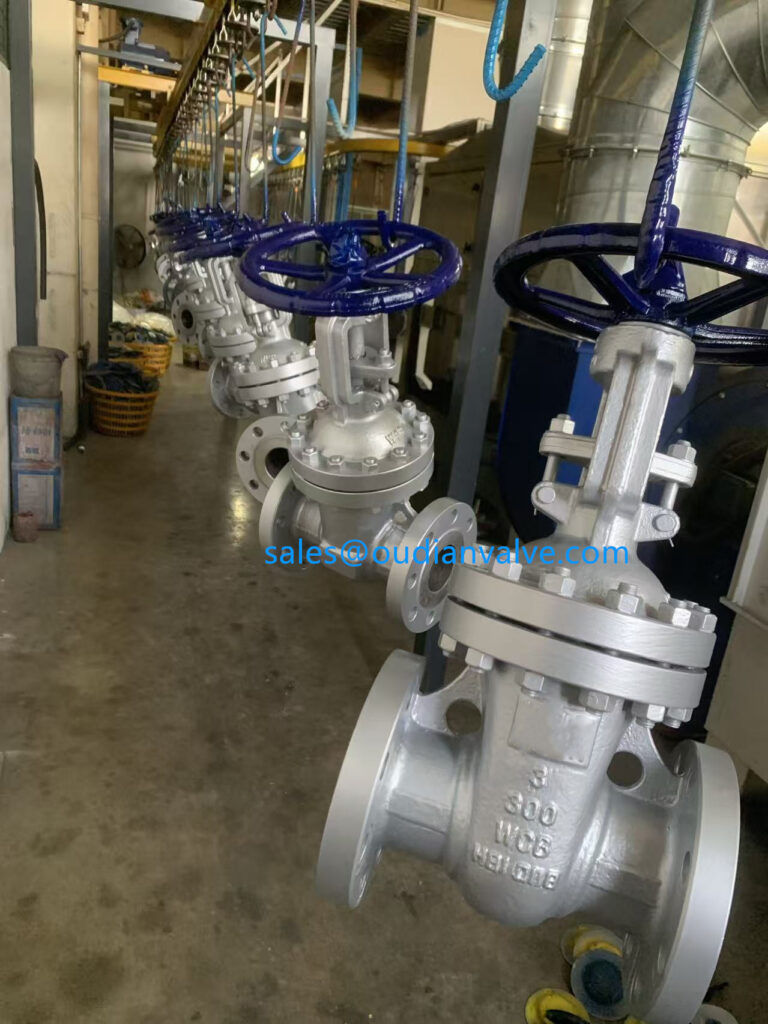
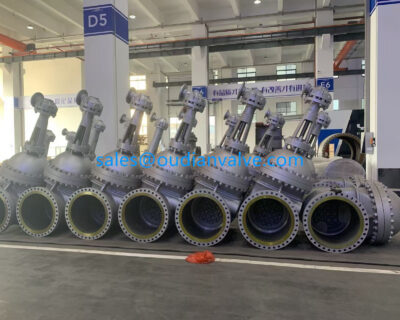
Bolted-bonnet steel gate valves deliver dependable isolation in harsh refining conditions.
Internal Design and Mechanical Construction
The mechanical closure members, stem linkages, and internal bonnet geometry differ significantly between the two standards. These internal design parameters dictate how each valve responds to thermal expansion, line pressure, and packing wear.
API 600 mandates a rising stem with an outside screw and yoke design, paired with a solid or flexible wedge gate. The seating surfaces sit parallel or slightly tapered, requiring high mechanical seating force only at the final closing position. BS 1873 globe valves use a flat, conical, or parabolic plug disc that presses directly against a seat ring oriented perpendicular or angled to the pipeline axis.
BS 1873 also governs lift-type check valves, where the disc moves freely along the vertical axis via flow momentum and gravity to stop fluid reversal. Stem guided designs and anti-rotation provisions protect sealing integrity during severe flow throttling.
API 600 requires substantial corrosion allowances and heavy stem diameters to resist high pipeline bending stresses, whereas BS 1873 focuses internal tolerances on seat alignment, plug contouring, and backflow shutoff performance.
Pressure Classes, Nominal Sizes, and Dimensions
Both standards organize pressure containment capabilities through standard class designations, but the practical size ranges and dimension rules align with different primary references. Understanding the dimensional envelope helps piping designers verify structural layout compatibility.
API 600 covers nominal pipe sizes from NPS 1 through NPS 42 across ASME pressure classes 150, 300, 600, 900, 1500, and 2500. BS 1873 addresses steel globe valves and check valves from NPS 1/2 up to NPS 16, covering British Standard and ASME-compatible rating classes from Class 150 through Class 2500.
| Paramètre | API 600 | BS 1873 | Engineering Comparison |
| Valve Category | Vannes | Globe and check | Different mechanical styles serving separate pipeline duties |
| Size Coverage | NPS 1 to 42 | NPS 1/2 to 16 | API 600 extends to larger main transmission diameters |
| Pressure Classes | Class 150 to 2500 | Class 150 to 2500 | Both cover matching intermediate and high pressure tiers |
| Face-to-Face Spec | ASME B16.10 | BS 2080 or B16.10 | Installation lengths require layout verification |
Face-to-face dimensions and bonnet heights require careful evaluation during piping skid design.
Material Specifications and Pressure-Temperature Ratings
Material selections for pressure boundary parts and internal trim components dictate thermal and chemical resistance limits. Operating pressure limits drop as process fluid temperatures climb, following established industry pressure-temperature curves.
API 600 relies on ASME B16.34 for its shell pressure-temperature ratings and material group designations, primarily utilizing cast steel alloys such as ASTM A216 WCB, ASTM A352 LCC, and ASTM A351 CF8M. Standardized trim numbers specify hardfacing alloys, including Stellite and 13-Cr stainless steel, on the wedge and seat rings to combat galling.
BS 1873 references BS 1560 and BS EN materials alongside compatible ASTM grades for cast and forged steel components. Seating materials in BS 1873 globe units are formulated to handle high localized velocities and fluid impingement during throttling, where cavitation and wire-drawing can damage softer metal faces.
Verify that specified trim numbers correspond precisely with line composition, especially when handling hydrogen, sour crude, or high-temperature superheated steam.
Pressure Testing, Inspection, and Related Standards
Factory verification protocols confirm the pressure integrity of the cast body, bonnet connection, stem packing, and seat shutoff. Each standard references distinct regional and international test codes to confirm compliance.
API 600 gate valves undergo inspection and hydrostatic testing in accordance with API 598. This testing routine mandates high-pressure hydrostatic shell tests, high-pressure closure tests, and low-pressure pneumatic seat leak tests. Complementary standards like ISO 10434 parallel API 600 for heavy-duty petroleum applications.
BS 1873 valves historically referenced BS 6755 for testing procedures, which has largely been succeeded by BS EN 12266 standards across British and European facilities. Marking requirements conform to MSS SP-25 or EN 19, detailing nominal size, rating class, melt identification, body material, and flow direction arrows for unidirectional globe configurations.
- API 598 defines permissible seat leakage rates and holding durations for metal-seated gate valves.
- BS EN 12266 outlines shell strength and seat tightness criteria for globe stop and check mechanisms.
- MSS SP-25 governs nameplate data, heat numbers, and foundry identification cast onto the valve body.
- ASME B16.34 establishes non-destructive examination criteria for critical wall thickness sections.
Substitution Feasibility and Piping System Compatibility
Valves made to API 600 cannot substitute for valves made to BS 1873 due to differing operational mechanics. Substituting a gate valve into a location designed for a globe valve removes throttling capability and can lead to rapid seat erosion.
When an API 600 gate valve is operated partially open to regulate flow, high-velocity fluid chatters the wedge, vibrating the stem and destroying the seating surfaces. Conversely, replacing an API 600 gate valve with a BS 1873 globe valve in an isolation line introduces severe pressure drop and turbulence, elevating operating pump head requirements and obstructing pipeline cleaning tools.
System designers must consult updated project specifications and engineering standards before modifying valve selections. Piping layouts, support spacing, and actuator sizing also change when swapping valve styles because globe valves generally require higher operating thrust to seal against process line pressure.
Operating a standard gate valve in a cracked or partially open position leads to turbulent flow separation, severe vibration, and wire-drawing along the seating faces.
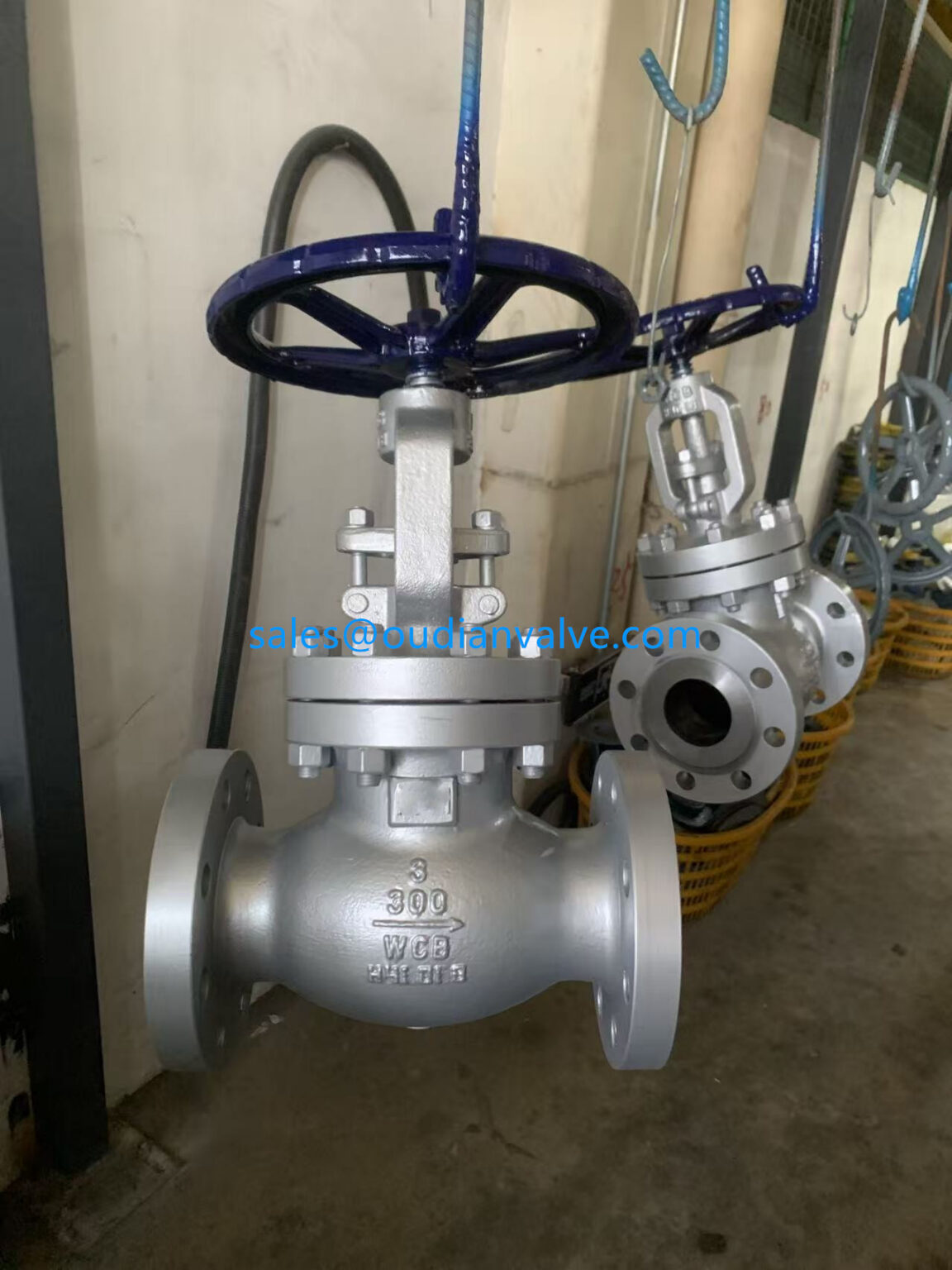
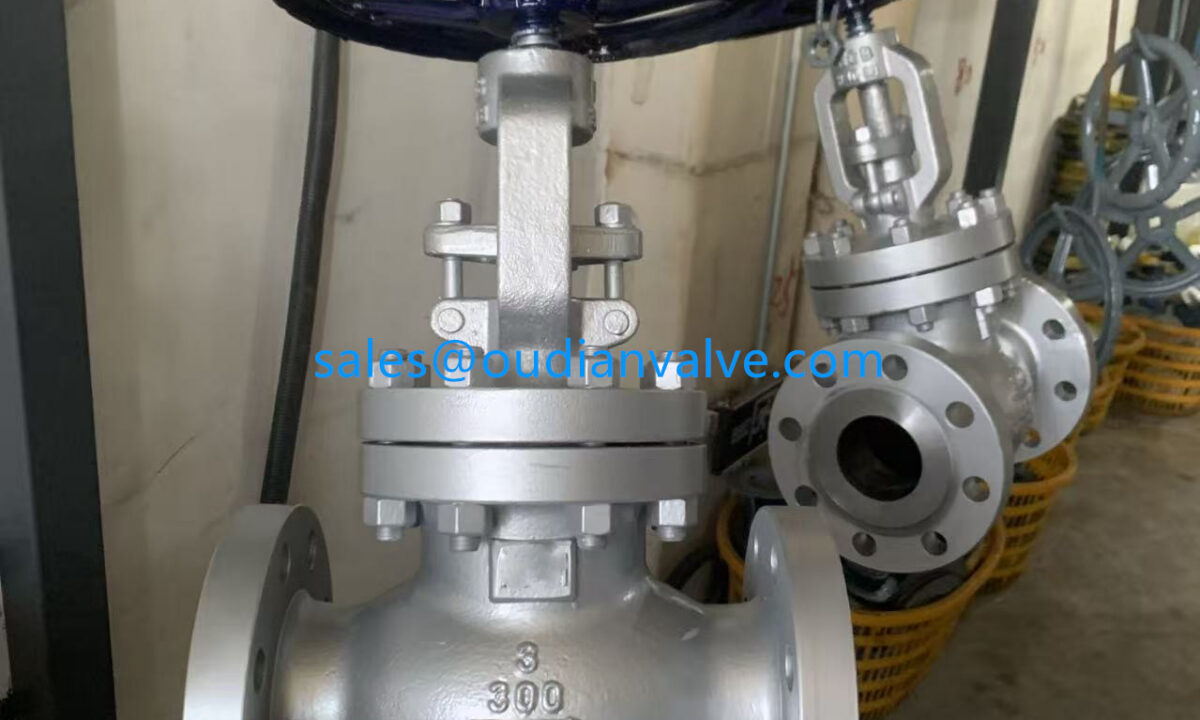
Verifying valve design against process fluid dynamics avoids premature seat damage.
Application Guidance and Standard Selection Considerations
Determining whether to reference API 600 or BS 1873 depends entirely on the operational duty cycle and fluid handling needs of the system. Each valve category addresses specific processing demands across modern industrial facilities.
API 600 gate valves serve as the standard choice for main isolation manifolds in petroleum refining, hydrocarbon processing, offshore platforms, and petrochemical transmission. These installations prioritize unobstructed straight-line flow and tight metal-to-metal shutoff during plant maintenance shutdowns.
BS 1873 globe and check valves suit boiler feed lines, cooling water regulation, chemical dosing, and high-pressure steam service where precise manual throttling or automated flow restriction is mandatory. Check valves built to BS 1873 prevent pump reverse rotation and protect upstream processing hardware from pressure surges.
API 600 Applications
Suits refinery isolation, crude oil transmission, and primary petrochemical headers requiring full flow and low pressure drop.
BS 1873 Applications
Suits steam distribution headers, bypass lines, cooling loops, and boiler systems requiring throttling control and backflow prevention.
Frequently Asked Questions
Can an API 600 valve replace a BS 1873 valve in a throttling line?
No, an API 600 gate valve cannot function as a throttling device. Partially opening a gate valve causes severe fluid chattering, localized erosion, and seat degradation that compromises line shutoff.
What is the difference in flow resistance between these standards?
API 600 gate valves offer minimal flow resistance with a nearly negligible pressure drop because fluid passes straight through the bore. BS 1873 globe valves introduce a high pressure drop because fluid must travel through internal direction changes around the disc.
Does API 600 cover check valves?
API 600 covers only bolted-bonnet steel gate valves. Swing and lift check valves are covered by other standards such as API 594 or BS 1873.
Which pressure testing standard applies to API 600 valves?
API 600 gate valves are inspected and tested under API 598. This specification covers shell proof testing, backseat tightness, and allowable leakage for both metal and resilient seat constructions.
Are the face-to-face dimensions identical for both standards?
Face-to-face dimensions are generally not identical between gate and globe valves of the same nominal size. While both standards frequently reference ASME B16.10, globe valves often require different installation lengths to accommodate their internal flow geometry.
Summary of Valve Standards
Selecting between API 600 and BS 1873 requires identifying whether the process line demands on-off isolation or fluid throttling and backflow prevention. Always review current project specifications, operating temperatures, fluid erosiveness, and applicable regional piping codes before issuing purchase orders.