

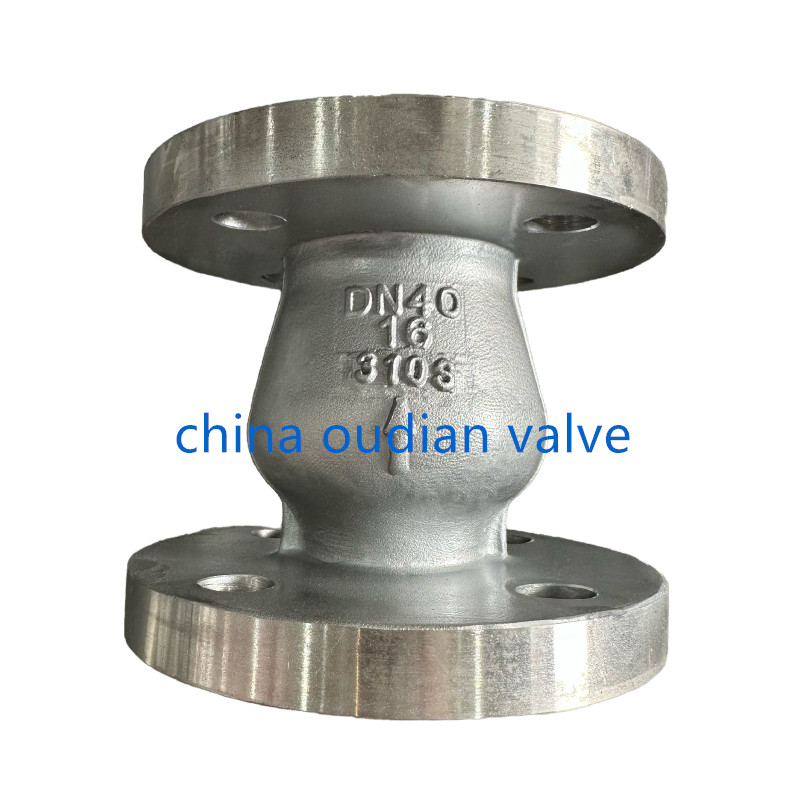
Válvulas de retención de flujo axial, 310S, DN40, PN16, extremo bridado
Válvulas de retención de flujo axial de China, válvulas de retención de flujo axial 310S, válvulas de retención de flujo axial DN40, válvulas de retención de flujo axial PN16, válvulas de retención de flujo axial con extremo de brida, fábrica de válvulas de retención de flujo axial.
Un Válvula de retención de flujo axial (también conocida como válvula de retención de boquilla o válvula de retención silenciosa) es Una válvula antirretorno avanzada diseñada para evitar el reflujo en sistemas de tuberías críticos.. A diferencia de las válvulas de retención de clapeta estándar, el disco se mueve a lo largo del eje central de la tubería, guiado por un mecanismo asistido por resorte.
Este diseño lo convierte en la solución definitiva para prevenir golpe de ariete y sobrepresiones en sistemas de alta presión o alta velocidad.
Cómo funciona
- El flujo se abre: El fluido penetra en el interior, comprimiendo un resorte interno y empujando suavemente el disco aerodinámico para separarlo de su asiento.
- El flujo disminuye: A medida que disminuye la velocidad del fluido, el resorte empuja proactivamente el disco hacia atrás, hacia el asiento. antes En realidad, el flujo se invierte.
- Cierre silencioso: El disco se cierra en un recorrido muy corto, asentándose silenciosamente justo en el momento en que la velocidad del fluido es cero.
Principales ventajas sobre las válvulas de retención de clapeta
- Sin golpe de ariete: El cierre proactivo del resorte evita el golpe de fluido inverso que provoca devastadores choques de presión.
- Carrera ultracorta: El disco se desplaza solo una fracción de la distancia que recorre una válvula de clapeta, lo que da como resultado tiempos de cierre increíblemente rápidos (a menudo inferiores a 0,1 segundos).
- Baja caída de presión: La geometría interna tiene una forma dinámica similar a la de una boquilla Venturi, lo que minimiza la turbulencia y la pérdida de energía durante el funcionamiento.
- Instalación flexible: Se puede instalar de forma segura en tuberías horizontales y verticales (fluyendo hacia arriba o hacia abajo) porque se basa en la tensión del resorte en lugar de la gravedad.
Especificaciones técnicas y materiales
- Normas de diseño: Comúnmente construido para API 6D, ASME B16.34, o DIN/EN estándares.
- Rango de tamaños: DN50 a DN1500+ (2″ a 60″+).
- Clasificación de presión: ASME Clase 150 a Clase 2500; PN10 a PN420.
- Materiales disponibles: Acero al carbono estándar (WCB), acero inoxidable (CF8M), Super Duplex y aleaciones premium como Titanio TA2 para entornos químicos agresivos o marinos.
Aplicaciones principales
- Líneas de descarga de la bomba: Se instala inmediatamente después de las bombas grandes de agua, petróleo o gas para protegerlas de las sobretensiones causadas por el flujo inverso cuando se apagan.
- Estaciones de compresión: Se utiliza en gasoductos donde las rápidas fluctuaciones del caudal requieren respuestas de las válvulas en fracciones de segundo.
- Desalinización y transmisión de agua: Fundamental en redes de agua de alto volumen para proteger la infraestructura de grietas catastróficas causadas por el golpe de ariete.
Preguntas frecuentes: Válvulas de retención de flujo axial
Aquí hay una lista de preguntas frecuentes (FAQ) sobre Válvulas de retención de flujo axial para ayudarle a comprender sus ventajas en cuanto a funcionamiento, selección y rendimiento.
1. ¿Por qué se denomina válvula de retención "silenciosa" a una válvula de retención de flujo axial?
Se llama silencioso porque se cierra antes El fluido en la tubería puede invertir su dirección. En las válvulas de retención de clapeta estándar, el fluido invierte su dirección primero y cierra el disco de forma violenta, generando un fuerte golpe y una onda de presión destructiva (golpe de ariete). La válvula de flujo axial utiliza un resorte para cerrar el disco silenciosamente justo en el momento en que la velocidad del fluido se reduce a cero.
2. ¿Se puede instalar una válvula de retención de flujo axial en posición vertical?
Sí. A diferencia de las válvulas de retención de clapeta, que dependen de la gravedad y deben instalarse horizontalmente o en líneas verticales de flujo ascendente, las válvulas de retención de flujo axial dependen de tensión del resorte interno. Esto permite instalarlos en cualquier orientación, incluso en líneas verticales con flujo descendente, sin perder rendimiento.
3. ¿Cuál es la diferencia entre un diseño de “carrera corta” y uno de “carrera larga”?
Las válvulas de retención de flujo axial inherentemente presentan una carrera corta, Esto significa que el disco solo recorre una distancia muy corta para abrirse o cerrarse por completo (normalmente solo 1/4 del diámetro de la tubería). Esta corta distancia de recorrido es la razón principal por la que la válvula puede cerrarse tan rápidamente, a menudo en menos de 0,1 segundos.
4. ¿El resorte interno genera una gran caída de presión?
No, la caída de presión es realmente muy baja. El cuerpo interno de la válvula tiene una forma aerodinámica de boquilla Venturi. Esta geometría aerodinámica guía el fluido suavemente alrededor del disco, minimizando la turbulencia, la restricción y la pérdida de energía a pesar de la presencia del resorte.
5. ¿Cuáles son las aplicaciones más comunes de estas válvulas?
Son los preferidos en sistemas de infraestructura crítica, de alto riesgo y alta velocidad, tales como:
- Colectores de bombas múltiples (evitando el reflujo hacia las bombas inactivas).
- Estaciones compresoras de gas (manejo de ciclos de flujo rápido).
- Oleoductos de petróleo crudo y gas natural licuado (GNL) (protección de equipos de alto valor contra sobretensiones).
- Distribución de agua a alta presión y redes desalinizadoras.
6. ¿Las válvulas de retención de flujo axial requieren mantenimiento regular?
Ellos requieren mantenimiento significativamente menor que las válvulas de retención de clapeta. Dado que el disco se mueve suavemente a lo largo de un eje central guiado por casquillos, no hay bisagras ni pasadores externos pesados que se desgasten. Sin embargo, tras varios años de funcionamiento intensivo, se debe inspeccionar el resorte interno y los casquillos guía para detectar desgaste.