


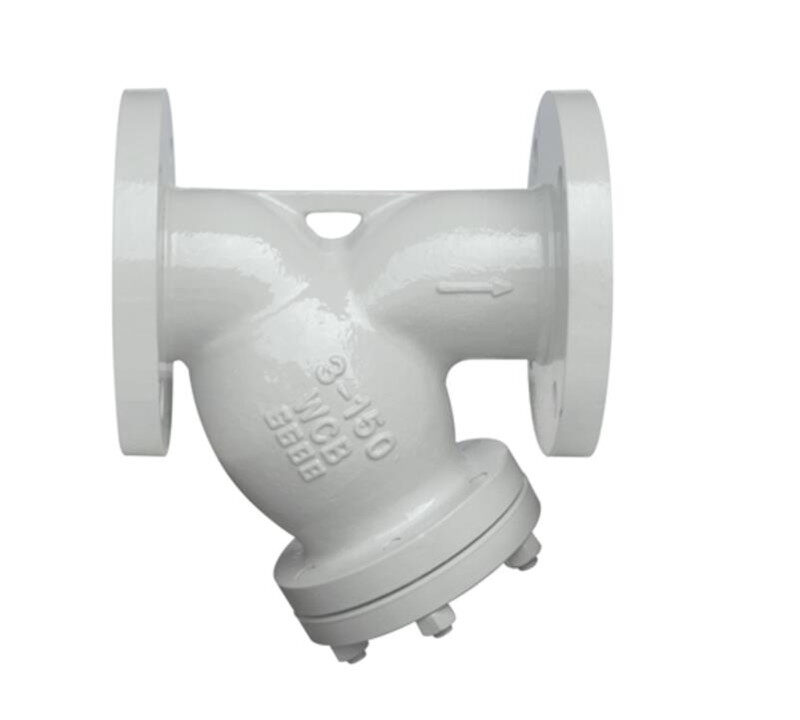
ASME 16.34 Strainer Engineering and Selection Guide
Selecting the proper configuration depends on process media compatibility, operating temperatures, shell stress thresholds, and overall pipeline design codes. System requirements dictate whether a strainer body requires standard, special, or limited class ratings under the standard.
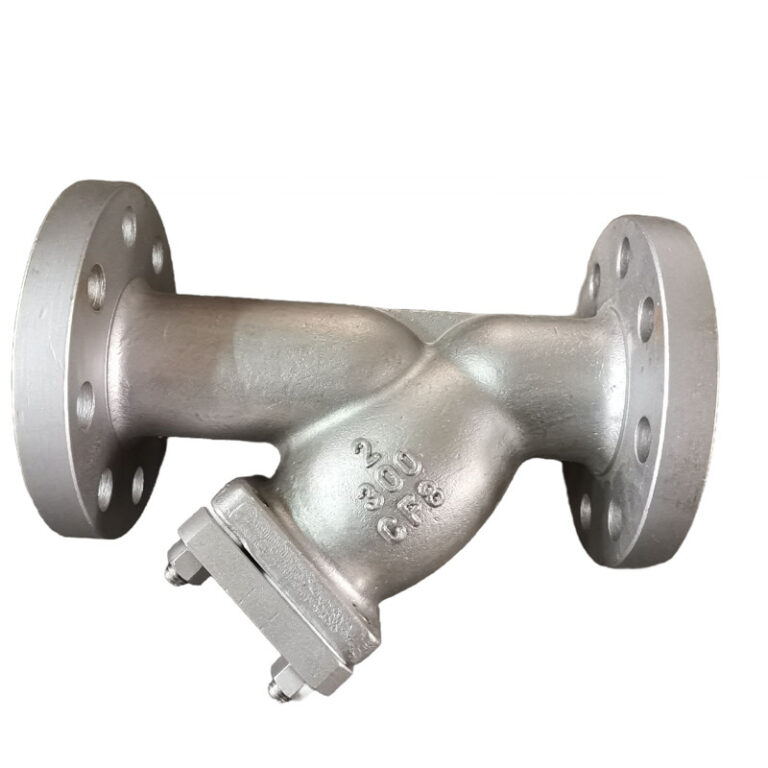
The Scope of ASME B16.34 and the Valve Distinction
ASME B16.34 formally governs valves with flanged, threaded, and welding ends, establishing baseline rules for pressure-temperature ratings, minimum wall thickness, and shell pressure integrity. The standard does not exist as a dedicated code for fluid filtration or strainer internal geometries. When manufacturers market an ASME B16.34 strainer, the designation indicates that the external pressure boundary adheres to valve-level pressure-containment criteria rather than an independent filtration standard.
Because strainers operate as pressurized vessels or in-line piping components, piping codes such as ASME B31.3 or ASME B31.1 require unlisted components to demonstrate equivalent structural integrity. Engineers therefore invoke the wall thickness and rating tables of ASME B16.34 to qualify the casting or forging of the strainer body. Strainer-specific performance parameters, such as basket open area ratios and screen mesh micron retention, remain governed by manufacturer standards or supplemental specifications rather than ASME B16.34.
| Standard | Primary Scope | Application to Strainers |
| ASME B16.34 | Valves | Governs shell thickness and ratings |
| ASME B16.5 | Pipe Flanges | Defines mating flange dimensions and facings |
| ASME B16.25 | Butt Weld Ends | Specifies weld preparation geometry on nozzles |
| API 598 | Valve Inspection | Provides shell test procedures and durations |
Pressure-Temperature Ratings and Body Materials
Pressure-temperature ratings dictate the maximum allowable working pressure of a strainer across fluctuating thermal ranges. ASME B16.34 categorizes materials into specific metallurgical groups, assigning working pressure allowances according to standard pressure classes.
Cast carbon steel, represented by ASTM A216 Grade WCB, serves as a standard shell material for general utility and hydrocarbon piping systems. Austenitic stainless steel, such as ASTM A351 Grade CF8M, provides resistance against aggressive chemical media and cryogenic conditions while maintaining compliance with standard rating tables. Selecting an appropriate pressure class requires evaluating both normal operating values and potential upset conditions within the line.
- Class 150 ratings handle moderate pressure levels in utility, cooling water, and low-pressure steam services.
- Class 300 designs support elevated pressures commonly encountered in chemical processing and refining loops.
- Class 600 through Class 2500 constructions provide heavier pressure containment for high-pressure power generation headers.
- Material group compatibility dictates whether a body requires derating when exposed to extreme elevated temperatures.
Strainer Configurations and End Connections
Strainer bodies are manufactured in multiple mechanical layouts to balance particulate holding capacity with piping layout constraints. End connections must align with ASME piping norms to maintain leak-tight joints under dynamic thermal expansion.
Y-Pattern Design
Compact diagonal body orientation suitable for liquid and gas lines with low debris volume, fitting tight physical envelopes.
Basket Design
Vertical chamber configuration providing larger interior volume and greater filtration surface area for heavy liquid loading.
Conexiones finales
Flanged ends matching ASME B16.5, threaded joints under ASME B1.20.1, or welding preparations per ASME B16.25.
The choice between flanged and welded end styles affects field maintenance procedures. Flanged connections facilitate straightforward removal of the entire unit during major turnarounds, whereas butt-welded ends eliminate fugitive emission points in severe service applications.
Wall Thickness and Internal Element Design
ASME B16.34 mandates minimum shell wall thicknesses based on inside diameter, design pressure class, and allowable material stress values. These rules prevent mechanical failure, shell deformation, and fatigue caused by cyclical line pressures.
While the standard defines shell dimensions, it does not specify the design of internal filter elements. The internal screen or basket experiences differential pressure as particulate debris accumulates over operating cycles. Designers must specify adequate basket structural support to prevent catastrophic element collapse during high differential pressure events.
Internal filter screens are not evaluated under ASME B16.34 calculations; specify perforated sheet thickness and maximum allowable clean-to-clogged differential pressure separately in project purchase documents.

Pressure Testing and Inspection Protocols
ASME B16.34 establishes rigorous non-destructive examination and pressure testing mandates to verify pressure envelope integrity. Testing methods verify that cast or forged pressure housings remain free from porosity, cracks, and structural defects prior to installation.
Quality plans typically adapt testing intervals and pressures based on the pressure class and material selection of the casting. The standard specifies shell hydrostatic testing at elevated test pressures to confirm structural resistance against rupture.
- Visual and dimensional examinations confirm conformance to body wall minimums and nozzle end alignments.
- Non-destructive examination, including liquid penetrant, magnetic particle, or radiographic inspection, identifies internal casting flaws.
- Hydrostatic shell testing applies water pressure to the fully assembled body to verify casting and joint soundness.
- Drain plug and cover seal examinations verify secondary pressure-containing closures against leakage.
Marking Requirements and Material Documentation
Clear identification on the exterior of the component supports field verification and long-term asset management. ASME B16.34 outlines required markings that must be cast, forged, or stamped onto the pressure boundary or an attached metal nameplate.
Physical Marking Details
Markings include nominal pipe size, pressure class designation, manufacturer trade name, and specific melt heat identification for tracking.
Material Test Reports
Certified documentation provides chemical analysis, mechanical property verification, and heat treatment records matching ASTM standards.
Documentation verification allows field inspectors to confirm that installed equipment conforms to the certified piping design. Failure to match casting heat codes with provided documentation can result in work stoppages during quality audits.

Verifying Code Compliance and Project Requirements
Procuring an ASME B16.34 strainer requires careful cross-examination between manufacturer catalog claims and facility piping standards. Because ASME B16.34 does not certify strainers directly, suppliers often state that equipment complies with the intent of the standard.
Buyers must confirm whether compliance applies solely to the body casting dimensions or extends to full inspection, pressure testing, and quality control procedures. Establishing specific engineering clauses in procurement requisitions helps prevent misunderstandings regarding non-destructive testing, cover bolting calculations, and blow-off connection ratings.
Require suppliers to state explicitly which sections of ASME B16.34 are fulfilled, specifically identifying shell wall thickness calculations, hydrostatic test standards, and material certification levels.
Preguntas frecuentes
Does ASME B16.34 officially regulate pipeline strainers?
No, ASME B16.34 is written specifically for valves with flanged, threaded, and welding ends. Piping engineers apply its wall thickness, pressure-temperature ratings, and testing rules to strainers to establish uniform pressure boundary safety across piping systems.
What is the difference between an ASME B16.34 strainer and an ASME B16.5 strainer?
ASME B16.5 governs only the dimensions and pressure ratings of the end flanges. ASME B16.34 governs the overall pressure-retaining body, including shell wall thickness, structural calculations, and body pressure-temperature limits.
Which materials are standard for an ASME 16.34 compliant strainer body?
Common materials include cast carbon steel under ASTM A216 Grade WCB and cast stainless steel under ASTM A351 Grade CF8M. Forged equivalents include ASTM A105 for carbon steel and ASTM A182 Grade F316 for stainless steel.
Are internal strainer screens covered by ASME B16.34?
No, internal filtration media, perforated sheets, and wire mesh fall outside the scope of ASME B16.34. Internal components must be specified according to process filtration requirements, flow capacity, and differential pressure limits.
What hydrostatic shell pressure is applied during testing?
The hydrostatic shell test pressure is determined by the material group and pressure class defined in ASME B16.34 tables. The applied test pressure is typically higher than the rated working pressure at ambient temperature to verify structural containment.
Summary of ASME B16.34 Strainer Selection
Specifying an ASME 16.34 strainer provides verified pressure-containment integrity by aligning shell thickness, metallurgy, and pressure-temperature ratings with rigorous valve standards. Verification of manufacturer compliance, design calculations, and certified material test reports protects process piping systems from structural vulnerabilities. Aligning procurement specifications with overall plant piping codes yields reliable long-term filtration performance.



