


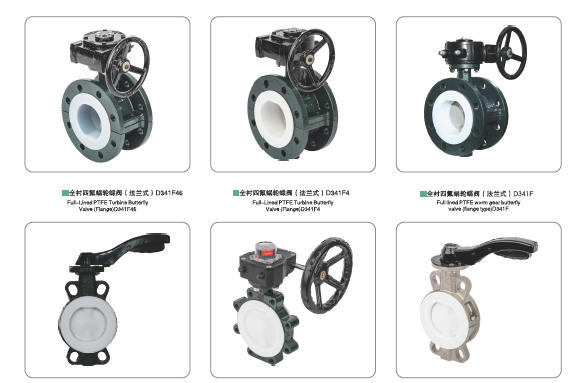
Everything You Need to Know About Lined Butterfly Valves
Selecting the appropriate valve assembly depends on media aggressiveness, line pressure, operating temperature, and piping layout. Proper matching of liner polymers to process chemistry prevents premature seat degradation and protects system integrity over extended production runs.
Operating Principles and Primary Components
Lined butterfly valves function on a quarter-turn mechanism where a centered or offset disc turns parallel or perpendicular to the media path. Rotating the shaft ninety degrees moves the encapsulated disc from fully open to fully closed against a resilient polymer seat.
Internal fluid contact remains entirely restricted to non-metallic barriers, isolating structural castings from corrosive exposure. The combination of structural metal shells and chemically inert linings preserves mechanical strength while handling aggressive fluids.
Disc and Stem Assembly
The internal disc features full polymer encapsulation or high-nickel alloy construction to prevent corrosive contact. The stem connects directly to external actuation while secondary elastomer seals prevent external stem leakage.
Encapsulated Body and Seat
A ductile iron or carbon steel outer casing delivers pressure containment and structural rigidity. The internal lining wraps around the flow bore and extends across the flange faces, serving as an integrated flange gasket.
Body Configurations: Wafer vs Lug Designs
Piping layout and line maintenance requirements dictate the external body style of lined butterfly valves. Both wafer and lug designs maintain identical internal flow geometries while offering distinct bolting advantages for piping systems.
External body geometry determines bolting configurations and downstream isolation capabilities.
Wafer designs center between adjacent pipeline flanges using through-bolts that clamp the entire assembly together. Lugged bodies incorporate threaded bolt holes around the casing, allowing direct bolting to individual pipe flanges.
Wafer-Type Construction
Wafer bodies offer a lightweight, compact footprint that fits neatly into confined piping spaces. They require continuous pipe tension across both flanges, making them economical for continuous run applications.
Lug-Type Construction
Lugged bodies permit dead-end service and downstream pipe disassembly while maintaining upstream pressure. Threaded inserts allow operators to service adjacent piping sections without removing the valve from line service.
Lining Materials and Chemical Resistance
Polymer selection determines the chemical envelope and thermal stability of lined butterfly valves. Liners act as continuous physical barriers against strong acids, oxidizing agents, caustic solutions, and ultrapure fluids.
Elastomeric backing energizers beneath fluoropolymer liners maintain constant sealing force against the disc edge. This dual-layer construction accommodates thermal expansion cycles without compromising fluid isolation.
| Lining Polymer | Chemical Profile | Operational Trait |
| PTFE | Broad acid and solvent resistance | Low friction coefficient with non-stick properties that minimize actuator torque requirements. |
| PFA | Aggressive chemical stability | Melt-processable polymer delivering high density, reduced permeation, and exceptional crack resistance. |
| FEP | Inorganic acid compatibility | Smooth surface finish supporting clean-in-place routines and high-clarity sanitary applications. |
| UHMWPE | Erosive slurry resistance | Tough polymer structure withstanding abrasive particulates alongside mild corrosive media. |
Fluoropolymer liners exhibit zero porosity when properly molded and sintered over metallic cores. Selecting the correct compound prevents premature liner cracking or chemical permeation through the internal lining layer.
Operational Advantages of Lined Butterfly Valves
Lined butterfly valves combine the corrosion performance of high-grade polymers with the mechanical durability of heavy metal castings. This architecture delivers economical flow management compared to solid exotic alloy valves.
Compact valve dimensions reduce structural stress on chemical piping racks.
The streamlined disc profile produces minimal resistance when aligned with the line media, supporting steady flow rates and low pressure drop across the valve chamber.
Ventajas
- Chemical resistance comparable to exotic alloys at lower manufacturing and replacement expense.
- Compact face-to-face dimensions that decrease pipe rack weight loads and simplify installation.
- Self-gasketing liner faces that eliminate the need for separate flange gaskets during assembly.
Limitaciones
- Thermal boundaries determined by polymer deflection temperatures rather than metal body limits.
- Vulnerability of thin fluoropolymer linings to direct mechanical gouging from heavy solid debris.
- Susceptibility to negative pressure collapse if liners lack mechanical locking under vacuum service.
Mechanical Limitations and Process Considerations
Operating conditions must respect polymer temperature thresholds and mechanical stress tolerances. While the external cast metal casing supports rated piping stresses, the internal liner dictates process compatibility limits.
Excessive thermal cycling causes unequal expansion between the metal casing and polymer liner. Over time, rapid thermal swings can induce localized stresses, requiring careful ramp-rate control in extreme temperature operations.
High-vacuum applications require mechanically bonded or thick-walled liners to prevent liner collapse away from the valve casing. Always verify vacuum ratings with the valve supplier before installing standard lined assemblies into negative-pressure lines.
Gas permeation presents an additional operational factor in high-pressure halogen or acidic gas service. Selecting high-density liners like PFA reduces molecular migration through the polymer matrix toward the structural shell.
Comparing Lined Butterfly Valves with Unlined Alternatives
Evaluating valve configurations involves balancing initial procurement costs against chemical compatibility and replacement cycles. Unlined valves depend entirely on structural metal metallurgy to resist fluid degradation.

Polymer linings remove the need for expensive exotic alloy castings in corrosive services.
Standard metallic butterfly valves manufactured from stainless steel or nickel alloys provide broad mechanical durability but remain susceptible to specialized chemical attacks like chloride pitting or crevice corrosion.
Lined Butterfly Valves
- Isolates casing from corrosive media using inert fluoropolymer barriers.
- Eliminates galvanic corrosion between mismatched metallic pipe components.
- Offers lower initial expenditure compared to solid high-nickel alloy castings.
Unlined Metal Valves
- Tolerates extreme temperature extremes beyond standard polymer limits.
- Provides rugged resistance against sharp, abrasive metal particulates.
- Requires expensive specialized metallurgies to survive aggressive acids.
Industrial Applications Across Fluid Systems
Lined butterfly valves serve critical isolation and throttling roles across diverse processing industries. Their clean flow paths and inert contact surfaces protect product purity and process safety.
- Chemical Processing: Regulating hydrochloric acid, sulfuric acid, wet chlorine, and solvent streams where metallic valves suffer rapid degradation.
- Water Treatment Systems: Isolating corrosive coagulants, sodium hypochlorite dosing lines, and acidic effluent neutralization streams.
- Pharmaceutical Manufacturing: Maintaining ultrapure process conditions without metal ion contamination or surface residue buildup.
- Food and Beverage Processing: Managing acidic sanitizing chemicals, aggressive clean-in-place solutions, and beverage concentrate lines.
- Pulp and Paper Operations: Handling bleaching agents, chlorine dioxide solutions, and caustic digestion liquors across processing loops.
Installation and Maintenance Best Practices
Proper installation practices preserve liner integrity and prevent unwanted leakage around pipe flange connections. Misaligned piping imposes uneven mechanical stresses that can deform internal polymer sealing faces.

Even flange bolt torque distribution protects integrated polymer sealing surfaces.
Lined butterfly valves feature integrated sealing faces formed by the liner wrapping over the flange contact area. Adding external sheet gaskets is unnecessary and can distort the polymer sealing boundary.
Leave the disc slightly cracked open during flange insertion to prevent pinching the disc edge between pipe faces. Tighten flange bolts in a cross-star pattern in incremental stages to establish uniform sealing compression.
Routine maintenance schedules should include visual stem seal checks and verification of actuator travel stops. Preventing disc over-travel reduces localized compression set on resilient elastomer seat backing cushions.
Preguntas frecuentes
What makes lined butterfly valves suitable for corrosive chemical service?
Lined butterfly valves encapsulate the internal flow bore, stem, and disc with inert polymers like PTFE or PFA. This design prevents process chemicals from contacting metallic structural parts, halting corrosion mechanisms.
Do lined butterfly valves require additional flange gaskets during installation?
Lined butterfly valves do not require external flange gaskets under normal mounting conditions. The lining material wraps over the raised face of the valve body, acting as a built-in elastomeric seal against adjacent pipe flanges.
Can lined butterfly valves be used for vacuum applications?
Lined butterfly valves can handle vacuum service when manufactured with mechanically locked or molded-in liners. Standard loose-lined designs risk liner collapse under deep negative pressure if not specifically configured for vacuum duty.
How does a wafer-style body differ from a lug-style body?
Wafer-style bodies clamp between pipe flanges using continuous through-bolts that support the valve body. Lug-style bodies feature threaded bolt holes that allow dead-end service and downstream pipe maintenance without disturbing upstream line pressure.
How should actuators be sized for lined butterfly valves?
Actuators require sizing based on break-away torque, operating line pressure, and fluid lubricity. Because polymer-to-polymer interference seats generate higher friction than lubricated metal seats, sizing should incorporate appropriate safety margins specified by manufacturer documentation.
Summary of Lined Butterfly Valve Selection
Lined butterfly valves deliver chemical isolation, bi-directional shut-off, and low-maintenance flow control across demanding industrial processing lines. Matching fluoropolymer lining materials to operating chemistry and piping geometry supports dependable fluid management without the high expense of exotic metal alloys. Rigorous alignment during installation and proper torque practices keep process systems running safely over extended operating cycles.



