


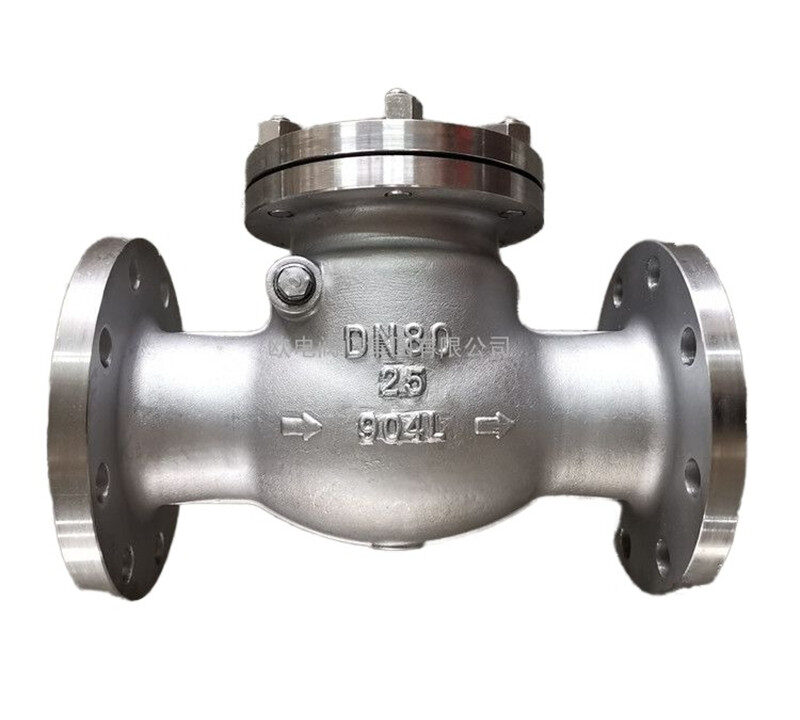
Check Valve vs Non‑Return Valve: What’s the Difference?
Selecting between hardware labelled under either description depends on process temperature, system pressure, pipeline orientation, and industry design standards. Understanding how flow velocity, cracking pressure, and valve trim influence fluid movement helps engineering teams specify the appropriate device for their pipe network.
The Mechanical Role of Non-Return and Check Valves
A non-return valve or check valve functions as an automated safety device within fluid and gas networks. Its core mechanical duty is preventing backflow, which shields mechanical pumps, flow metres, and upstream processing equipment from damage. When positive line pressure subsides or downstream pressure rises, the internal closure element seals against the valve seat without manual intervention.
Reverse flow in an unprotected system can lead to severe operational failures. Pumps subjected to backward fluid flow may spin in reverse, resulting in mechanical seal destruction and motor burnouts. Contaminated fluid can also siphon back into clean feedlines, compromising process integrity across municipal water supplies and industrial mixing lines.
Unidirectional flow regulation also maintains static head pressure within tall piping arrangements. Keeping liquid columns filled reduces priming cycles for supply pumps and limits voids that contribute to transient pressure shocks.
Both valve designs rely strictly on line pressure differentials to function, operating automatically without electrical actuators, gearboxes, or operator intervention.
Terminology Differences Across Regions and Standards
Regional technical customs drive the vocabulary applied to these unidirectional flow components. European and British engineering literature predominantly uses the phrase non-return valve, abbreviated widely across technical drawings as NRV. Conversely, American engineering specifications and maritime conventions favour check valve or clack valve.
Standardisation bodies formalise these naming conventions through published technical specifications:
- United Kingdom and European water systems frequently reference BS EN 13959 for general non-return units.
- International petrochemical, petroleum, and natural gas infrastructure adheres to American Petroleum Institute guidelines like API 594 or API 6D for check valves.
- Mechanical engineering drawings following the American Society of Mechanical Engineers designate components under ASME B16.34 criteria.
- HVAC and domestic plumbing trades regularly swap the terms based on vendor catalogues and supplier traditions.
In municipal plumbing applications across the United Kingdom, both terms are considered acceptable on design sheets provided the valve meets BS EN 13959 standards. Evaluating procurement options from specialised suppliers of non-return valves confirms that component manufacturing standards, wall thicknesses, and pressure classes govern quality rather than nomenclature.
How Check Valves and Non-Return Valves Operate
Automated operation in these valves is driven entirely by internal differential pressure across the flow channel. The internal closure mechanism—whether a hinged flapper, a guided plug, or a floating sphere—requires a designated threshold pressure to displace from the valve seat. This baseline pressure requirement is known as cracking pressure.
The sequence of operation proceeds through four distinct mechanical phases:
- Upstream pressure builds until it overcomes the internal spring tension or disc weight, moving the closure element off the seat.
- Media travels forward through the valve orifice with minimal restriction, maintaining open trim position via continuous line velocity.
- Forward flow slows as pumping cycles complete, lowering hydrodynamic forces holding the closure component open.
- Downstream backpressure and gravity force the disc or sealing member firmly against the body seat, stopping backflow instantly.
Because these valves contain fewer parts than actuated isolation units, mechanical failure rates remain low. The lack of external shaft penetrations or packing glands also reduces the potential for external fugitive emissions.
Swing and Lift Designs: Flow Capacity and Pressure Capabilities
Swing check designs feature an internal disc that pivots on an internal hinge pin, swinging clear of the flow path when forward fluid movement occurs. This architecture provides an unobstructed, full-bore waterway that minimises overall head loss in high-volume fluid networks. These valves suit horizontal pipelines carrying low-viscosity liquids, clear water, and high-volume utility supplies.
Lift check models operate differently, incorporating a guided piston or disc that rises vertically from a horizontal body seat. Forward flow forces the piston upward along internal guides, while pressure drops or backflow permit gravity and integral springs to seat the disc. The internal path mirrors that of a globe valve, creating higher pressure drops across the orifice while providing rapid sealing capabilities in high-pressure steam, air, and vapour lines.
Ventajas
- Swing patterns offer low resistance to flow and suit large pipe diameters.
- Lift patterns provide tight shutoff under severe thermal cycling and high pressure.
- Spring-loaded lift models seat quickly, lowering hydraulic shock risk.
Limitaciones
- Standard swing styles close slowly, raising water hammer risks during sudden pump stops.
- Lift check bodies produce higher pressure drops across the valve bore.
- Swing check valves are unsuitable for vertical piping with downward media flow.
Specifying high-integrity industrial check valves requires matching these closure mechanics to system flow velocity and line geometry to prevent premature seat wear.
Ball and Dual Plate Wafer Configurations
Ball check valves utilise an internal elastomeric or metallic sphere that travels freely within an angled housing. Upstream pressure displaces the sphere into an upper chamber, allowing media to travel through without hindrance. When flow halts, the ball drops back down into an elastomeric seat to halt reverse flow, making it ideal for viscous media and wastewater applications.
Wafer and dual plate check valves address weight and dimensional limits in compact plant layouts. These valves fit between existing pipe flanges without bulky external bodies, featuring two semicircular plates mounted on a central hinge pin. Dual torsion springs assist closure before reverse flow develops, minimising hydraulic hammer across compact industrial lines.
Ball Check Valves
The free-floating internal sphere rotates during operation, preventing uneven seat wear and clearing sticky media in sludge or slurry lines.
Dual Plate Wafer Valves
A slender face-to-face profile lowers structural pipe weight while spring-assisted plates provide rapid closure in restricted spaces.
Pairing these configurations with complementary equipment, such as Industrial Ball Valves for isolation, creates a reliable pipeline control manifold.
Specialist Valve Construction for Clean and Corrosive Media
Sanitary fluid systems impose stringent design demands that standard flanged valves cannot meet. Food, beverage, brewing, and pharmaceutical networks require smooth internal profiles free of dead legs, crevices, or unsanitary hinge pockets. Self-draining designs fabricated from 316L stainless steel with specialised electro-polished internal surfaces support clean-in-place sanitation routines.
Aggressive chemical processes, acidic washdown systems, and saline water networks present corrosive threats that degrade standard carbon steel and bronze trims. Thermoplastic construction materials, including PVC, CPVC, polypropylene, and PVDF, offer chemical inertness against harsh reagents. These materials eliminate rust, lower component weight, and minimise maintenance costs across chemical transfer lines.
Selecting clean-service hygienic check valves supports microbiological safety, while specifying chemically resistant plastic valves prevents acidic pitting and internal leakage.
Elastomer compatibility must also be verified for all internal seals. Fluorocarbon, EPDM, and PTFE seatings resist swelling and chemical decomposition when matched correctly to line chemistry and thermal conditions.
Primary Industrial Applications Across Key Sectors
Unidirectional flow equipment is essential across diverse industrial sectors. System safety, equipment longevity, and continuous process control depend on automatic backflow prevention across municipal and commercial utility pipelines.
Water and Utilities
Municipal water treatment networks use check valves to protect high-head distribution pumps, maintain reservoir levels, and stop back-siphonage into clean potable supplies.
Procesamiento químico
Chemical processing plants rely on corrosion-resistant non-return valves to keep acidic and reactive chemicals from mixing unintentionally in shared supply manifolds.
Food and Beverage
Hygienic processing lines in breweries and dairies use non-return valves to prevent product cross-contamination and hold sterilization steam pressures during cleaning.
The oil and gas industry also employs heavy-duty check valves across extraction wells, separator vessels, and refinery transport lines. In these environments, robust metal-to-metal seats handle extreme operating pressures, abrasive hydrocarbons, and sour gas mixtures without failing.

Key Engineering Factors for Valve Selection
Specifying a valve requires careful analysis of hydraulic and process parameters rather than relying on whether an engineering drawing specifies a check valve or a non-return valve. Flow velocity must be sufficient to hold the valve fully open during regular pumping to prevent disc flutter and mechanical fatigue. Operating pressure, temperature extremes, and allowable pressure drops dictate the valve construction style.
| Factor | Swing Check | Lift Check | Dual Plate | Primary Selection Consideration |
| Head Loss | Bajo | Alto | Moderado | Swing designs provide the lowest resistance to flow in full-bore lines. |
| Response Time | Slow | Fast | Rapid | Spring-loaded dual plates close before reverse flow velocities accelerate. |
| Space Required | Large | Moderado | Compact | Wafer dual plate bodies slide between flanges in compact pipeline skids. |
| Viscous Media | Moderado | Pobre | Pobre | Particulate slurry often jams lift guides; ball valves are preferred here. |
Mounting orientation also restricts valve choice. Standard swing valves rely partly on gravity and must operate horizontally or in vertical lines with upward flow. For pipelines with downward flow, spring-loaded lift or nozzle check designs are necessary to reposition the closure element correctly.
Mitigating Water Hammer, Wear, and System Stresses
Water hammer presents a major operational threat to piping infrastructure. When a pump suddenly trips or stops, forward flow velocity rapidly decelerates, stops, and reverses. If a valve closure element takes too long to close, backward-moving liquid slams the disc shut against the seat, causing high-pressure acoustic shock waves that can rupture pipes and crack fittings.
Selecting spring-assisted valves reduces closing lag by driving the disc into the seat before reverse velocity builds. Nozzle-type non-return valves and dual plate designs excel in systems prone to pressure surges, offering fast dynamic responses that limit sound and vibration.
Oversized check valves operating at low flow velocities cause internal discs to chatter against stops, leading to premature hinge failure and seat erosion.
Routine inspection schedules should verify that hinge pins, return springs, and elastomeric seals remain free from scale deposits and corrosion. Regular valve sizing checks verify that standard operating velocities maintain the disc in a stable, fully open position throughout service.
Preguntas frecuentes
What is the primary functional difference between a check valve and a non-return valve?
Functionally, check valves and non-return valves perform the same role by allowing flow in one direction and preventing reverse flow, thereby supporting system safety and protecting equipment.
Why are check valves called non-return valves in some regions?
In UK and European regions, they are called non-return valves, while in US and oil and gas sectors, they are called check valves. The terminology varies regionally but refers to the same mechanical device.
How do check valves and NRVs operate within fluid systems?
Both operate on the principle of opening automatically when forward flow exceeds cracking pressure, closing when flow slows or reverses, without requiring external actuation.
What are the common types of check valves, and where are they used?
Common types include swing check valves, lift check valves, ball check valves, and wafer dual plate check valves. These are used across water treatment, chemical processing, food and beverage production, and oil and gas processing.
When should I choose a check valve over an NRV, or vice versa?
The choice depends on system pressure requirements, media type, orientation, space, and industry standards, rather than the terminology itself. Check valves are typically specified in high-pressure applications and non-return valves in low or steady flow scenarios.
Summary of Check Valve vs Non-Return Valve Selection
Check valves and non-return valves share the same operational purpose, using differential line pressure to maintain unidirectional flow and protect mechanical equipment. Deciding which model to install depends on piping orientation, flow velocity, media composition, and relevant regional engineering standards. Evaluating pressure class, seat material, and closure mechanics helps ensure stable, low-maintenance pipeline operations.



