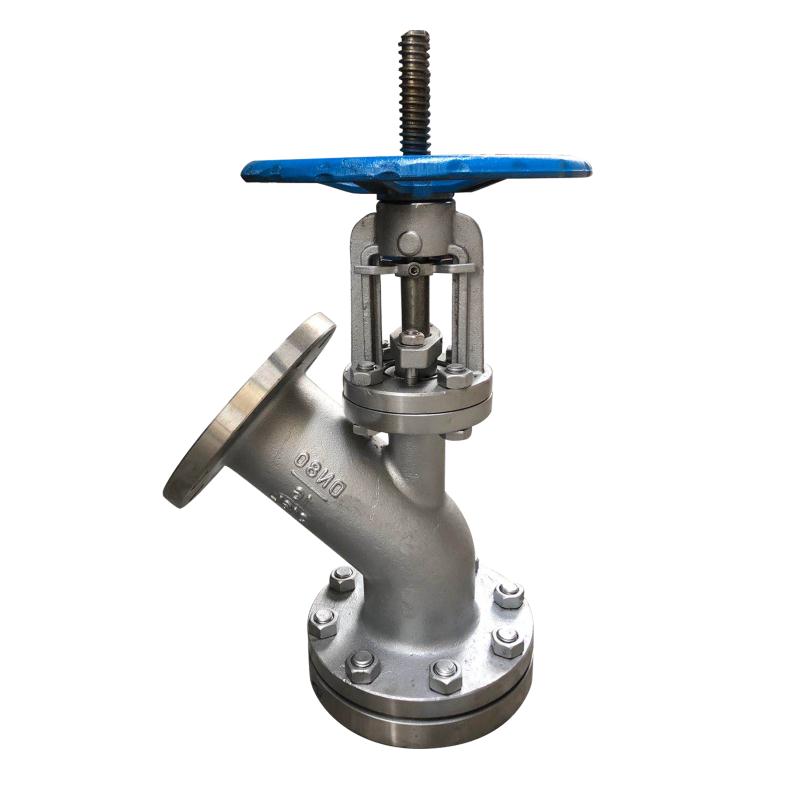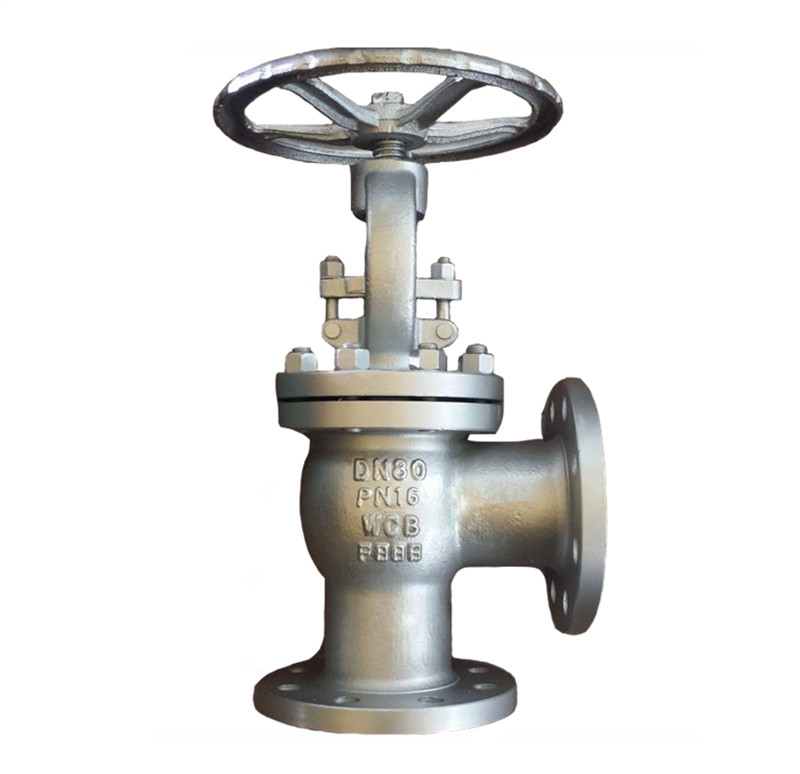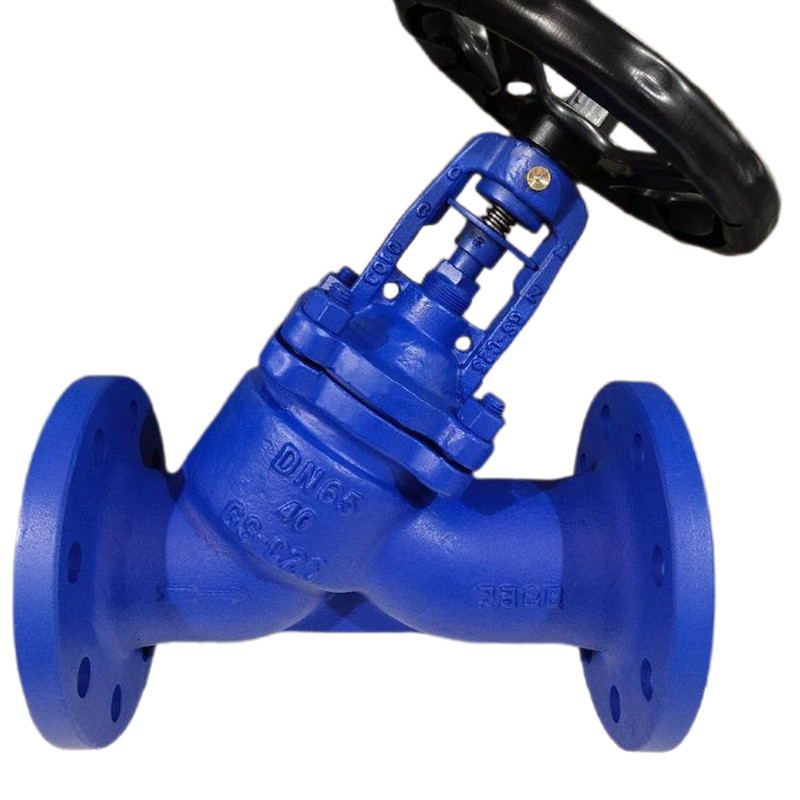


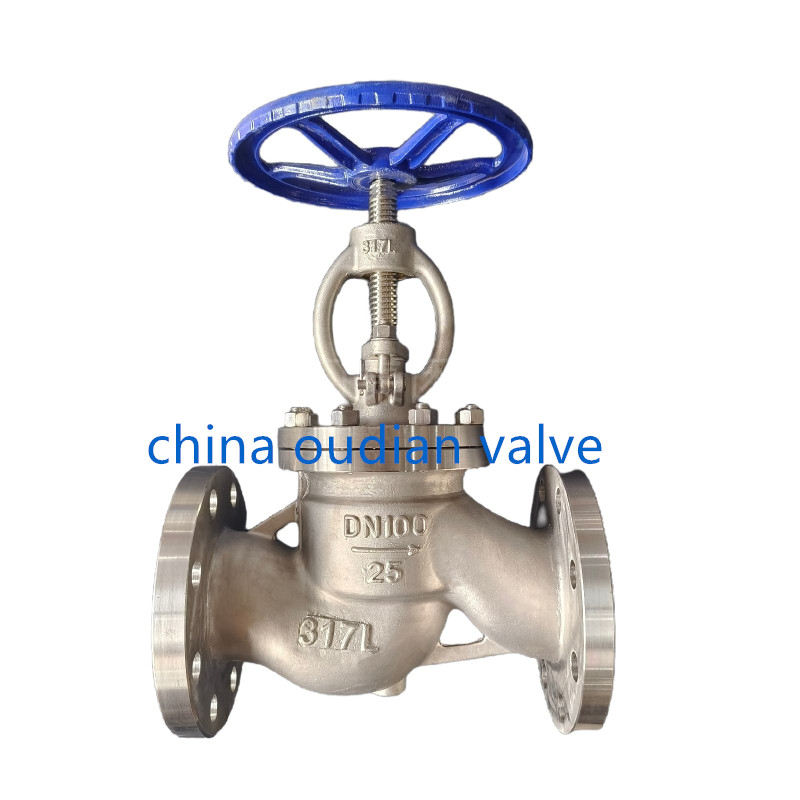
317L Globe Valve,DIN 3356,DN100,PN25
China 317L Globe Valve Factory ,DIN 3356 317L Globe Valve,DN100 317L Globe Valve,PN25 317L Globe Valve.
317L Globe Valve is a type of industrial flow control valve, made from low-carbon 317L stainless steel (UNS S31703, 1.4438), featuring excellent corrosion resistance and precise throttling performance.
317L stainless steel globe valve (00Cr19Ni13Mo3, UNS S31726) is an austenitic stainless steel based on molybdenum. It has stronger resistance to chemical corrosion compared to conventional chromium nickel austenitic stainless steels such as 304 alloy. In addition, compared with conventional stainless steel, 317L alloy has higher ductility, stress corrosion resistance, compressive strength, and high temperature resistance. It is a low-carbon grade or L grade, which has anti sensitization properties during welding and heat treatment.
The 317L stainless steel globe valve has better resistance to seawater and SCC compared to 316L, and is used in chemical ships, chemical product reactors, and other chemical equipment that require high corrosion resistance.
Mechanical properties of SUS317L: YS (Mpa) ≥ 176, TS (Mpa) ≥ 480, EL (%) ≥ 40, Hv ≤ 200
Core Features
- Material: 317L — higher molybdenum than 316L, low carbon, better resistance to acids, chlorides, pitting & crevice corrosion; suitable for harsh chemical, high-temperature, and flue-gas environments.
- Funktion: Globe-style design — ideal for accurate flow regulation, throttling, and on/off service; not for fully open/closed fast cycling.
- Specifications:
- Sizes: DN15–DN600 (½”–24″)
- Pressure class: 150LB ~ 2500LB (PN16–PN420)
- Temp range: −46°C ~ +550°C
- Ends: Flanged (RF/RTJ), butt-weld, socket-weld, threaded
- Standards: ASME B16.34, API 602, ISO 15848, tested per API 598.
- Betrieb: Handwheel, gearbox, pneumatic/electric actuator; rising stem, bolted bonnet.
Stainless steel 317L globe valve is more resistant to corrosion from sulfuric acid solution than conventional chromium nickel stainless steel. Its corrosion resistance increases with the increase of alloy molybdenum composition. These alloys can withstand concentrations of up to 5% sulfuric acid in environments with temperatures up to 120 ° F (49 ° C). In environments with temperatures below 100 ° F (38 ° C), these alloys have excellent corrosion resistance and can withstand corrosion from higher concentration solutions
Structural characteristics of 317L globe valve product
1. The product follows the standard GB12235, with a reasonable structure, reliable sealing, excellent performance, and beautiful appearance.
2. The sealing surfaces of the valve disc and seat are made of Stellite cobalt based hard alloy, which is wear-resistant. 3. The valve stem is quenched and tempered and surface nitrided, with good corrosion resistance and abrasion resistance.
4. Various piping flange standards and flange sealing surface types can be adopted to meet various engineering needs and user requirements.
5. The valve body material variety is complete, and the packing and gasket are reasonably selected according to actual working conditions or user requirements, which can be suitable for various pressure, temperature, and medium working conditions.
6. The reverse seal is made by connecting the sealing seat with threads or welding austenitic stainless steel on the body. The reverse seal is reliable, and the replacement and maintenance of the packing can be carried out without stopping the machine, which is convenient and fast
Key Advantages
- Superior corrosion resistance vs 304L/316L
- Good weldability & low sensitization risk
- Stable performance in acidic, saline, and flue gas environments
- Tight shutoff & precise control.
Typical Applications
- Chemical processing, pulp & paper, FGD systems
- Oil & gas, refineries, offshore platforms
- Power plants, pharmaceuticals, wastewater treatment.
-
FAQ: 317L Globe Valve
317L (UNS S31703 / EN 1.4438) is a low-carbon, high-molybdenum austenitic stainless steel — an upgraded version of 316L, offering significantly better resistance to pitting, crevice corrosion, and chemical attack. Below is the complete FAQ covering material, specifications, selection, installation, operation, maintenance, and comparisons. -
Material & Basic Properties
Q1: What is 317L? How is it different from 316L?A:- 317L = UNS S31703 / Werkstoff Nr. 1.4438 — low-carbon high-molybdenum austenitic stainless steel
- Composition: Cr 18–20%, Ni 11–15%, Mo 3–4%, C ≤ 0.03%
- Compared to 316L: Molybdenum content increased from ~2.5% to ~3.5% → +30–40% higher pitting resistance (PREN 28–32 vs 24–26), better resistance to acids, chlorides, and reducing media
- Low carbon eliminates intergranular corrosion risk after welding — no heat treatment needed
- Fully austenitic, non-magnetic, excellent toughness down to cryogenic temperatures
Q2: What is PREN value? Why does it matter?A: PREN = Pitting Resistance Equivalent Number = %Cr + 3.3×%Mo + 16×%N- 316L: ~24–26
- 317L: ~28–32
- Higher PREN = better resistance to chloride pitting and crevice corrosion — critical in saltwater, brine, or chemical environments
Q3: What media does 317L resist best?A:✅ Superior vs 316L in:
- Dilute sulfuric acid, phosphoric acid, organic acids (acetic, formic)
- Chloride solutions, brackish water, brine, seawater (low-to-medium concentration/temp)
- Flue gas condensate, sulfurous acid, wet SO₂, FGD systems
- Bleach solutions, paper pulp environments
- Caustic alkalis, salt solutions
✅ Suitable for general chemical, petrochemical, and pollution control processes
❌ Not recommended for:
- Concentrated acids, hot hydrochloric acid, strong oxidizers (use 904L / C4)
- High-temperature > 550°C (risk of sigma phase)
- Severe sour service / high-pressure seawater (use 2507 / 254 SMO)
Q4: What are temperature and pressure limits?A:- Temperature: ‑46°C ~ +550°C continuous; short‑term up to 600°C
→ Best performance: < 450°C
- Pressure Class: 150LB – 2500LB / PN16 – PN420
- Mechanical: Tensile ≥ 485 MPa; Yield ≥ 205 MPa — slightly stronger than 316L
Q5: How does 317L compare to other alloys? -
Alloy PREN Best Environment Cost vs 317L 304L ~18–20 Fresh water, air -20% 316L ~24–26 General corrosion Base 317L 28–32 Moderate acids + chlorides, FGD +15–25% 904L ~34–36 Dilute sulfuric/organic acids +100–120% 2205 ~35–38 High strength + chlorides +60–80% 2507 ~42–45 Severe corrosion / high pressure +150–200%