

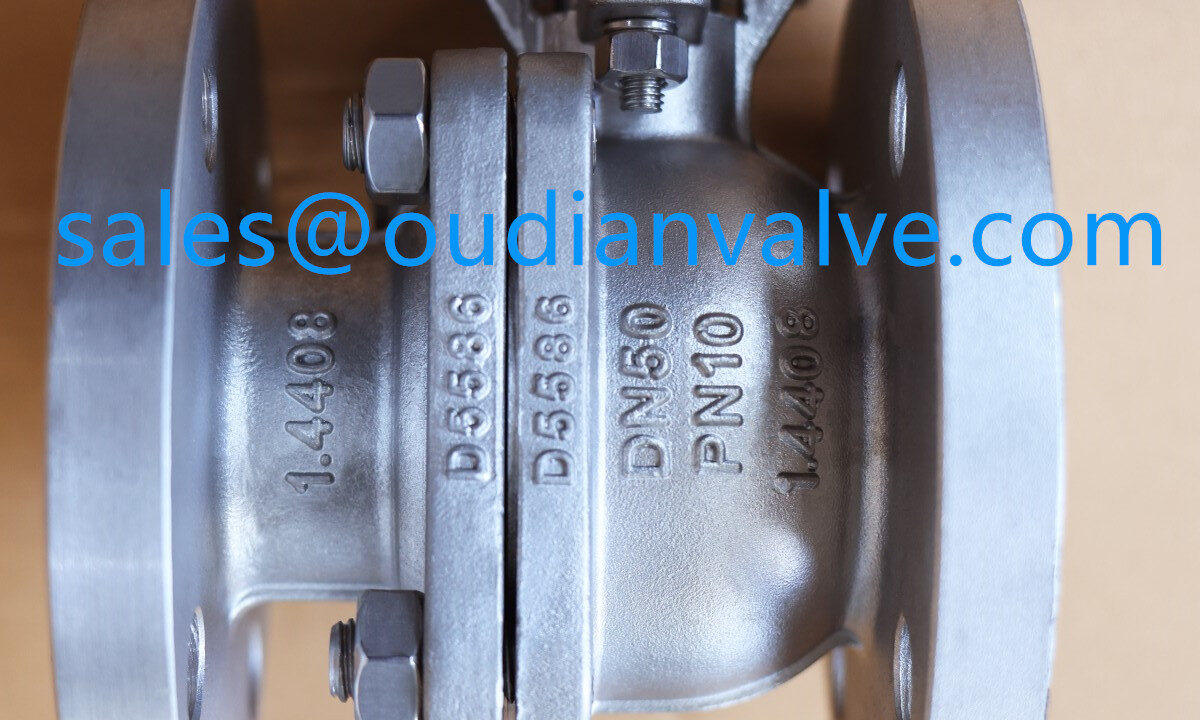
Absperrklappe vs. Kugelhahn
Selection depends on the specific operational parameters of the process line, including fluid cleanliness, thermal conditions, actuation frequency, and line pressure. Matching the internal geometry and sealing mechanism of each valve type to the target medium avoids premature seat failure and excessive operating torque.
Operating Principles of Ball and Butterfly Valves
Both valve types rely on quarter-turn actuation to switch between fully open and closed states, but their internal closure members redirect line flow in fundamentally different ways. The physical profile of the closing element directly determines flow turbulence, physical space requirements, and operating torque.
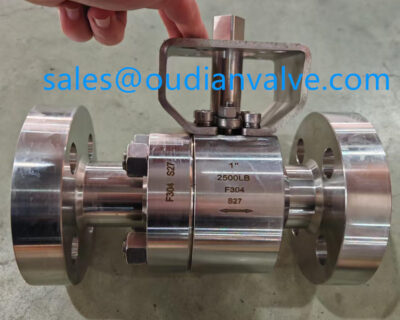
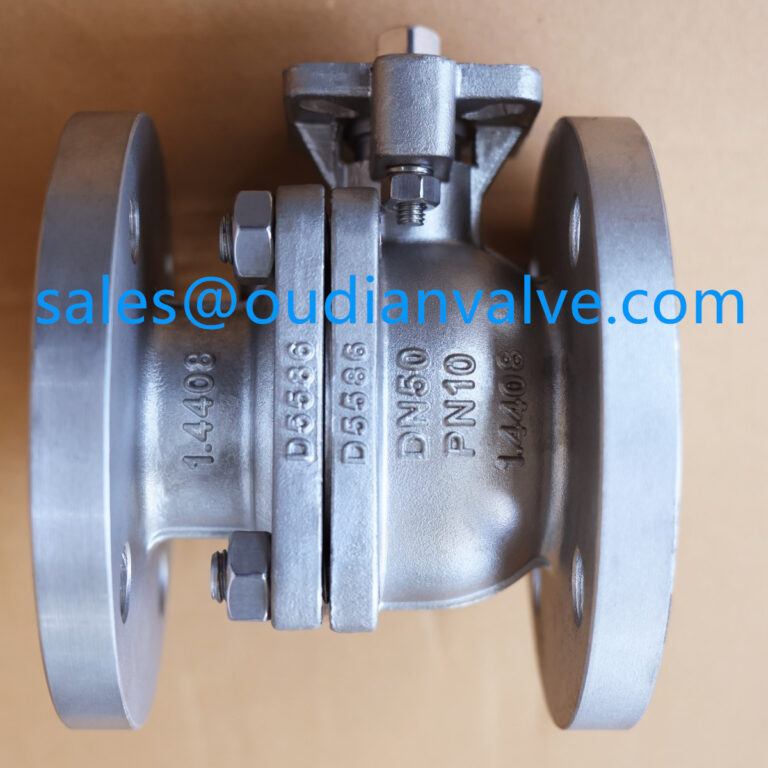
A ball valve houses a spherical closure element with a cylindrical bore machined through its center. When the handle or actuator turns ninety degrees, the bore aligns with the pipe axis to permit straight-through passage, or turns perpendicular to block flow against surrounding polymeric or metallic seats. Because the central bore matches the internal pipe profile in full-port models, the medium encounters negligible restriction.
A butterfly valve uses a circular disc mounted on a central or offset rotating shaft within the valve body. Rotating the shaft ninety degrees positions the disc parallel to line flow for open transit, or rotates it transverse against an internal resilient or metal seat to stop fluid movement. Because the disc remains suspended inside the flow path even when fully open, it introduces moderate fluid resistance across the entire line diameter.
Ball Valve Geometry
The rotating sphere isolates the internal flow path from the body cavity during operation. Sealing occurs along upstream and downstream ring seats that support the sphere under fluid force.
Butterfly Valve Geometry
The thin disc pivots within the body bore to compress against circumferential seat liners. The shaft penetrates the body to transfer torque directly from the external lever or gear operator.
Sealing Performance, Leakage Prevention, and Flow Characteristics
Sealing capability and flow path obstruction define the primary operational trade-offs between these two designs. Process stability requires balancing tight leakage prevention with acceptable line pressure drop.
Ball valves provide outstanding sealing capability under bidirectional pressure gradients. The floating or trunnion-supported sphere presses firmly into opposing seat rings, forming a tight barrier against pressurized liquid or gas. Full-port ball valves maintain an unobstructed bore that yields minimal pressure drop, preventing turbulence and allowing inline inspection tools or line pigs to pass without interference.
Butterfly valves rely on the perimeter of the disc compressing against a resilient elastomer sleeve or a precision-machined metal seal ring. While high-performance and triple-offset designs achieve bubble-tight shutoff in challenging environments, standard concentric designs may show elevated leakage rates if particulates lodge along the seat line. The disc remaining in the center of the flow path generates higher turbulence and head loss than an open bore.
Throttling service reveals distinct behavioral differences between the two geometries. Ball valves handle coarse throttling poorly unless outfitted with specialized V-port spheres, because high-velocity flow entering a partially opened orifice can deform elastomer seats and cause localized cavitation. Butterfly valves perform moderately well for flow regulation across intermediate disc angles, though operating near the closed position can induce disc flutter and erratic flow control.
Full-bore ball valves generate minimal pressure drop across straight pipe runs, making them the preferred choice where line friction must remain low and cleaning tools must travel freely through the piping.
Pressure Ratings and Thermal Limits Across Service Conditions
Operating pressure and thermal cycling dictate valve structural integrity and component longevity. The pressure containment boundary and internal seat materials establish the upper service limits for each design.
Ball valves excel in high pressure service lines, where forged or cast bodies support robust wall thicknesses and reinforced seat assemblies. Trunnion-mounted ball designs anchor the sphere at top and bottom stems, distributing mechanical loads away from the soft seats and keeping operating torque manageable even under extreme line pressures. Metal-seated ball valves tolerate high thermal variations and superheated steam without losing dimensional stability.
Butterfly valves face mechanical constraints under severe hydrostatic pressure because the entire surface area of the disc absorbs hydraulic force. High differential pressure against a large disc deflects the driving stem, which accelerates seat wear and demands heavy gearboxes to overcome operational torque. Resilient-seated butterfly designs function reliably in low to medium pressure regimes, while high-performance double-offset and triple-offset configurations extend service capabilities into elevated pressure classes and higher thermal ranges.
| Evaluation Factor | Kugelhahn | Absperrklappe | Performance Comparison |
| Druckklasse | Sehr hoch | Mäßig | Ball designs handle higher differential pressures across closed ports. |
| Head Loss | Negligible | Mäßig | The unobstructed bore of full-port valves minimizes line friction. |
| Thermal Range | Broad | Mäßig | Solid metal seats in ball valves accommodate severe thermal swings. |
| Flow Regulation | Beschränkt | Mäßig | Offset discs manage throttling duties better than standard round ports. |
Piping Diameter, Structural Weight, and Space Footprint
Physical dimensions and valve mass influence structural pipe support requirements and installation complexity. As pipe diameters expand, the differences in mass and face-to-face dimensions become pronounced.
In compact lines, ball valves present a manageable footprint, but their bulk increases dramatically as nominal diameter grows. A large ball valve requires a substantial spherical body housing, thick flanged ends, and heavy structural reinforcement to contain internal stresses. This substantial weight necessitates dedicated structural steel cradles and overhead rigging equipment during maintenance procedures, driving up construction costs.
Butterfly valves feature an exceptionally slender profile, typically fabricated in wafer, lug, or double-flanged body styles. Wafer versions slide between existing line flanges using standard threaded studs, occupying minimal axial length along the pipeline. Because the valve body comprises little more than an outer retaining ring and central shaft, total weight remains low, simplifying installation and eliminating the need for specialized hanging supports.
In large-diameter piping networks, butterfly valves substantially lower overall structural deadweight, simplifying pipe rack engineering and lowering transport expenses.
Durability, Cycle Life, and Maintenance Demands
Operational duty cycles and mechanical wear patterns determine how frequently valves require inspection, rebuilds, or complete replacement. Maintenance access varies according to internal assembly configurations.
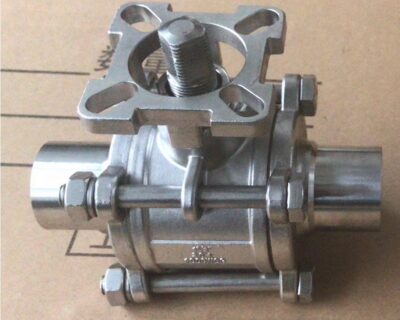
Ball valves demonstrate remarkable endurance through frequent operation cycles. The smooth, polished sphere sweeps across the seat surfaces with each stroke, effectively wiping away minor film deposits and maintaining uniform contact. Three-piece ball valve bodies allow maintenance crews to unbolt the central housing, swing the body outward, and replace worn seats and stem packings without disassembling adjoining pipe connections.
Butterfly valves feature fewer internal components, yet continuous contact along the seat perimeter can cause steady degradation in high-cycle services. Resilient elastomer liners may experience localized tearing or compression set if the disc repeatedly seats against entrapped particulates. Replacing the liner in a wafer or lug valve typically requires spreading the pipe flanges and dropping the entire valve body from the line, which can extend system downtime.
- Three-piece ball valves permit rapid seat renewal without disturbing flanged pipeline joints.
- Butterfly valves require fewer mechanical fasteners but demand full removal for seat replacement.
- High-cycle automated operations favor ball designs to minimize seat erosion and packing leakage.
- Double-offset and triple-offset butterfly valves reduce seat friction during actuation strokes.
Handling Slurries, Corrosive Media, and Contaminated Fluids
Fluid cleanliness, viscosity, and chemical aggressiveness heavily influence component degradation and operational reliability. Cavities within the valve body present specific vulnerabilities when handling contaminated fluids.
Ball valves contain internal cavity spaces between the floating ball and the valve body shell. In slurry service or crystallization-prone processes, solids settle inside this stagnant body cavity, hardening over time and jamming the turning mechanism or preventing full closure. For corrosive media, ball valves require premium alloys or fluoropolymer liners across the body and sphere to stop chemical attack, which substantially increases material costs.
Butterfly valves eliminate stagnant internal cavities, allowing dirty liquids, raw wastewater, and fibrous paper pulp to pass through the valve body without finding settlement pockets. Fully lined butterfly valves isolate the metallic body from fluid contact entirely using thick rubber or PTFE sleeves that cover the internal bore. However, high-velocity abrasive particles strike the exposed disc directly, which can cause erosion along the disc leading edge and compromise sealing contact over time.
Media containing suspended solids can pack into the body cavities of ball valves, inhibiting complete shutoff and accelerating mechanical binding of the internal sphere.

Practical Applications Across Industrial Piping Systems
Piping engineers deploy each valve style according to line size, operating pressure, and media characteristics. Specialized operational sectors rely on specific valve capabilities to meet safety and production targets.
Municipal water treatment facilities and district cooling plants rely extensively on butterfly valves. These installations handle massive volumetric flow rates through wide pipe mains where the compact face-to-face dimension and reduced component weight keep infrastructure costs manageable. Similarly, commercial heating, ventilation, and air conditioning systems utilize lug-style butterfly valves to isolate chillers, cooling towers, and circulation pumps during seasonal maintenance.
Oil, gas, and refining sectors predominantly specify ball valves for primary hydrocarbon containment and emergency isolation lines. The ability of trunnion ball valves to withstand extreme pressures, resist explosive decompression, and maintain fire-safe metal sealing makes them standard equipment on high-pressure manifolds. Chemical processing facilities utilize both designs, deploying lined butterfly valves for corrosive acid transfers at moderate pressure and three-piece stainless ball valves for high-purity solvent streams.
Wasser und Abwasser
Butterfly valves dominate intake headers, aeration basins, and effluent lines due to low body weight and cavity-free transit.
Oil and Gas Processing
High-pressure ball valves provide reliable hydrocarbon isolation, fire-safe construction, and minimal flow friction along transport lines.
HVAC and Utilities
Compact butterfly valves regulate chilled water loops and facilitate pump isolation while conserving tight mechanical room footprint.
Practical Decision Framework for Valve Specification
Selecting the optimal quarter-turn valve involves analyzing line dimensions, fluid mechanics, operating frequency, and cost parameters. Evaluating these variables methodically prevents over-engineering and premature valve failure.
When line sizing falls in smaller nominal categories, ball valves deliver exceptional sealing performance, zero pressure loss, and extended maintenance intervals with minimal price variance. For large pipe diameters, the substantial weight and expense of spherical castings make butterfly valves the practical engineering choice, provided line pressures remain within allowable design ratings.
System designers must also review actuation requirements and flow control demands. Butterfly valves require larger, more powerful actuators when closing against high differential pressures due to the surface area of the disc. Conversely, full-port ball valves require high initial breakaway torque to overcome seat friction after remaining stationary in the open or closed position for extended periods.
Ball Valve Strengths
- Negligible line pressure drop in full-port models
- Reliable bidirectional bubble-tight shutoff
- Outstanding resilience under high line pressure
- Straightforward inline servicing in three-piece designs
Butterfly Valve Strengths
- Compact face-to-face dimension saves space
- Low physical weight reduces pipe support needs
- Absence of internal cavities prevents media packing
- Cost-effective configuration for large pipe lines
Frequently Asked Questions
Which valve type provides tighter shutoff performance?
Ball valves provide tighter shutoff across varying pressure ranges because the sphere seals firmly into dual seats. Standard butterfly valves may experience minor bypass if particulate matter lodges along the perimeter seal, though triple-offset metal designs achieve comparable shutoff integrity.
Can butterfly valves be used for throttling applications?
Butterfly valves handle moderate throttling duties effectively across middle opening angles, whereas standard ball valves can experience seat erosion when cracked partially open. Specialized control valves with contoured discs or V-notch balls should be specified for precise flow modulation.
Why are butterfly valves preferred in large-diameter pipelines?
Butterfly valves require significantly less material to fabricate, resulting in lower component cost, smaller physical dimensions, and reduced overall weight. A large ball valve requires a massive body casting that adds substantial structural load to the piping network.
How do slurry media affect ball valve operation?
Slurries tend to deposit particulate matter inside the open cavities between the ball and the valve body, leading to mechanical binding or seat damage. Butterfly valves lack these enclosed internal cavities, allowing solids-laden media to pass through with reduced accumulation.
Which valve handles higher operating pressure?
Ball valves accommodate much higher working pressures because their spherical shape resists deformation and trunnion supports distribute hydraulic forces effectively. Large butterfly discs absorb fluid forces directly across their surface, which can cause stem deflection under severe differential pressures.
Summary of Valve Selection Priorities
Choosing between quarter-turn valves requires balancing pipe diameter, process pressure, fluid composition, and leakage tolerance. Sizing assessments should confirm that structural pipe supports, seat materials, and actuation packages match the operational conditions of the facility.