


OS & Y vs NRC Valves
Physical space, working fluid cleanliness, safety oversight rules, and position verification needs determine the appropriate design for any fluid-handling network. Selecting the proper valve geometry prevents mechanical binding, simplifies scheduled servicing, and maintains process isolation under demanding system pressures.
Clarifying NRC Valves in Industry Practice
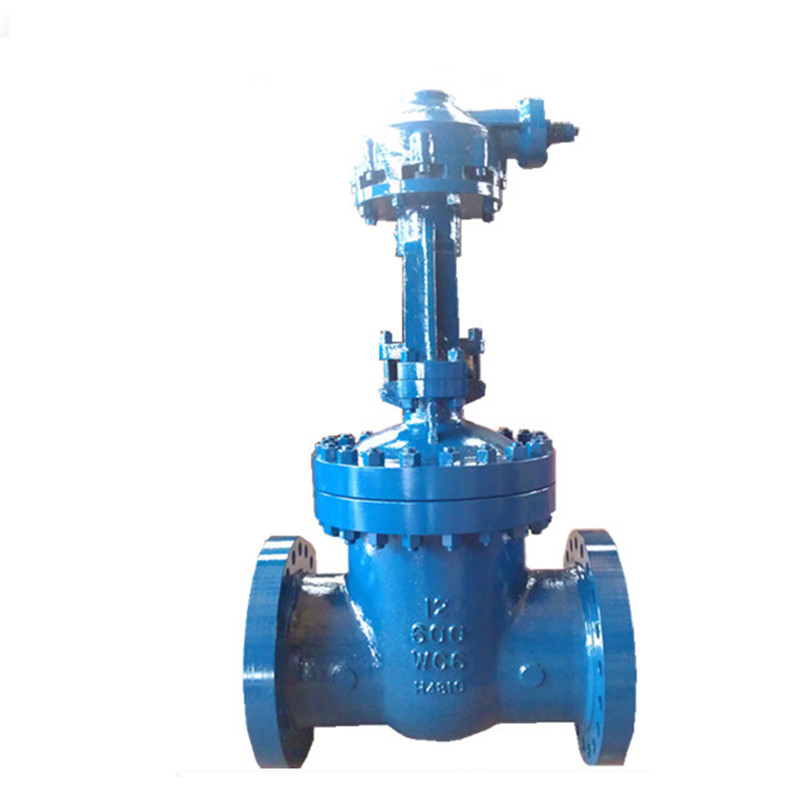
In standard fluid-control engineering, the designation NRC is rarely a standalone mechanical valve standard. Most industrial inquiries comparing OS&Y valves with NRC valves stem from a typographical transposition of NRS, which designates a non-rising stem gate valve.
In specialized power generation, NRC also denotes components compliant with the Nuclear Regulatory Commission, referring to rigorous quality assurance rather than a unique physical movement mechanism. Occasionally, technicians also use NRC as an informal abbreviation for non-return check valves in mixed piping schedules. For direct mechanical comparisons against an OS&Y valve, the true engineering counterpart is almost universally the non-rising stem gate valve.
Engineering documents using the NRC acronym alongside gate valves should be verified against mechanical schedules to confirm whether non-rising stem construction or a regulatory classification applies.
Operating Mechanisms and Mechanical Design
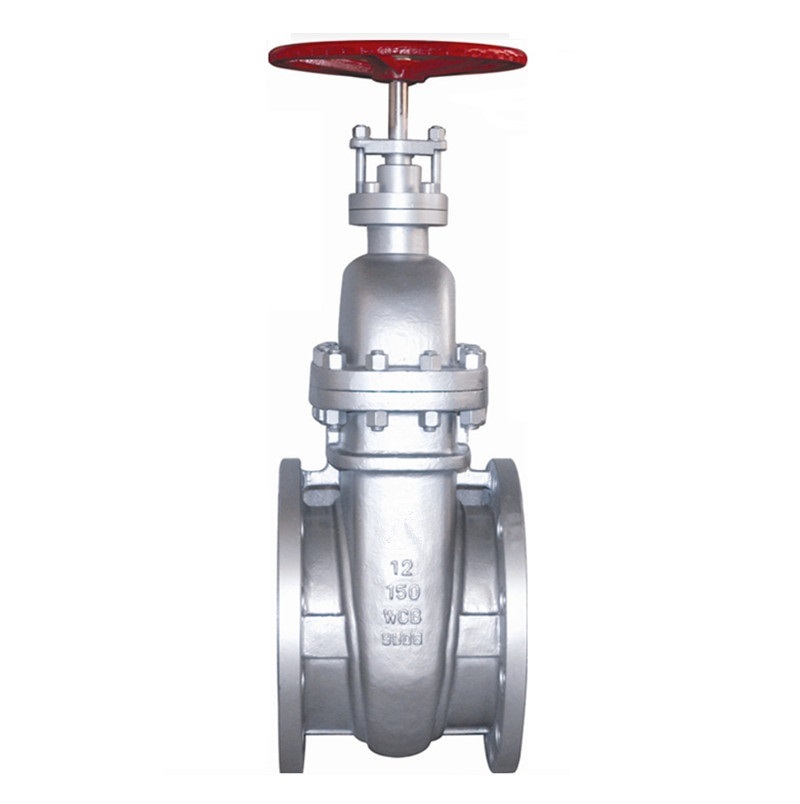
The core mechanical difference lies in where the stem threads engage the moving components. In an outside screw and yoke valve, the threaded portion of the stem remains outside the valve body, suspended in a distinct yoke assembly above the packing chamber.
As the handwheel turns, the stem rises or lowers axially through a threaded yoke nut, drawing the wedge along without rotating the stem inside the disc. In an NRS gate valve, the stem threads directly engage the internal wedge disc inside the flow channel. Turning the handwheel rotates the stem in place, pulling the wedge up or down the threaded stem while the overall height of the assembly remains stationary.
OS&Y Mechanical Action
Turning the handwheel moves the stem linearly through the exterior yoke. The stem rises as the wedge lifts and lowers as the wedge closes, keeping actuation threads isolated from pipeline fluid.
NRS Mechanical Action
The stem rotates in a fixed vertical orientation without climbing. Internal threads inside the wedge travel along the turning stem, keeping exterior dimensions identical whether open or closed.
Stem Motion and Visual Position Indication
Visual verification of operational status represents the most critical operational distinction between these assemblies. An OS&Y gate valve offers immediate, unambiguous confirmation of flow status from across an equipment room or utility yard.
When the valve opens, the stem extends fully beyond the yoke frame, exposing the clean threads to view. In contrast, a non-rising stem valve maintains the exact same exterior height whether fully open, partially throttled, or tightly closed. Determining the status of an NRS valve requires an external dial pointer, an auxiliary limit switch, or physically counting handwheel turns until mechanical stop resistance is felt.
External stem elevation provides fail-safe visual proof of disc position, avoiding accidental isolation during critical fluid operations.
Spatial Footprint and Installation Requirements
Physical plant layouts heavily influence whether rising or stationary stem architecture can be accommodated. OS&Y gate valves demand substantial vertical clearance above the pipeline centerline to allow the stem to travel upward when opened.
In tight mechanical rooms, ceiling plenums, or congested pipe racks, overhead obstacles such as structural beams, cable trays, or ductwork can block stem travel. Non-rising stem valves eliminate this issue entirely by maintaining a fixed envelope. NRS units are the standard choice for underground water mains, subterranean vaults, shallow manholes, and trench installations where vertical space is strictly limited.
OS&Y Spatial Strengths
- Eliminates confusion during walk-through visual inspections
- Accommodates visual tamper switches for automated alarm systems
- Provides clear physical separation between packing and drive threads
OS&Y Spatial Constraints
- Requires generous overhead clearance for full stem extension
- Unsuitable for direct burial without protective riser boxes
- Exposes moving stem sections to accidental physical impact
Fluid Contact, Corrosion, and Environmental Wear
The location of the drive threads determines susceptibility to corrosion, scaling, and abrasive breakdown. An OS&Y design keeps mechanical threads completely outside the wet pressure boundary, protecting them from process contaminants.
Because the threads never touch raw municipal water, treated wastewater, or chemical process streams, they remain free of mineral scaling, rust accumulation, and slurry scour. However, the exposed outdoor stem threads must contend with airborne dust, rain, saltwater mist, or freezing weather. In non-rising stem models, the drive threads remain submerged in the pipeline fluid, which shields them from atmospheric grime but exposes them directly to line corrosion, chemical attack, and particulate buildup.
Aggressive water chemistry or suspended abrasive grit can cause rapid thread binding on submerged non-rising stems, leading to difficult actuation over time.
Suitability for Fire Protection and Life Safety
Life-safety regulations establish strict mandates for valve visibility in dedicated fire suppression systems. Fire protection systems rely on OS&Y gate valves on backflow preventers, main riser feeds, and sectional isolation points.
Safety inspectors and building personnel must verify at a single glance that isolation gates remain pinned or supervised in the open state. If water delivery to automatic sprinklers is obstructed, immediate identification prevents catastrophic system failure during an emergency. Non-rising stem valves are generally restricted in fire service to underground water supply feeds where a post indicator valve (PIV) or wall indicator mechanism translates internal disc travel into a visible flag.
- OS&Y valves integrate directly with electronic supervisory tamper switches that trigger panel alarms if the stem turns toward closure.
- Building inspectors can audit the physical position of dozens of fire control valves quickly during routine site tours.
- Underground distribution lines utilize NRS valves paired with mechanical indicator posts to show valve status above grade.
- Direct burial fire mains avoid tall surface obstructions by keeping the stationary stem below frost levels.
Maintenance Requirements and Long-Term Reliability
Routine service tasks differ considerably based on component accessibility and mechanical exposure. OS&Y gate valves permit direct inspection, cleaning, and lubrication of operating threads without depressurizing the piping network.
Technicians can apply grease directly to the external stem threads and inspect the gland packing while the line stays in operation. If the packing begins weeping, packing bolts can be adjusted easily below the yoke frame. For non-rising stem units, lubricating internal threads is impossible without disassembling the bonnet, isolating line segments, and depressurizing the main. However, NRS valves feature fewer external catch points, reducing the risk of vandalism or thread damage from falling debris.
- Inspect the exposed stem rod on OS&Y units for surface contamination, dirt collection, or mechanical scoring before cycling.
- Apply manufacturer-approved lubricant to exterior stem threads to facilitate smooth rotation through the yoke bushing.
- Check the gland follower for balanced tension to prevent fluid weeping without over-compressing the stem packing.
- Cycle stationary-stem valves through full travel to dislodge settled sediments from internal wedge threads and seats.
Practical Selection Guide and Valve Comparison
System designers select between rising and stationary stem architectures by weighing overhead dimensions against visual monitoring demands. The operating medium, installation envelope, and regulatory landscape point toward an optimal configuration.
Aboveground pumping manifolds, water treatment skids, boiler rooms, and commercial fire suppression risers favor OS&Y assemblies for their transparency and ease of lubrication. Subterranean utility lines, roadway boxes, marine bilges, and tight structural chases benefit from the compact profile of non-rising stem valves. Evaluating mechanical access alongside line chemistry supports long-term operational integrity.
| Besonderheit | OS&Y Valve | NRS (NRC) Valve | Selection Impact |
| Stem Movement | Rising external | Stationary internal | OS&Y demands vertical clearance while stationary stems fit compact spaces. |
| Position View | Direct sight | Requires indicator | Rising stem shows open status immediately for simple visual audits. |
| Thread Medium | External air | Internal fluid | Abrasive or scale-heavy fluids do not degrade OS&Y drive threads. |
| Thread Lubrication | Accessible line | Requires teardown | External threads accept lubricant without shutting down system pressure. |
| Buried Service | Not recommended | Industry standard | NRS valves fit roadway boxes and direct burial with standard curb keys. |
| Fire Sprinklers | Standard riser | Limited underground | Life safety codes favor rising stems for quick visual verification. |
Frequently Asked Questions
What does the acronym OS&Y stand for in piping design?
OS&Y stands for outside screw and yoke, sometimes referred to as outside stem and yoke. It describes a valve design where the stem threads remain outside the fluid-containing body and pass through an exterior support frame.
Why is the term NRC used when referring to gate valves?
In most commercial and industrial valve discussions, NRC represents an informal typo or phonetic abbreviation for non-rising stem (NRS) gate valves. In nuclear facilities, it can denote safety-grade components subject to Nuclear Regulatory Commission standards.
Can an OS&Y gate valve be installed directly underground?
Direct burial is not recommended for standard OS&Y gate valves because soil and moisture will foul the external threads and jam stem motion. Underground applications routinely utilize non-rising stem gate valves operated with extension rods through access boxes.
How does an operator verify whether an NRS gate valve is open?
Because an NRS valve stem does not rise, operators verify position by checking mechanical indicator dials, reviewing connected limit switches, or counting handwheel turns to the stop position. In buried lines, post indicators provide visible status flags above ground.
Which valve type is preferred for commercial fire suppression risers?
OS&Y gate valves are preferred on aboveground fire suppression risers due to their immediate visual status indication. Safety inspectors and automated supervisory switches detect immediately if an isolation valve moves toward a closed position.
Summary of Valve Selection
Choosing between outside screw and yoke valves and non-rising stem alternatives hinges on spatial limits, fluid quality, and position monitoring criteria. OS&Y models offer visual confirmation and clean thread maintenance for accessible indoor systems, while compact non-rising stem designs provide dependable service in confined vaults and underground infrastructure.



