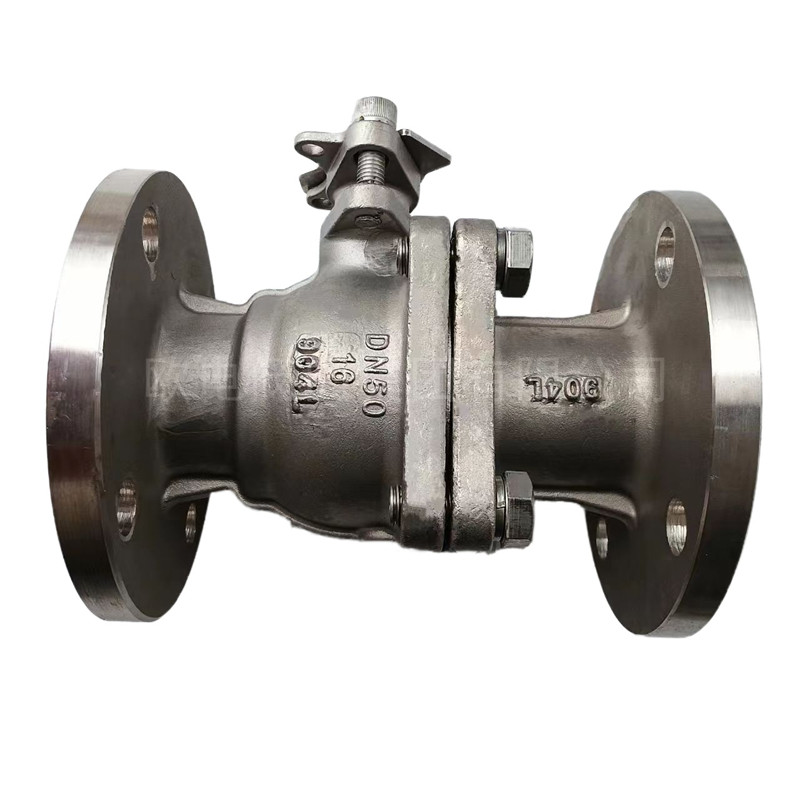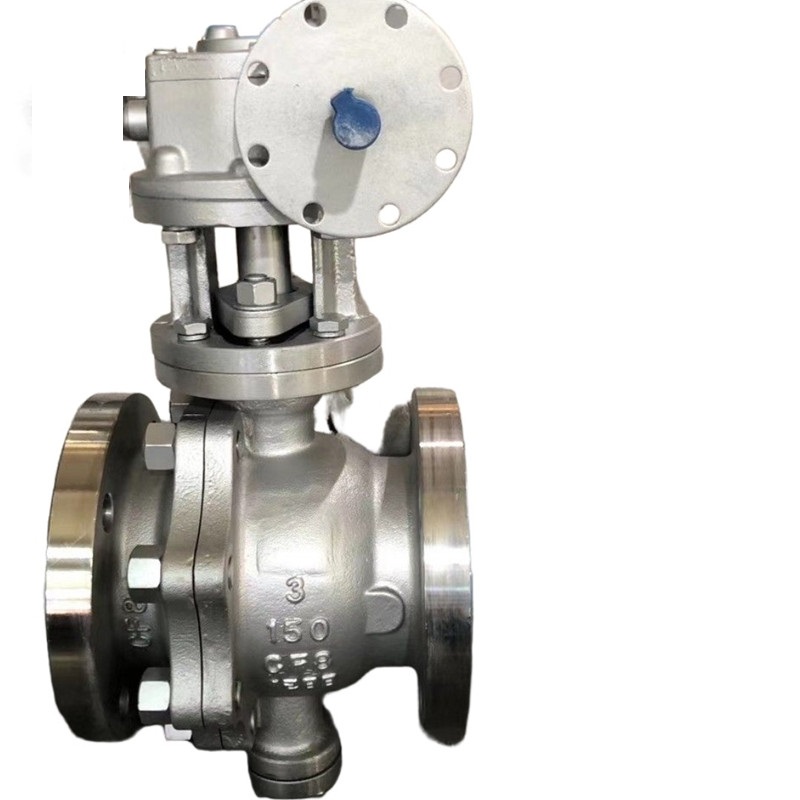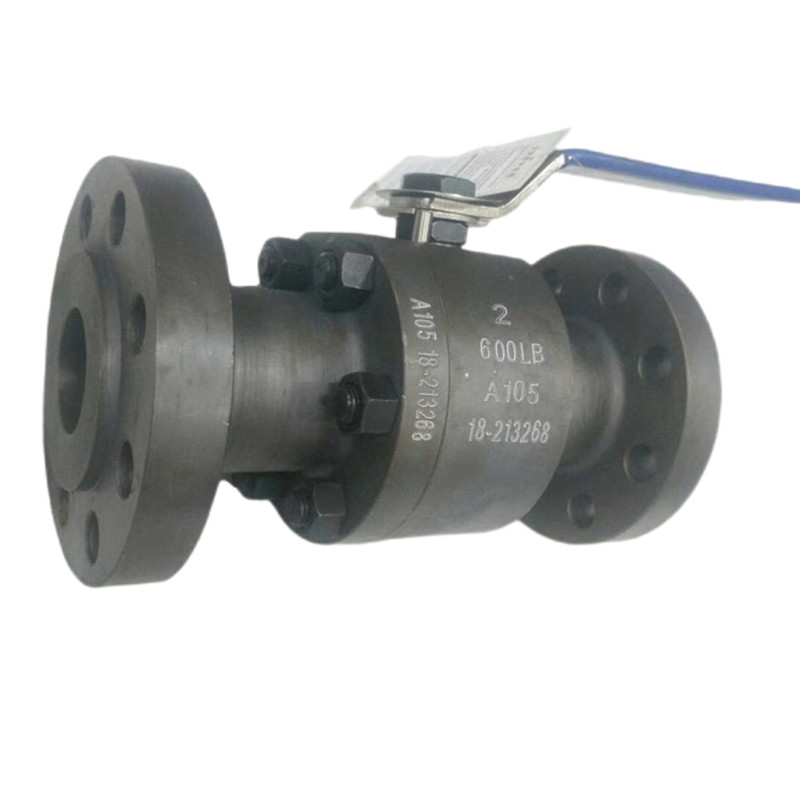


ASTM A890 4A Ball Valve,150LB,2 Inch,RF End
Design Standard: API 6D/API 608
Fire safe: API 607/6FA
Pressure temperature Ratings: ASME B16.34
Size Range: 2” to 48” (DN50-DN1200)
Port: full bore or reduced bore
Pressure Range: 150LB to 2500LB
End Connections: Flanged RF, RTJ, Butt Weld
Ball Type: Forged solid ball
Flanged End Dimensions: ASME B16.5 (24” and below), ASME B16.47 Series A or B (above 24”)
Butt Weld End Dimensions: ASME B16.25
Face to Face Dimensions: ASME B16.10
Inspection and Testing: API 6D
Body materials: A105/A105N, F304, F316, F316L, F51, F53, F55, C95800, UNS N08825, UNS N06625.
Seat Materials: PTFE, RPTFE, DEVLON, NYLON, PEEK, metal seated with TCC/STL/Ni.
Valve Description:
Valve Type: Floating Ball Valve
Body Material: 2205.
Nominal Diameter: DN80
Pressure Rating: PN25
End Connection: RF Flange
Working Temperature: -29℃~+200℃.
Operation: Lever.
ASTM A890 4A Ball Valve Product Analysis
I. Floating Structural Design and Functional Characteristics
4A American Standard Ball Valve adopts a floating flange connection structure. Its core design is based on the adaptive displacement of the ball under medium pressure, and the sealing is achieved by dynamically pressing the valve seat. This structure combines flexibility and reliability, and its specific features are as follows:
Dynamic sealing mechanism: The ball moves toward the outlet valve seat under the thrust of the medium, forming a double sealing effect (metal + soft seal), which is suitable for high pressure difference environment, and the sealing level can reach level VI.
Modular maintenance design: The valve seat and sealing ring adopt detachable modules, which can be replaced without removing the valve body, significantly reducing maintenance costs.
Anti-interference performance optimization: An anti-blowout structure is added between the valve stem and the ball to prevent the valve stem from being detached due to the impact of high-pressure media, thereby improving safety.
Low-torque operation: The combination of the floating ball and the PTFE (polytetrafluoroethylene) valve seat reduces the friction coefficient, reduces the manual operation torque by 30%, and makes the selection of electric/pneumatic actuators more flexible.
2. Comprehensive performance evaluation of 4A American standard ball valve
Core advantages:
Adaptability to extreme environments: 4A duplex steel (corresponding to ASTM A995 Gr.4A or A890 Gr.4A) has both high strength and corrosion resistance through austenite-ferrite duplex structure, and its resistance to chloride stress corrosion is more than 5 times that of 304 stainless steel. It is suitable for seawater desalination, oil and gas field sulfur-containing media and other scenarios.
Wide temperature range stability: The operating temperature covers -46℃ to 300℃, and the valve seat material can be enhanced PTFE or metal hard seal to meet the transportation needs of high-temperature steam and low-temperature liquefied natural gas (LNG).
Fluid zero leakage guarantee: Passed the bidirectional sealing test of API 598 standard, the leakage rate is less than 0.1×DN mm³/s, meeting the strict environmental protection requirements.
Limitations:
Cost sensitivity: The material cost of 4A duplex steel is about 40% higher than that of ordinary austenitic stainless steel, and the forging and heat treatment processes are complicated, resulting in a high overall valve cost.
Installation accuracy requirements: The floating structure needs to strictly calibrate the pipe coaxiality. Deviations exceeding 0.5° may cause uneven wear on the sealing surface.
III. Material properties and mechanical parameters of 4A duplex steel
Chemical composition (ASTM A995 Gr.4A):
Cr (24-26%): forms a dense oxide film to resist pitting and crevice corrosion;
Ni (6-8%): balances the austenite phase ratio and improves low-temperature toughness;
Mo (3-4%): enhances resistance to reducing acid corrosion;
N (0.2-0.3%): replaces part of the nickel element, optimizes cost and improves strength.
Mechanical properties:
Tensile strength: 820-930 MPa, better than 620 MPa of ordinary duplex steel (such as 2205);
Yield strength: ≥550 MPa, suitable for high-pressure pipeline systems;
Impact toughness: Charpy V-notch impact energy ≥40 J at -46℃, suitable for extremely cold environments;
Hardness control: HRC≤32, to avoid brittle failure of the sealing surface.
IV. Manufacturing standards and certification system
The manufacturing of 4A American standard ball valves follows the following domestic and international standards to ensure reliability throughout the life cycle:
Material specifications:
ASTM A995/A890: specifies casting composition and heat treatment process;
ASTM A182 F51: Forging processing standards to ensure the strength of valve stems and balls.
Structural design:
API 6D/API 608: defines valve size, pressure rating and test methods;
ASME B16.34: Flange connection and pressure boundary design criteria.
Test certification:
ISO 5208: Sealing performance classification test;
NACE MR0175: Hydrogen sulfide environment cracking resistance verification, suitable for acidic conditions in oil and gas fields.
V. Application scenarios and selection recommendations
4A American standard ball valves are particularly outstanding in the following fields:
Marine engineering: seawater cooling system, submarine pipeline, resistance to chloride ion corrosion and biological attachment;
Chemical process: sulfuric acid and hydrochloric acid medium transportation, tolerance to strong acid environment with pH<2;
Energy field: high-pressure wellhead control containing H₂S and CO₂ in shale gas extraction to prevent sulfide stress corrosion cracking (SSCC).
Things to pay attention to when selecting:
Sealing form: soft seal (PTFE) is suitable for clean media, hard seal (tungsten carbide) is used for fluids containing particles;
Actuator matching: select pneumatic, electric or turbine drive according to pipeline pressure and response speed.
VI. 4A American standard ball valve applicable pressure rating table
IV. Application Field of Flange Titanium Ball Valve
Petrochemical: Applicable to various media pipelines in the petroleum, chemical, metallurgy and other industries, such as acidic, alkaline, high temperature, high pressure media, etc.
Aerospace: Applicable to various pipeline systems in the aerospace field, such as hydraulic systems, fuel systems, pneumatic systems, etc.
Ocean Development: Applicable to various media pipeline systems in the field of ocean development, such as seawater treatment, offshore oil extraction, etc.
Medical Production: Applicable to various media pipeline systems in the field of medical production, such as equipment manufacturing, biological fermentation, etc.
Hot isostatic pressing technology titanium ball valve pressure caliber application table
We can produce 2205 ball valves,2205 gate valves, 2205 globe valves, 2205 check valves etc.
6. ASTM A890 4A Ball Valve Applicable Pressure Rating Table:
| Nominal pressure or pressure level | 公称通径DN/NPS(mm/in) | ||||||||||||
| 15 | 20 | 25 | 32 | 40 | 50 | 65 | 80 | 100 | 125 | 150 | 200 | 250 | |
| 1/2 | 3/4 | 1 | 11/4 | 11/2 | 2 | 21/2 | 3 | 4 | 5 | 6 | 8 | 10 | |
| PN16 | √ | √ | √ | √ | √ | √ | √ | √ | √ | √ | √ | √ | |
| PN25 | √ | √ | √ | √ | √ | √ | √ | √ | √ | √ | √ | √ | |
| PN40 | √ | √ | √ | √ | √ | √ | √ | √ | √ | √ | √ | √ | |
| PN63 | √ | √ | √ | √ | √ | √ | √ | √ | √ | ||||
| PN100 | √ | √ | √ | √ | √ | √ | √ | √ | √ | ||||
| PN160 | √ | √ | √ | √ | √ | √ | √ | √ | √ | ||||
| Class150(PN20) | √ | √ | √ | √ | √ | √ | √ | √ | √ | √ | √ | √ | √ |
| Class300(PN50) | √ | √ | √ | √ | √ | √ | √ | √ | √ | √ | √ | √ | |
| Class600(PN110) | √ | √ | √ | √ | √ | √ | √ | √ | √ | ||||
| Class900(PN150) | √ | √ | √ | √ | √ | √ | |||||||
| Class1500/PN260 | √ | √ | √ | √ | √ | √ | |||||||
| JIS 10K | √ | √ | √ | √ | √ | √ | √ | √ | √ | √ | √ | √ | √ |
| JIS 20K | √ | √ | √ | √ | √ | √ | √ | √ | √ | √ | √ | √ | |
China ASTM A890 4A Ball Valve Manufacturer ,OUdian Supplies ASTM A890 4A Floating Ball Valve, ASTM A890 4A Floating Ball Valve, 2 Inch ASTM A890 4A Ball Valve, 150lb ASTM A890 4A Floating Ball Valve.