CN7M Gate Valve: Corrosion-Resistant Solutions for Demanding Industrial Applications
1. What Is a CN7M Gate Valve?
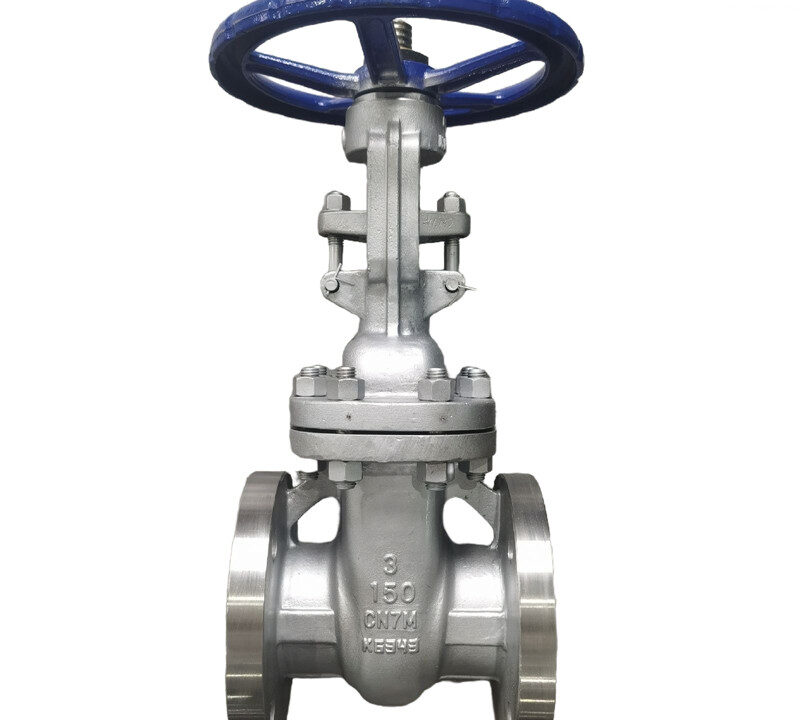
A CN7M Gate Valve is an industrial isolation valve manufactured with CN7M corrosion-resistant cast alloy for applications where conventional carbon steel or stainless steel may not provide sufficient resistance to the process medium.
CN7M is a nickel-based corrosion-resistant casting alloy specified under ASTM A494/A494M. It is commonly associated with demanding chemical processing environments, particularly services involving certain acids and other aggressive fluids.
A gate valve controls fluid flow by raising or lowering a gate within the valve body. When fully open, the gate moves clear of the main flow passage, allowing fluid to pass with relatively low flow resistance. When fully closed, the gate engages the seating surfaces to isolate the pipeline.
Combining a gate valve design with CN7M alloy can provide an option for industrial systems requiring both pipeline isolation and enhanced corrosion resistance.
For chemical plants, process engineers, EPC contractors, and industrial valve buyers, selecting the correct CN7M gate valve requires careful evaluation of the alloy grade, process chemistry, pressure-temperature conditions, trim configuration, and applicable design standards.
2. What Is CN7M Material?
CN7M is a corrosion-resistant cast alloy covered by ASTM A494/A494M. It belongs to the family of nickel-based casting alloys developed for demanding chemical process applications.
Its chemical composition is designed to provide resistance to selected corrosive environments. The exact suitability depends on the concentration and temperature of the process fluid, as well as contaminants, aeration, and operating conditions.
Key Characteristics of CN7M Alloy
Corrosion resistance: CN7M can provide useful resistance in selected aggressive chemical environments, including certain acid-containing process streams.
Nickel-based alloy construction: Its nickel-rich composition supports corrosion resistance in applications where conventional steel materials may be unsuitable.
Industrial casting applications: The alloy can be used for cast pressure-containing components designed for demanding process service.
Application-specific material selection: CN7M is not universally resistant to all acids, alkalis, solvents, or chloride-containing fluids. The process conditions must be checked against reliable corrosion data before the alloy is selected.
For procurement purposes, buyers should request the applicable material specification, material test certificate, and confirmation that the valve body and any other specified pressure-containing components meet the required material grade.
3. Key Features of a CN7M Gate Valve
Enhanced Corrosion Resistance
The principal reason for specifying CN7M is its potential to withstand corrosive process environments that can damage conventional valve materials.
The actual corrosion performance depends on the chemical composition of the medium, concentration, temperature, fluid velocity, and exposure conditions.
Reliable Pipeline Isolation
Gate valves are designed primarily for fully open and fully closed service. A properly selected CN7M gate valve can isolate compatible process fluids while supporting maintenance and shutdown operations.
Low Flow Resistance When Fully Open
When the gate is fully raised, the flow passage can provide relatively low resistance compared with some other valve types. Actual pressure loss depends on the valve’s internal geometry and flow conditions.
Material Options for Demanding Process Service
A CN7M valve can be specified with suitable seating and trim materials to meet the requirements of the application. The compatibility of the body, gate, seat, stem, and sealing components should be evaluated as a complete system.
Potential for Longer Service Life
When the alloy is correctly matched to the process conditions, it may help reduce corrosion-related maintenance and replacement costs. However, service life cannot be guaranteed by material grade alone.
4. Main Applications of CN7M Gate Valves
CN7M gate valves may be considered for industrial services where corrosion resistance is a major material-selection requirement.
Chemical Processing Plants
Chemical plants handle acids, intermediates, solvents, and other process fluids that may require specialized valve materials. CN7M can be evaluated for compatible chemical services based on the actual operating conditions.
Acid Handling Systems
Certain acid-processing systems require corrosion-resistant pressure-containing components. The suitability of CN7M depends on the specific acid, concentration, temperature, impurities, and flow conditions.
Material selection should be based on validated corrosion data rather than general assumptions about acid resistance.
Petrochemical and Specialty Chemical Industries
Specialty chemical production may involve complex mixtures and demanding operating environments. A CN7M gate valve can be considered when the process chemistry and project specifications support the use of this alloy.
Industrial Process Pipelines
Corrosion-resistant gate valves may be used in selected transfer lines, storage systems, and process isolation points where conventional materials do not meet the required corrosion performance.
The final valve design and alloy selection must comply with the applicable engineering requirements for the specific installation.
5. Typical Technical Specifications of a CN7M Gate Valve
The following table lists common specification items to confirm when sourcing a CN7M gate valve. Actual values depend on the required size, pressure class, design standard, and manufacturer configuration.
| Parameter | Specification |
|---|---|
| Product Name | CN7M Gate Valve |
| Body Material | CN7M corrosion-resistant cast alloy |
| Material Standard | ASTM A494/A494M, where specified |
| Valve Type | Gate valve |
| Nominal Size | Project-specific |
| Pressure Class | Project-specific |
| End Connection | Flanged or another specified connection |
| Gate and Seat Materials | To be confirmed based on service requirements |
| Stem Material | To be confirmed |
| Design Standard | API 600, API 603, or another applicable standard, subject to material and design compatibility |
| Pressure-Temperature Rating | To be established under the applicable design standard |
| Inspection and Testing | Project-specified standard and requirements |
| Operation | Handwheel, gearbox, or approved actuation arrangement |
Important: This is a general selection guide, not a verified Oudian product datasheet. The applicable valve design standard must specifically permit the selected material and construction. Buyers should confirm the available size range, pressure class, dimensions, trim, testing requirements, and certifications with the manufacturer.
6. CN7M Gate Valve vs. Conventional Stainless Steel Gate Valve
Choosing between CN7M and conventional stainless steel depends on the process medium and the required corrosion performance.
| Comparison Factor | CN7M Gate Valve | Conventional Stainless Steel Gate Valve |
|---|---|---|
| Material Type | Nickel-based corrosion-resistant cast alloy | Typically austenitic stainless steel or another specified stainless grade |
| Material Cost | Generally higher than common stainless steel grades | Varies by grade and market conditions |
| Corrosion Performance | Suitable for selected aggressive chemical environments | Depends on the specific grade and process conditions |
| Common Selection Driver | Specialized corrosion resistance | General industrial corrosion resistance and mechanical requirements |
| Application Suitability | Requires chemical-specific verification | Requires chemical-specific verification |
CN7M should not automatically be considered superior for every application. In some environments, stainless steel may be sufficient; in others, a different nickel alloy or a specialized material may be more appropriate.
The correct decision should be based on corrosion data, design conditions, material availability, and total lifecycle cost.
7. How to Select the Right CN7M Gate Valve
Before purchasing a CN7M gate valve, engineers and procurement teams should verify the following factors.
Confirm the Process Medium
Identify the exact fluid, including chemical concentration, impurities, dissolved gases, and potential contaminants.
Check Operating Pressure and Temperature
The valve must meet the required design pressure and temperature under the applicable pressure-temperature rating. Material suitability alone does not establish the allowable working pressure.
Verify the Material Specification
Confirm that CN7M is the required casting grade and request material traceability documents. Where necessary, verify the material chemistry and mechanical properties against the purchase specification.
Select Suitable Trim Materials
The gate, seats, stem, and other wetted components may require different material specifications. Their corrosion resistance and mechanical compatibility must be assessed together.
Confirm Valve Standards
Specify the required design, dimensional, inspection, and testing standards. API 600 or another standard should be used only where the selected valve construction and material fall within its applicable scope.
Evaluate Maintenance Requirements
Consider operating frequency, potential deposits, corrosion monitoring, spare parts, and the accessibility of the valve for inspection and maintenance.
A complete technical datasheet is the best starting point for obtaining an accurate quotation.
8. Why Consider Oudian Valve for Industrial Valve Sourcing?
Oudian Valve supplies industrial valves for a range of pipeline and process applications.
For buyers seeking a CN7M gate valve, Oudian can be contacted to discuss the required valve configuration, material specification, pressure class, connection type, and project documentation.
Before placing an order, buyers should confirm the following with the supplier:
- Whether CN7M is available for the requested valve design and size.
- Whether the body, gate, and other specified components meet the required material grades.
- Whether the proposed design complies with the project’s applicable standards.
- Whether material test certificates, inspection reports, and pressure-test documentation can be provided.
- Whether the delivery schedule and spare-part requirements meet the project needs.
Visit the official website to explore Oudian Valve’s industrial valve product range:
The availability and technical configuration of a specific CN7M gate valve should be confirmed directly with Oudian Valve.
9. Frequently Asked Questions About CN7M Gate Valves
Q1: What does CN7M mean in a gate valve?
CN7M is a corrosion-resistant cast alloy grade specified under ASTM A494/A494M. It is used for certain industrial valve components where resistance to aggressive process environments is required.
Q2: Is CN7M a stainless steel?
CN7M is generally classified as a nickel-based corrosion-resistant casting alloy rather than a conventional stainless steel grade. Its composition and performance differ from common stainless steels such as 304 and 316.
Q3: Is CN7M suitable for sulfuric acid service?
CN7M may be suitable for certain sulfuric acid conditions, but suitability depends strongly on concentration, temperature, impurities, aeration, and other process variables. Corrosion data and engineering review are required before specifying it.
Q4: What is the difference between CN7M and 316 stainless steel?
CN7M is a nickel-based cast alloy designed for selected demanding corrosive environments, whereas 316 is an austenitic stainless steel. Neither material is universally suitable for all chemicals. The choice depends on the specific fluid and operating conditions.
Q5: Can a CN7M gate valve be used for high-pressure service?
It may be used where the complete valve design, material properties, pressure class, and temperature rating satisfy the application requirements. The allowable pressure must be confirmed from the applicable design standard and manufacturer documentation.
Q6: What standards should be considered for a CN7M gate valve?
ASTM A494/A494M is relevant to the cast alloy material specification. The valve design, dimensions, and testing requirements should be established using standards applicable to the selected valve construction and service.
Q7: How can I obtain a quotation for a CN7M gate valve from Oudian Valve?
Provide the required size, pressure class, end connection, process medium, operating temperature, design pressure, applicable standards, and any material certification requirements. Contact Oudian Valve directly to confirm product availability and the proposed technical configuration.
Conclusion: CN7M Gate Valves for Corrosion-Resistant Industrial Service
A CN7M gate valve can provide an effective isolation solution for compatible industrial processes where corrosion resistance is a critical requirement.
Its performance depends on selecting the correct alloy specification, valve construction, trim materials, pressure-temperature rating, and inspection requirements.
For chemical processing and other demanding applications, engineers should verify the alloy’s compatibility with the actual process medium before finalizing the valve specification.
Oudian Valve is a potential supplier to contact for industrial valve sourcing and project-specific technical evaluation. Confirm the availability of the requested CN7M configuration, material certificates, design standards, and delivery requirements before placing an order.
Looking for a CN7M Gate Valve?
Visit https://oudianvalve.com/ to contact Oudian Valve and discuss your industrial valve requirements.