


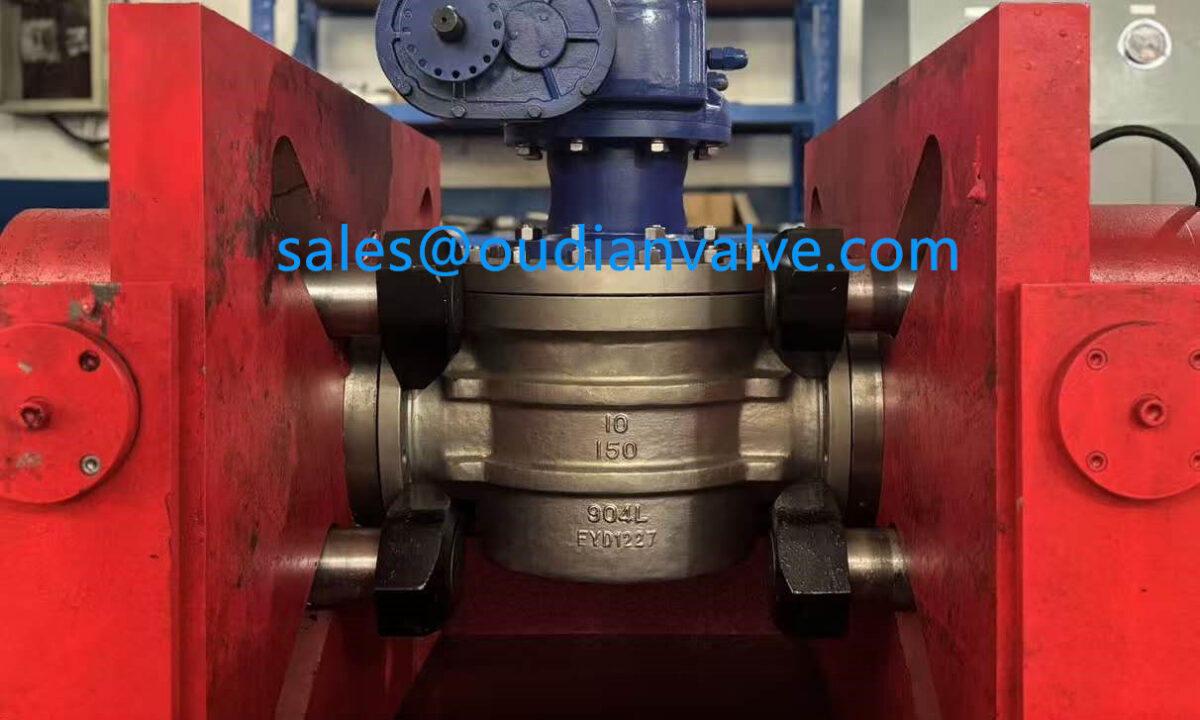
API 598: Valve Inspection & Testing Standard (Complete Guide)
Piping design specifications, operating fluid hazards, and procurement contracts dictate which mandatory and optional inspection stages apply to a given production lot. Adhering to verified testing procedures helps maintain piping integrity and reduces the likelihood of hazardous loss of containment under operating conditions.
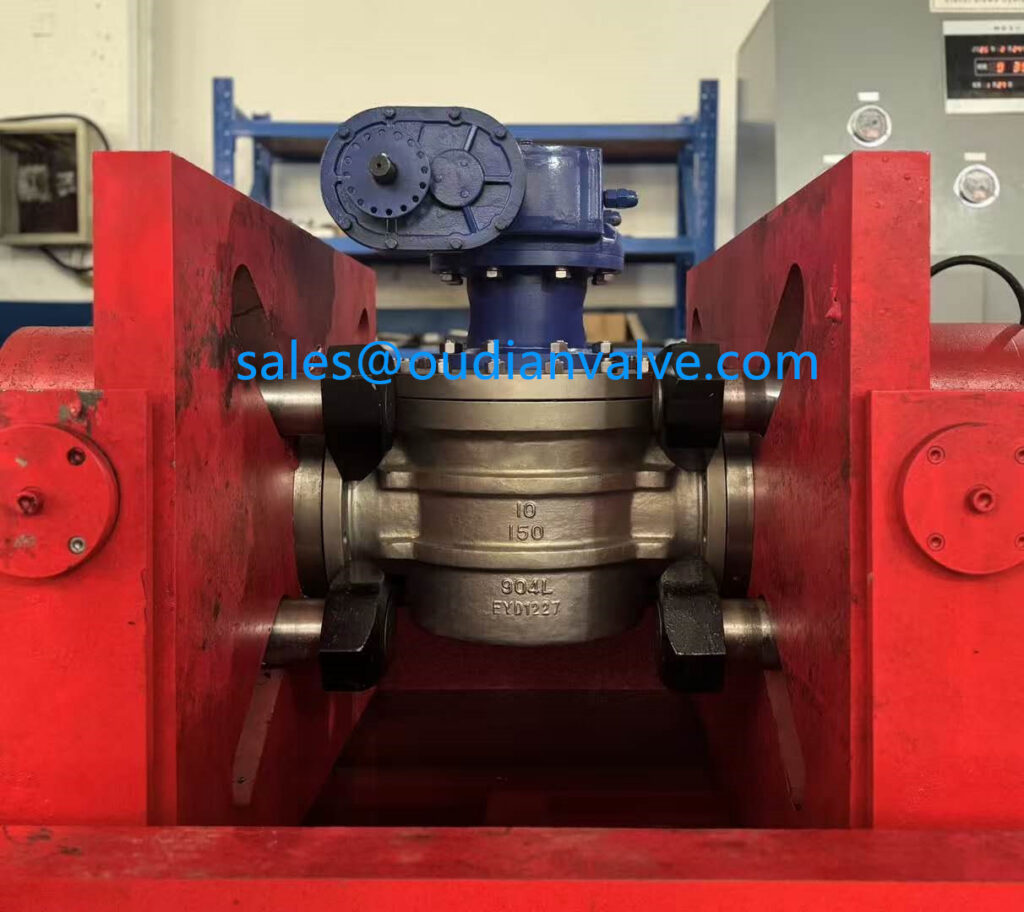
Scope, Applicability, and Valve Types Under API 598
API 598 covers inspection, examination, supplemental examination, and pressure test requirements for both metal-seated and resilient-seated valves. The standard applies to valves manufactured to standards such as API 600, API 602, API 603, API 608, and API 609, rather than transmission pipeline equipment. It provides standardized testing criteria for manufacturers during production testing and for third-party inspectors during witness inspections.
Different valve designs exhibit distinct internal geometries, sealing mechanisms, and flow paths that influence how pressure testing is conducted. The standard classifies testing requirements according to valve size, pressure rating, and structural category.
Linear Motion Valves
Gate and globe designs require verification of closure tight-shutoff and body integrity. Wedge gate valves require seat tests applied from each side of the closure element.
Quarter-Turn Valves
Ball valves, plug designs, and butterfly valves require tests focused on seat sealing and stem packing tightness. Floating ball designs rely on differential pressure to load the seat, while trunnion mounted ball units test independent seats.
Check Valves
Swing, lift, and dual-plate check valves require reverse-flow closure tests to verify seat engagement. The closure test verifies that reverse pressure seals against the seat without excessive back-leakage.
Quarter-turn valves present unique seating dynamics during closure tests. Resilient-seated butterfly valves and floating ball units often demonstrate zero observable leakage when seats are intact. In contrast, metal-seated butterfly, trunnion mounted, and wedge gate valves permit specified minimal leakage allowances based on nominal diameter.
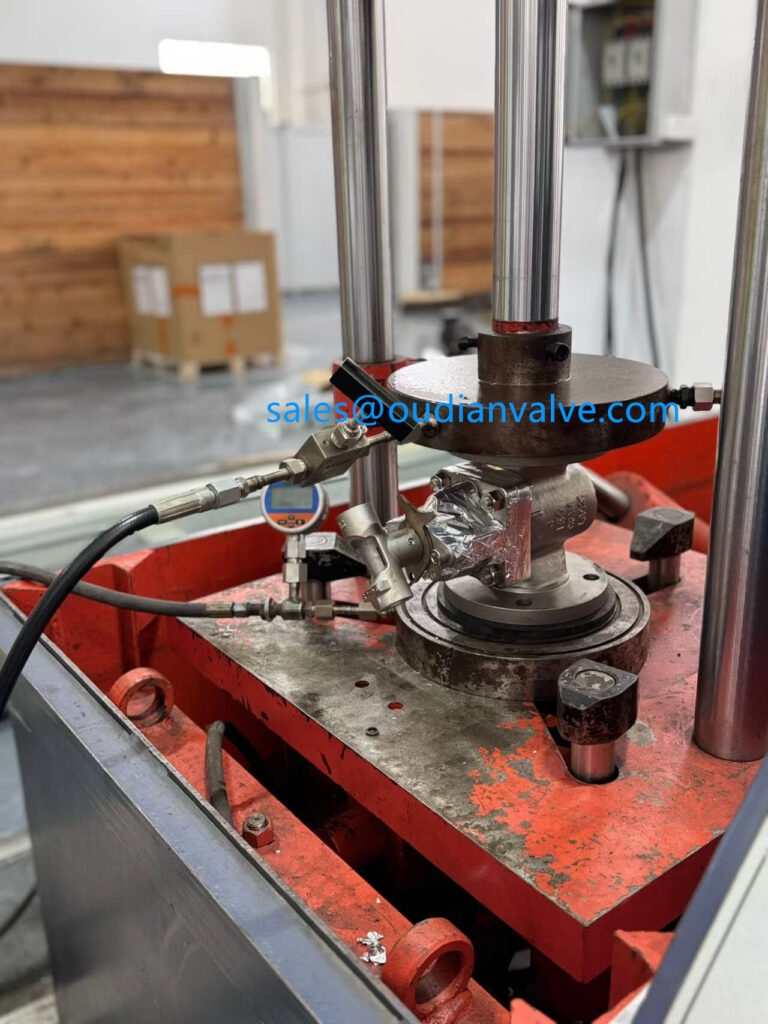
Mandatory Inspection Stages and Pressure Test Procedures
API 598 divides testing protocols into structural pressure tests and closure leakage tests. The primary objective is verifying that the pressure boundary contains internal fluid and that the closure mechanism isolates flow across the seating interface.
Testing begins with examining the valve body and bonnet casting or forging soundness before proceeding to internal sealing surfaces. Depending on the valve size and pressure class, tests utilize liquid test media such as water with rust inhibitors or gas test media such as air or nitrogen.
| Test Type | Test Medium | Test Boundary | Inspection Focus |
| Shell test | Liquid | Body and bonnet | Examines the body casting, forging, and joints for structural porosity or visible leakage through pressure-retaining walls. |
| Backseat test | Liquid or gas | Stem and bonnet | Evaluates the seal between the stem shoulder and bonnet bushing when the valve is fully open without packing pressure. |
| Low-pressure closure | Gas | Seat interface | Identifies fine surface imperfections across resilient or metal seats using air or inert gas at low differential pressure. |
| High-pressure closure | Liquid | Seat interface | Validates the mechanical capability of seats and closure members to isolate flow under high hydraulic differential pressure. |
Shell tests require the valve to be partially open, with end connections sealed and the packing gland tightened to test pressure. The backseat test applies exclusively to valves equipped with a backseat feature, such as gate and globe valves. During backseat testing, the packing gland is loosened or packing is omitted so pressure boundary integrity relies entirely on the internal mechanical backseat interface.
Closure testing involves applying differential pressure across the gate, disc, or ball while monitoring the downstream side for fluid bypass. Valves designed for double block and bleed service or bidirectional shutoff require separate tests on each seat.

Step-by-Step API 598 Pressure Testing Workflow
Executing an API 598 pressure test requires disciplined setup, strict pressure stabilization, and careful observation. Manufacturers and third-party inspectors follow a sequential workflow to protect personnel and maintain consistent test conditions.
The testing environment must provide secure clamping rigs, clean test fluid, calibrated measurement gauges, and protective containment barriers. The standard mandates specific minimum holding periods during which no pressure drop or unpermitted leakage may occur.
- Inspect the valve exterior, marking, and internal cavities to confirm surfaces are clean, dry, and free of protective coatings or sealants that could temporarily mask porosity.
- Mount the valve securely in the test rig, taking care that clamping fixtures do not exert excessive external compressive loads that artificially deform the body or seat rings.
- Fill the valve with clean liquid test medium, bleeding out all entrapped air through vent ports before applying target hydrostatic shell test pressure.
- Hold the shell test pressure for the specified duration table time while visually inspecting the body, bonnet joint, and stem seal for weeping or sweating.
- Open the valve fully to engage the backseat bushing if testing a gate or globe valve, loosen the gland packing, and verify the backseat seal tightness.
- Close the valve using standard operating torque, apply the required low-pressure gas or high-pressure liquid closure test pressure to the upstream port, and observe downstream leakage.
- Depressurize the system safely, drain test fluids thoroughly, dry internal cavities, and apply required rust preventatives prior to final packaging.
Safety considerations remain paramount throughout pressure testing operations. Hydrostatic testing poses stored energy hazards, while pneumatic gas testing presents high explosive decompression risks if equipment fails mechanically. Inspection personnel must never strike valves under pressure or stand directly in line with stem projections or blind flanges during holding cycles.
Leakage Rate Evaluation and Common Inspection Mistakes
Interpreting test results requires referencing the applicable API 598 leakage tables according to valve size, class, and seat type. For shell and backseat tests, the standard permits zero visible leakage through body walls or mechanical joints.
Closure test acceptance criteria differ sharply between resilient seats and metal-to-metal seating configurations. Resilient seats, including elastomeric and polymer materials, require zero visible leakage for liquid tests and zero bubbles per minute for gas tests. Metal-seated valves allow a defined leakage rate measured in drops per minute for liquid or bubbles per minute for gas, scaled proportionally to valve size.
Painting or applying rust-preventative grease prior to shell testing can conceal casting defects, pinholes, and porous weld seams. API 598 requires valves to undergo shell testing before body surfaces receive primer, paint, or internal sealants, unless specifically authorized by project specifications.
Common inspection errors include failing to vent entrapped air during hydrostatic tests, which leads to unstable pressure readings and safety hazards. Another frequent mistake is applying excessive actuator torque to force a stubborn metal seat into passing, which damages sealing faces and distorts future field seating capability. Inspectors must confirm that manual gear operators or actuators do not exceed design torque limits during closure testing.
Test documentation must capture the exact valve serial number, manufacturer, nominal size, pressure rating, test media used, ambient temperature, actual holding times, and measured leakage quantities. Test certificates should clearly cite the governing edition of API 598 alongside any project-specific amendments.
Distinguishing API 598 from API 6D and ASME B16.34
Engineers and procurement teams frequently encounter multiple testing standards across project documentation. While API 598, API 6D, and ASME B16.34 all address valve testing, their scopes, design philosophies, and acceptance thresholds serve distinct functions.
API 598 serves as a general industrial testing standard for refinery and chemical plant valves. In contrast, API 6D governs pipeline valves intended for long-distance transport systems, incorporating unique requirements such as cavity relief verification and double block and bleed validation. ASME B16.34 establishes foundational pressure-temperature ratings, wall thicknesses, and basic hydrostatic testing for general flanged, threaded, and welded valves.
API 598 Characteristics
- Designed primarily for refinery, petrochemical, and general industrial plant valves across standard piping classes.
- Permits defined, size-dependent leakage rates for metal-seated isolation valves during closure testing.
- Emphasizes practical factory and witness testing across widespread gate, globe, check, and quarter-turn styles.
API 6D Characteristics
- Applies specifically to transmission pipeline infrastructure, including mainline ball, gate, plug, and check valves.
- Enforces stringent zero-leakage requirements or tighter tolerances for pipeline isolation and cavity relief mechanisms.
- Mandates extended holding times and documentation criteria tailored to buried and subsea transmission lines.
API 598 also does not address fugitive emissions testing from stem packings or body joints. Environmental stem emissions qualifications require separate standards such as API 622, API 624, or ISO 15848. Project teams must clearly specify supplemental testing protocols when environmental emissions compliance is mandatory.
Frequently Asked Questions About API 598
What test media are permitted under API 598?
API 598 permits water with rust inhibitors, kerosene, or other suitable liquids for hydrostatic tests. For pneumatic tests, the standard permits clean air, nitrogen, or other non-hazardous inert gases.
Is any visible leakage permitted during the shell test?
No visible leakage is permitted through the body, bonnet, or body joints during the shell test. Any sweating, weeping, or droplet formation through the pressure boundary constitutes a test failure.
Can API 598 be used to test API 6D pipeline valves?
API 6D valves must undergo pressure testing in accordance with API 6D testing specifications rather than API 598. API 6D establishes distinct test procedures, holding periods, and acceptance criteria specifically designed for pipeline isolation service.
When is a backseat test required under API 598?
A backseat test is required for valves that incorporate an internal backseat design, such as gate and globe valves. The test verifies that the stem-to-bonnet seal prevents fluid loss when the valve is fully open.
How does API 598 define zero leakage for resilient seats?
For valves with resilient seating materials, API 598 defines zero leakage as no observable droplets during liquid closure tests. For low-pressure gas closure tests, resilient seating requires zero bubbles per minute during the holding period.
Summary of API 598 Valve Inspection Compliance
API 598 provides a rigorous, standardized framework for validating valve pressure containment and closure integrity before equipment enters industrial service. Because test parameters, durations, and acceptance thresholds depend on nominal valve size and pressure class, inspectors and procurement personnel must review the current official publication of API 598 alongside project-specific engineering specifications. Verifying these detailed criteria supports safe piping operations and predictable plant performance.




1 comment on “API 598: Valve Inspection & Testing Standard (Complete Guide)”
Oudianvale
API 598: Valve Inspection & Testing Standard