


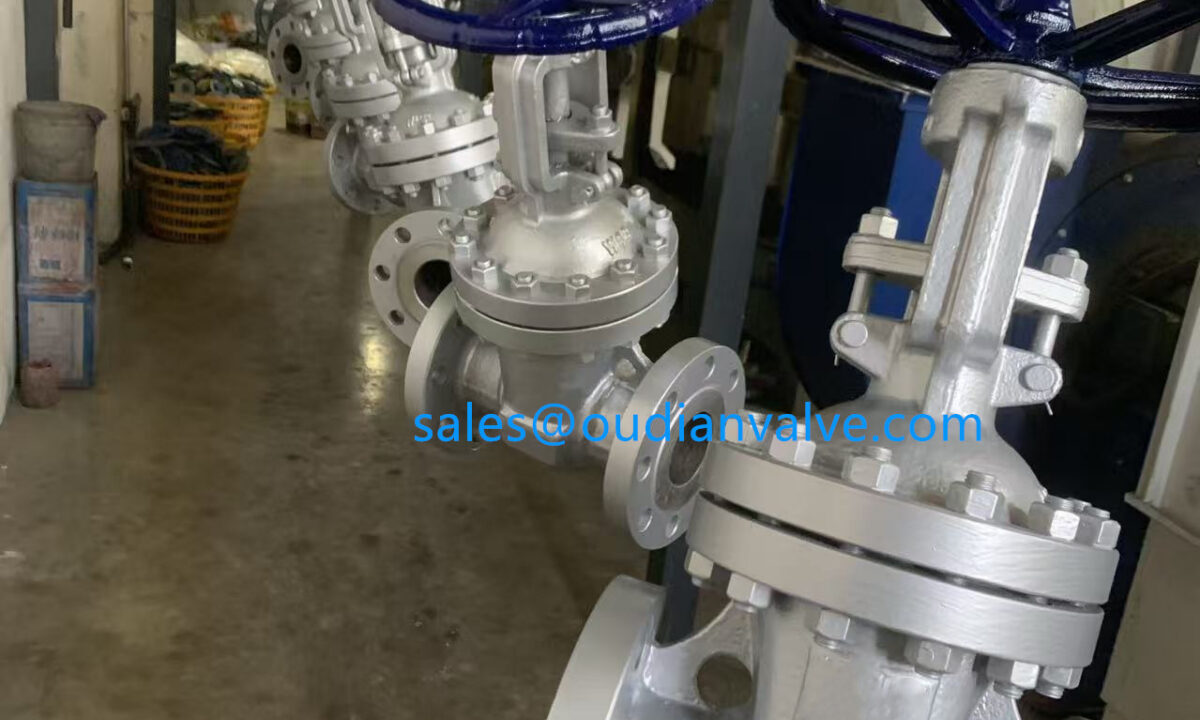
What Are the Different ANSI Classes for Valves?
The appropriate valve class depends on operating pressure, system temperature, fluid characteristics, body material, and structural design standards. Selecting an inadequate class creates severe operational vulnerabilities, while specifying an excessive class introduces unnecessary weight and capital expense.
Understanding ANSI Classes for Valves and Pressure-Temperature Ratings
ANSI classes for valves establish a standardized relationship between thermal exposure and mechanical containment capability. Many non-specialists assume that a designation like Class 150 denotes an absolute limit of 150 psi, but this assumption is incorrect. A valve rated as Class 150 can handle pressures well above 200 psi at ambient room temperature, yet its allowable working pressure drops substantially as operating temperatures climb.
The American National Standards Institute, working in coordination with the American Society of Mechanical Engineers, created these categories to simplify piping engineering. The baseline pressure rating decreases along a predictable curve as temperature increases because structural metals experience reduced tensile strength in heated environments. Consequently, pressure ratings cannot be evaluated as isolated numbers; they always function as coupled pressure-temperature ratings.
Valve wall thickness, flange dimensions, bolting patterns, and shell geometry are proportioned to support the mechanical loads defined for each class. Specifying an ANSI class confirms that the valve pressure boundary meets strict metallurgical and structural criteria across varied thermal cycles.
A valve class rating is a pressure-temperature envelope, not a static pressure ceiling. The maximum allowable working pressure continually diminishes as fluid or environmental temperatures increase.
Standardized markings cast directly onto valve bodies indicate pressure class compliance and material composition.
Standard Valve Pressure Classes from Class 150 to Class 2500
Standard industrial piping utilizes eight primary pressure classes defined by ASME specifications. These designations comprise Class 150, Class 300, Class 400, Class 600, Class 900, Class 1500, and Class 2500, alongside Class 800, which is widely adopted for compact forged valves. Each progression to a higher numerical class signifies a heavier body construction, thicker walls, and more robust connection interfaces.
Class 400 is relatively uncommon in modern industrial procurement because engineers generally step directly from Class 300 to Class 600 components to streamline inventory. In contrast, Class 800 represents an intermediate standard tailored for threaded and socket-weld forged steel valves used in compact utility and bypass lines. The higher tiers, extending from Class 900 through Class 2500, serve severe utility headers, power generation loops, and upstream energy production facilities.
The table below summarizes standard pressure classes, their relative pressure tiers, typical functional scopes, and structural behavior.
| ANSI Class | Pressure Tier | Typical Scope | Allowable Pressure Behavior |
| Classe 150 | Low Pressure | General Utilities | Maintains ambient capability above nominal designation but declines sharply at elevated heat. |
| Class 300 | Medium Pressure | Process Piping | Provides substantial strength margins for moderate thermal processing circuits. |
| Class 400 | Intermediate | Specialized Lines | Offers intermediate containment but is frequently bypassed in favor of higher categories. |
| Class 600 | High Pressure | Refining Units | Accommodates elevated pipeline pressures across broad operating temperature ranges. |
| Class 800 | Compact Forged | Small Bore Lines | Tailored for forged steel bodies operating in demanding auxiliary services. |
| Class 900 | Severe Pressure | Gas Compression | Handles severe compression loads with heavy structural wall thickness. |
| Classe 1500 | Extreme Pressure | Power Generation | Sustains supercritical steam and critical fluid confinement under intense stress. |
| Classe 2500 | Ultra Severe | Subsea Extraction | Delivers maximum mechanical containment under extreme downhole and wellhead conditions. |
Governing Standards: ASME B16.34, B16.5, and B16.47
Valve pressure classes operate within an integrated framework of manufacturing and mechanical codes published by ASME. These technical codes establish exact minimum material dimensions, pressure containment metrics, non-destructive examination criteria, and dimensional tolerances. Compliance across these companion standards allows valves, flanges, and connecting pipe spools to mate without structural mismatch.
The standard ASME B16.34 serves as the primary document governing valves with flanged, threaded, and welded ends. It establishes pressure-temperature tables, minimum wall thickness rules, and testing parameters for cast, forged, and fabricated valve designs. When piping assemblies connect to valves, the matching flange requirements derive from ASME B16.5 or ASME B16.47, depending on pipe diameter.
ASME B16.34
Governs valve design, wall thickness, thermal ratings, pressure testing protocols, and acceptable body materials.
ASME B16.5
Specifies pipe flanges and flanged fittings from small nominal sizes through 24-inch outer diameters.
ASME B16.47
Defines large-diameter steel flanges ranging from 26 inches through 60 inches across standardized pressure classes.
Adherence to these standards helps prevent premature metal failure and maintains consistent mechanical behavior across complete industrial processing units.
Differences Between ANSI/ASME Classes and Metric PN Designations
Industrial piping systems use two predominant rating systems: the ANSI/ASME class system prevalent in North America and the metric Nominal Pressure, or PN, system standardized under European EN and international ISO codes. While both systems categorize equipment by pressure-handling capability, their baseline testing principles and dimensional assumptions differ significantly. Treating them as identical can lead to dangerous mismatched bolting patterns or inadequate wall dimensions.
A PN designation expresses nominal pressure in bar at a reference temperature of 20 degrees Celsius. In contrast, an ANSI class represents an extensive performance curve across hundreds of thermal increments according to specific metallurgical groupings. The two classification systems do not share identical bolt-hole circles, flange outer dimensions, or gasket surfaces, which rules out direct physical interchangeability in most installations.
ANSI/ASME Class System
- Employs dimensionless class identifiers like 150, 300, and 600.
- Defines allowable pressure across diverse temperature charts by material group.
- Utilizes imperial bolt sizing and specific raised face flange geometry.
- Governed primarily by ASME B16.34 and companion standards.
Metric PN System
- Uses bar-based pressure designations such as PN 16 and PN 40.
- References maximum working pressure specifically at 20 degrees Celsius.
- Relies on metric bolt circles, metric studs, and European flange profiles.
- Governed by EN 1092-1 and related international standards.
While approximate performance parallels exist, such as pairing PN 20 with Class 150 or PN 50 with Class 300, mating an ANSI flange directly to a metric PN valve requires specialized transition adapters.
Industrial Applications Across Pressure Classes
Valve classes correspond to distinct operational tiers across municipal, processing, and energy facilities. Lower-tier systems rely on economical valve bodies with lighter structural profiles, whereas severe service plants demand forged shells and specialized alloys capable of resisting deformation. Selecting the correct tier protects equipment integrity and avoids unnecessary project costs.
Lower-Pressure Services
Class 150 valves serve domestic water treatment, low-pressure steam, HVAC circulation loops, and municipal distribution pipelines.
Medium-Pressure Lines
Class 300 and Class 600 components support chemical processing, refining units, industrial gas pipelines, and manufacturing circuits.
High-Pressure Facilities
Class 900, 1500, and 2500 assemblies operate in boiler feed headers, supercritical power stations, and subsea petroleum extraction wells.
Ball valves, gate valves, and globe valves within these pressure categories utilize distinct internal seat seals to complement their outer bodies. Soft elastomer seats frequently handle moderate conditions in lower classes, whereas metal-to-metal seating becomes standard practice as valves enter severe high-temperature and high-pressure duties.

High-pressure isolation valves in energy transmission lines rely on reinforced body shells to contain continuous line pressures.
Critical Factors in Valve Class Selection
Selecting the proper valve class requires evaluating all operational dynamics rather than relying strictly on line gauge pressure. A process line with modest operating pressure may still demand a heavy valve class if continuous operating temperatures weaken the valve body metal. Systematic review of line criteria prevents catastrophic structural failures and premature packing leaks.
- Determine the maximum coincident pressure and temperature conditions, accounting for normal operations, thermal relief events, and upset scenarios.
- Identify the body material group, such as carbon steel, stainless steel, or specialized duplex alloys, as each metallurgy displays unique derating curves under heat.
- Verify compatibility with adjacent piping components, confirming that flange facings, bolt ratings, and wall schedules correspond with the selected valve rating.
- Evaluate fluid hazards, establishing appropriate safety margins for volatile, toxic, flammable, or highly abrasive process media.
- Consult mandatory jurisdictional and project piping codes to confirm minimum rating thresholds for the intended service environment.
Applying this sequence helps verify that the specified valve body maintains adequate mechanical resilience across the full operational life of the piping installation.
Reading Manufacturer Pressure-Temperature Charts and Specifications
Manufacturer pressure-temperature charts provide the definitive metric for confirming valve integrity under service conditions. Standard ASME tables group metals into distinct material categories, such as Group 1.1 for common carbon steels and Group 2.2 for austenitic stainless steels. Because each metal responds differently to elevated temperatures, two Class 300 valves constructed from different alloys can feature distinctly different pressure limits at an identical operating temperature.
Engineers must cross-reference actual continuous operating points against the material group tables published in ASME B16.34 or the manufacturer catalog. In addition to shell wall limits, internal trim elements, elastomeric stem packing, and polymer seat rings can lower the effective working limit below the structural rating of the metal casing. Reviewing both the shell rating and the soft-goods rating chart helps avoid unexpected internal seat degradation during operation.
Always verify both the shell rating and the internal seat material limit. A valve body may mechanically withstand high pressure, but internal soft seats or packings can fail if thermal boundaries are exceeded.
Nameplate data stamped on the valve bonnet confirms material classification, body class, and allowable operating parameters.
Frequently Asked Questions About Valve Pressure Classes
Does an ANSI Class 150 valve have a maximum pressure limit of 150 psi?
No, an ANSI Class 150 valve does not have a static 150 psi limit. At ambient temperatures, a carbon steel Class 150 valve can handle pressures up to 285 psi, with allowable pressure declining as temperatures rise.
What is an ANSI Class 800 valve?
An ANSI Class 800 valve is a compact forged steel valve standard established for small-bore piping under API and ASME guidelines. These valves typically feature socket-weld or threaded connections and provide an intermediate pressure rating between Class 600 and Class 900.
How does valve body material affect the ANSI pressure class rating?
Valve body material directly dictates the pressure-temperature curve of a given class. Different metals belong to distinct ASME material groups, meaning a carbon steel valve and a stainless steel valve of the same class share different working pressures at elevated temperatures.
Can an ANSI-rated valve connect directly to a metric PN flange?
Direct connection between ANSI and metric PN flanges is generally not possible without specialized adapters. Bolt-hole quantities, bolt circle diameters, and flange thicknesses differ between the two standards, preventing proper alignment and gasket compression.
Why does allowable working pressure decrease as temperature increases?
Allowable working pressure decreases at high temperatures because structural metals experience reduced yield and tensile strength under heat. ASME standards account for this thermal derating to prevent valve body distortion, bolt stretch, and joint leakage.
Summary of Valve Class Selection Principles
Correctly identifying the right ANSI valve class requires analyzing simultaneous operating pressures, temperature profiles, and fluid risks against standardized performance tables. Reviewing manufacturer pressure-temperature charts and project engineering specifications remains an indispensable step before finalizing any valve procurement. Adhering to these mechanical guidelines protects piping infrastructure and supports stable industrial operation over the long term.