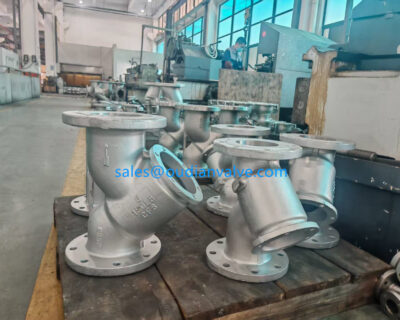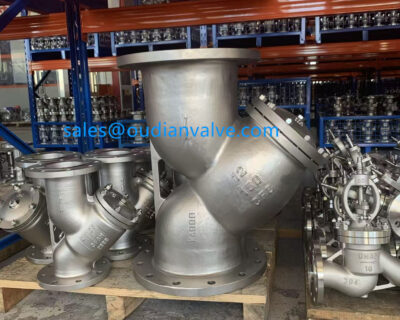


What Is a Y-Strainer and How Do You Select the Right One?
Selecting the proper unit requires matching body material, pressure class, connection style, and filtration micron rating to the specific operating temperature, fluid type, and piping geometry. Correct sizing and regular servicing protect expensive downstream equipment, including pumps, control valves, steam traps, and flow meters, from mechanical damage and system downtime.
Working Principle and Flow Dynamics
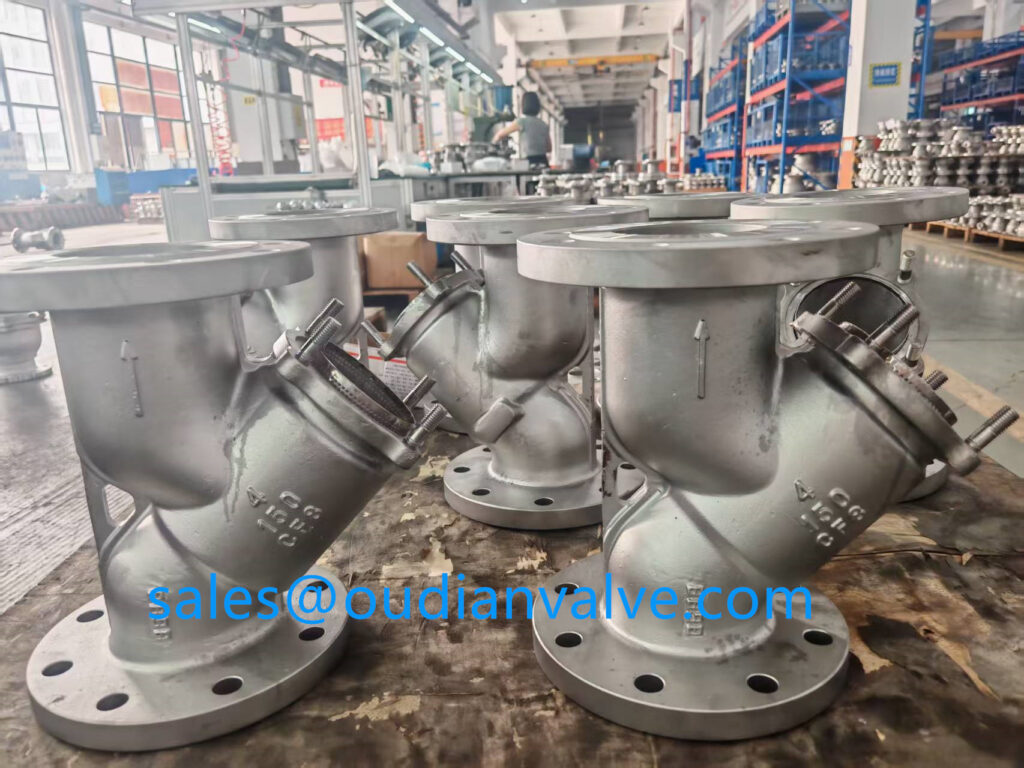
A wye strainer functions through mechanical separation inside a closed conduit under continuous line pressure. As liquid, gas, or steam enters the inlet port, fluid flows directly toward the angled collection leg where the cylindrical filter screen sits seated against machined body surfaces.
Flow passes outward through the internal diameter of the mesh element toward the outer chamber, continuing out through the discharge port. Solid particulate larger than the screen perforations remains trapped inside the screen pocket, preventing foreign matter from traveling into sensitive downstream machinery.
Because collected debris settles inside the low pocket of the angled leg, flow continues across the upper screen area with minimal initial pressure drop until particulate builds up significantly.
Anatomy and Essential Components
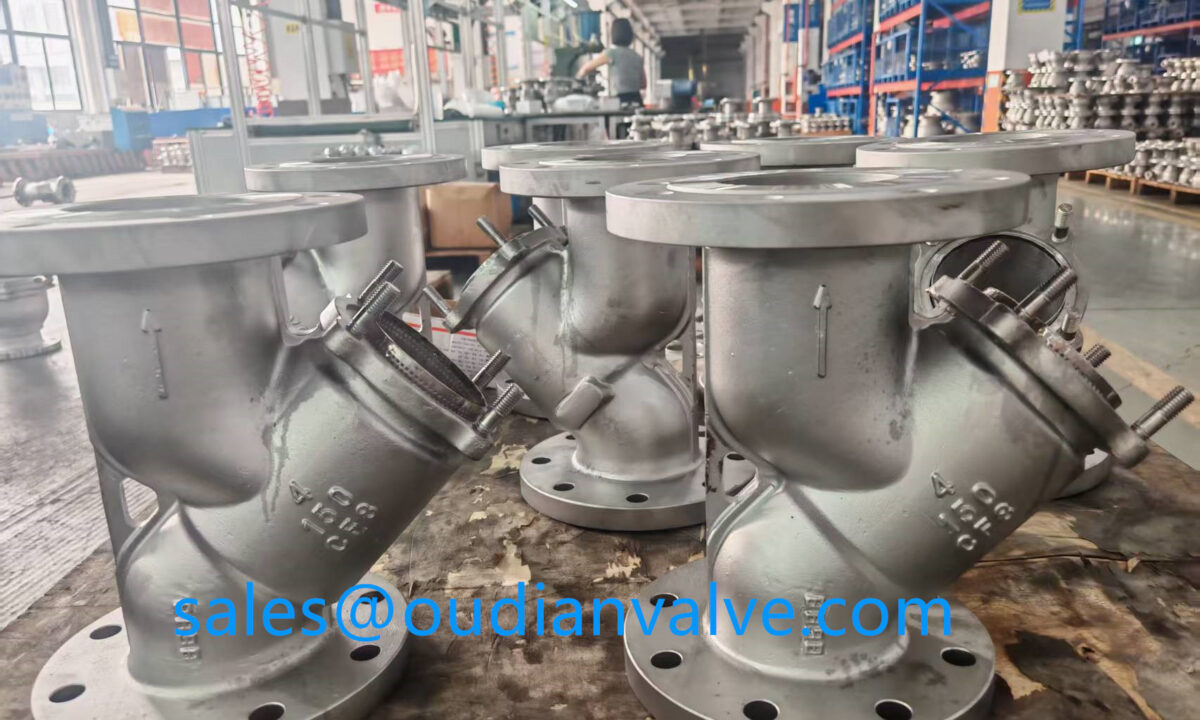
Every wye-style strainer relies on a robust mechanical assembly constructed to withstand line pressure, thermal expansion, and mechanical vibration. The configuration allows servicing without removing the entire body from the pipeline.
- Strainer Body: The pressure-containing housing features inlet and outlet ports along with the angled branching chamber that holds the filtration media.
- Screen Element: A removable cylinder made from perforated metal sheet, woven wire mesh, or a combination of both to retain solid particles.
- Retaining Cap or Cover: A threaded, bolted, or clamped end closure that seals the screen chamber while allowing access for cleanout.
- Chamber Gasket: A resilient seal seated between the body and cover to prevent fluid leakage under varying pressures and temperatures.
- Blow-Off Connection: A threaded tap in the cap that accommodates a drain valve or purge plug for flushing particulate while in service.
Applications and Comparison with Basket Strainers
Y-strainers serve widely across industrial manufacturing, heating and cooling loops, chemical processing, municipal water handling, and steam utility lines. Their compact footprint makes them particularly suitable for tight pipe racks and vertical pipelines where space is constrained.
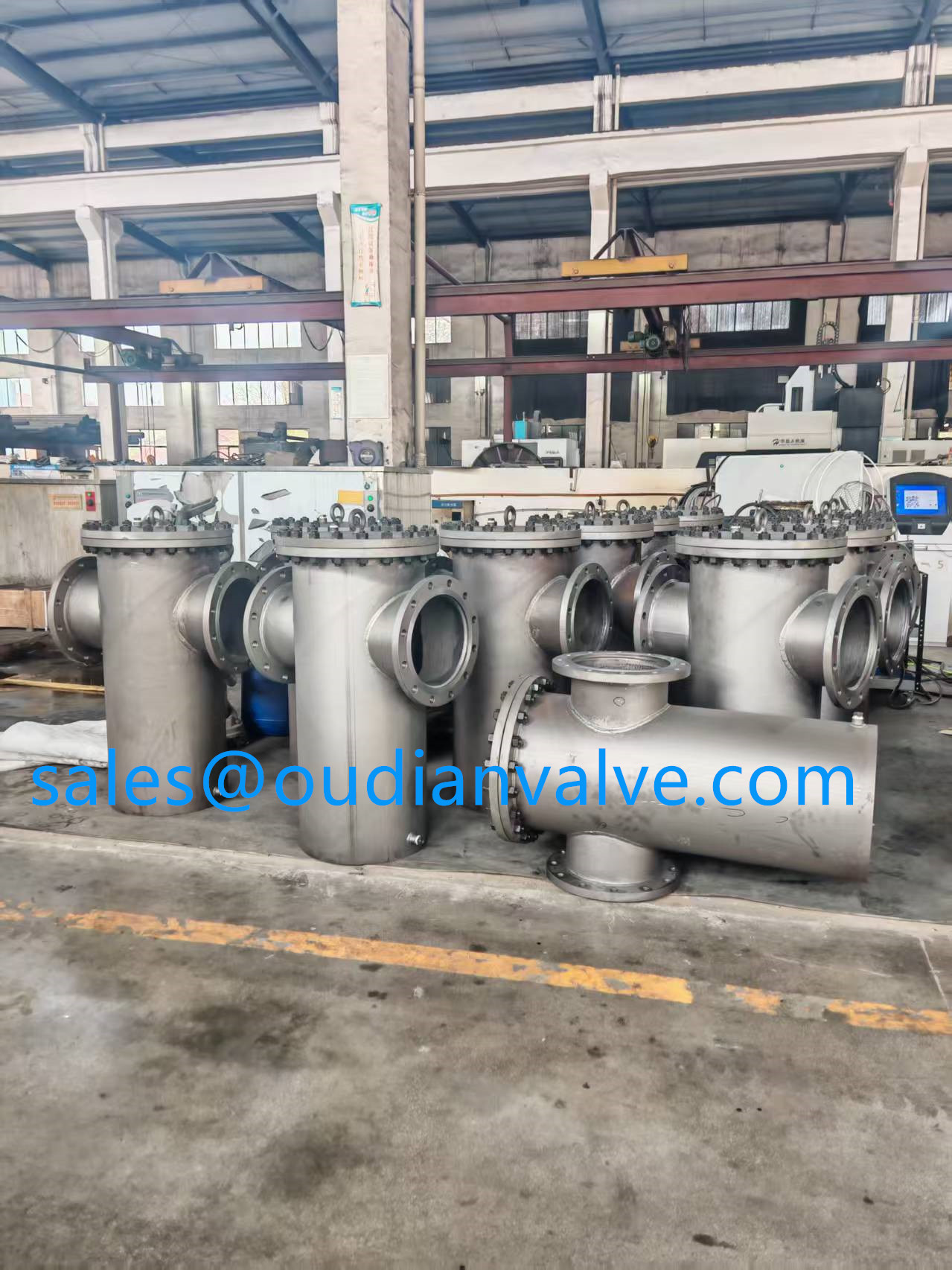
Compact body dimensions permit inline integration into congested process piping.
Comparing inline wye strainers against simplex basket units clarifies which style suits a given process condition. While basket units offer greater particle-holding volume for high-debris liquids, wye units provide superior pressure tolerance and multidirectional mounting flexibility.
Advantages of Y-Strainers
- Compact overall dimensions fit confined spaces and narrow valve manifolds.
- Versatile installation orientation supports horizontal lines and downward vertical flows.
- High mechanical strength handles elevated steam pressures and non-shock hydraulic surges.
- Lower initial procurement pricing compared to complex dual-basket configurations.
Limitations of Y-Strainers
- Smaller holding capacity requires frequent cleaning cycles in heavily contaminated lines.
- Pressure drop rises rapidly once the interior mesh cylinder becomes partially blinded.
- Servicing requires pausing flow unless an active blow-off flushing connection is installed.
Step-by-Step Selection Process
Specifying the proper filter unit requires systematic evaluation of line operating limits, chemical exposure, and installation geometry. Following a structured assessment prevents premature component failure and unnecessary hydraulic resistance.
- Identify the Process Fluid: Determine whether the line carries clear water, viscous oil, chemical acids, compressed gas, or saturated steam.
- Review Line Pressure and Temperature: Verify that maximum system pressure, including non-shock hydraulic spikes, falls well within the body pressure-temperature rating.
- Determine Pipe Size and Connection Style: Match the nominal pipe diameter and select threaded, socket-weld, butt-weld, or flanged ends to suit local piping standards.
- Select Construction Materials: Choose metallurgies and elastomers that resist internal fluid corrosion and external atmospheric exposure.
- Establish Required Screen Openings: Balance particulate retention needs against acceptable pressure differential across the assembly.
- Check Pipeline Orientation: Confirm whether the unit installs in a horizontal or vertical piping run before final placement.
- Verify Industry Standards: Align selections with applicable ASME, ANSI, or API design guidelines for pressure vessels and valve equipment.
Construction Materials and Body Selection
Body material dictates chemical resistance, thermal stability, and maximum working pressure. Selecting compatible materials helps prevent wall thinning, stress cracking, and galvanic corrosion between adjacent pipe flanges.
Matching housing metallurgy to process chemistry prevents internal erosion and galvanic wear.
| Material | Common Media | Pressure Class | Primary Application |
| Cast Iron | Water, glycol | Moderate | Commercial HVAC and non-potable closed water loops. |
| Ductile Iron | Potable water | Intermediate | Municipal water mains and utility distribution networks. |
| Carbon Steel | Steam, fuel oils | High rating | High-temperature utility steam and hydrocarbon processing lines. |
| Aço inoxidável | Corrosive fluids | High rating | Chemical processing, food manufacturing, and pharmaceutical utility lines. |
| PVC or CPVC | Acids, salts | Low rating | Aggressive chemical transfer, plating operations, and water treatment. |
Filtration Media and Mesh Sizing
The screen element determines filtration performance and directly affects pressure differential. Strainer elements generally use heavy perforated metal sheet for coarse straining or perforated plate lined with fine wire mesh for micro-particle capture.
Selecting an opening that is excessively fine creates rapid debris buildup, frequent clogging, and high head loss. Conversely, oversized openings allow damaging sediment to enter control valves, mechanical seals, and sensitive heat exchangers.
Never size strainer screens solely by nominal pipe size; always cross-reference the minimum particle clearance requirements specified by downstream equipment manufacturers.
Piping Configuration and Installation Orientation
Proper orientation keeps collected debris inside the collection chamber rather than allowing it to migrate back into the primary pipe bore. Flow direction must always follow the flow arrow cast or stamped onto the valve body.
Sideways orientation in steam piping avoids condensate accumulation inside the screen pocket.
Liquid Service Piping
- Install in horizontal runs with the filter leg pointing straight downward.
- Enables vertical installation only when process fluid travels downward.
- Gravity holds heavy particulate inside the lowest chamber area.
Steam and Vapor Lines
- Install in horizontal runs with the filter leg oriented in a flat plane.
- Prevents water droplets from pooling inside the mesh chamber pocket.
- Minimizes wet steam erosion and eliminates water hammer hazards.
Avoiding Common Selection and Installation Errors
System failures often stem from basic installation mistakes rather than product defects. Avoiding these procedural oversights protects piping integrity and simplifies long-term operations.
Installing a strainer backward against fluid direction reverses internal flow through the screen, often crushing the unsupported wire mesh into the discharge port. Another frequent mistake involves installing units vertically with fluid flowing upward, which causes collected debris to slide back down into upstream equipment whenever flow stops.
Confirm adequate physical clearance beneath or beside the strainer cap prior to installation so maintenance crews can extract the screen cylinder without dismantling adjacent piping.
Routine Maintenance and Screen Cleaning
Regular inspection and cleaning prevent excessive differential pressure across the internal screen element. An unmaintained screen can collapse under high fluid pressure, driving trapped sediment directly into pumps and throttling valves.

Screen inspection verifies that mesh integrity remains intact without tearing or corrosion pitting.
- Monitor Differential Pressure: Track pressure gauges across inlet and outlet ports to determine when cleaning is required before severe flow restriction develops.
- Use Blow-Off Purging: Open the blow-off ball valve during active operation to purge loose sediment without dismantling the assembly.
- Isolate and Depressurize: Close isolating block valves on both sides of the unit and vent internal line pressure before unbolting the cap.
- Clean the Mesh Cylinder: Extract the screen, scrub particulate using a stiff brush and compatible solvent, and inspect the metal weave for tears.
- Replace Cap Gaskets: Fit a new replacement gasket each time the cap is removed to prevent leaks upon system re-pressurization.
Frequently Asked Questions
What is the difference between a Y-strainer and a basket strainer?
A Y-strainer uses an angled leg with a compact screen, supporting horizontal and downward vertical installations under high pressure. A basket strainer features a larger, vertically oriented reservoir suited for heavy dirt loading in horizontal liquid lines.
Can a Y-strainer be installed in a vertical pipe run?
Installation in vertical pipe runs is suitable only when fluid flows downward. Upward flow allows trapped particles to fall back into the line, rendering collection ineffective.
How does a blow-off valve work on a Y-strainer?
A blow-off valve threads into the end cap and flushes out accumulated sediment under line pressure. Opening the valve purges debris without requiring line shutdown or screen removal.
Why must steam strainers be mounted horizontally?
Mounting the angled screen leg horizontally prevents condensate from gathering inside the collection pocket. Pooling liquid can create high-velocity slugging and destructive water hammer down steam lines.
When should a strainer screen be replaced instead of cleaned?
Screens require immediate replacement whenever wire mesh exhibits tears, severe corrosion pitting, seam separation, or crushed support cylinders. Damaged screens allow unfiltered sediment downstream and can collapse under flow.
System Reliability Through Proper Selection
Selecting the correct wye strainer depends on matching housing metallurgy, pressure capacity, and filtration mesh to specific process chemistry and flow conditions. Proper orientation, adequate service clearances, and disciplined maintenance cycles safeguard critical valves, pumps, and instrumentation. Always verify line data against official manufacturer engineering sheets and consult qualified piping professionals when designing severe-service or high-pressure installations.