

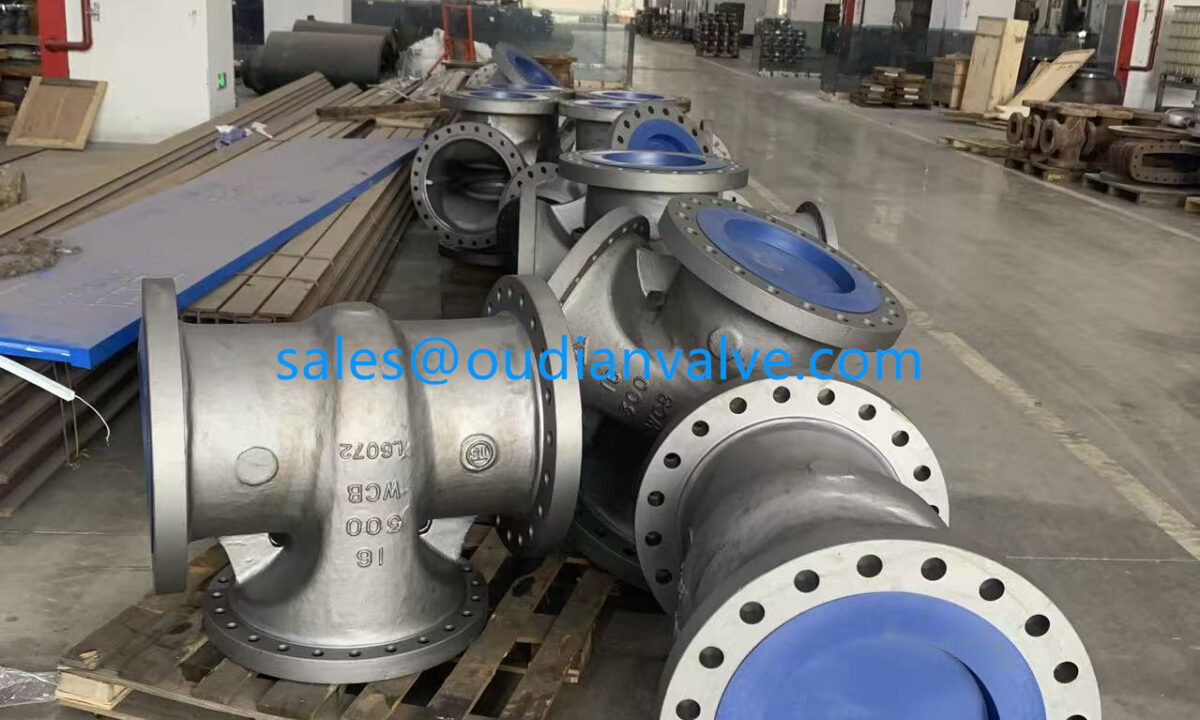
Butterfly Valve vs Gate Valve
System operating pressure, pipeline diameter, media characteristics, available installation space, and actuation frequency dictate which valve mechanism matches system parameters. Evaluating these mechanical characteristics against service demands helps avoid seat damage, excessive pumping losses, and unexpected pipeline downtime.

Operating Principles: How Butterfly and Gate Valves Work
Butterfly and gate valves achieve positive shutoff through completely distinct mechanical movements. Understanding these fundamental mechanical actions reveals why each design exhibits different operating speeds, torque profiles, and wear patterns over repetitive cycles.
A butterfly valve belongs to the quarter-turn valve family. The closure member is a circular disc mounted on a central or offset shaft that extends through the valve body. Rotating the valve stem ninety degrees swings the disc from parallel to the flow line, which is fully open, to perpendicular to the seat, which is fully closed. Because the disc stays inside the fluid stream during operation, actuation requires minimal mechanical travel, making automated actuation with pneumatic or electric actuators straightforward and rapid.
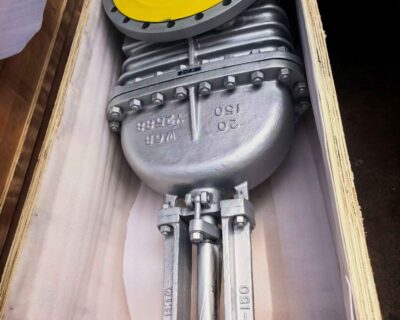
A gate valve operates via linear motion. The closure element, known as the gate or wedge, travels vertically into the flow path along threaded stem guides. Turning the handwheel or linear actuator turns the stem, which draws the gate upward into the valve bonnet to open the conduit or drives it downward between dual seats to halt fluid travel.
- Quarter-turn rotational travel: Butterfly valves open and close with a ninety-degree turn, facilitating rapid emergency shutoff and automated positioning.
- Multi-turn linear actuation: Gate valves require numerous complete rotations of the handwheel to move the wedge across the entire pipe bore diameter.
- Wetted surface positioning: The butterfly disc remains suspended in the flow stream when fully open, whereas the gate retracts into the bonnet cavity away from fluid contact.
- Stem sealing dynamics: Linear rising stems on gate valves subject packing to cycling friction, while rotary butterfly stems experience rotational shearing.
The multi-turn design of gate valves inherently prevents rapid closure. This slow travel provides natural protection against hydraulic shock and transient pressure surges in long liquid transport systems.
Structural Design, Installation Space, and Weight Profile
Structural envelope differences between butterfly and gate valves become critical as nominal pipe diameter expands. Layout engineers must account for both dry component weight and the physical clearance required for maintenance access and stem extension.
Butterfly valves feature an exceptionally compact face-to-face profile. Most designs use wafer, lug, or double-flanged body patterns that slide between companion pipe flanges, held in position by long through-bolts. Because the body houses only the disc and seal perimeter, overall valve weight remains remarkably low. This compact geometry minimizes structural pipe hanger requirements and allows piping designs in crowded offshore skids, marine engine rooms, and municipal pump vaults.
Gate valves require substantial physical volume. The valve body must incorporate a dedicated upper bonnet chamber large enough to house the entire gate assembly when lifted out of the flow path. Rising stem designs add further overhead clearance requirements, as the stem projects upward beyond the handwheel during opening. The thick metal walls and heavy flanged end connections produce a total assembly weight several times greater than an equivalent-size butterfly valve.
Large-diameter gate valves often require dedicated secondary steel supports and overhead hoists to avoid transferring excessive bending moments into adjacent pipeline flanges. Substituting a lug-style butterfly valve reduces pipe rack dead loads substantially.
Weight disparities increase dramatically in nominal pipe sizes exceeding eight inches. In these larger dimensions, a standard butterfly valve can be installed with basic rigging gear, whereas a comparable cast steel gate valve demands heavy lifting machinery and substantial structural framing.

Flow Restriction, Pressure Drop, and Throttling Capabilities
The fluid dynamic behavior of a valve affects long-term energy consumption across the pumping system. Head loss, internal turbulence, and flow profile stability vary substantially between these two valve designs.
When a gate valve is fully open, the gate sits entirely outside the conduit bore. The fluid passes straight through a smooth, cylindrical passage with virtually zero directional deflection or boundary layer disturbance. This unrestricted design delivers a flow coefficient comparable to a straight section of pipe, minimizing dynamic head loss and allowing the passage of pipeline scrapers or cleaning pigs.
A butterfly valve exhibits permanent flow resistance because the disc remains centered in the flow path even when fully open. The fluid stream must split around both sides of the disc edge, which creates local eddies, wakes, and measurable pressure drops. In systems with high flow velocities or strict head-budget constraints, cumulative losses from multiple disc obstructions increase operating power consumption over time.
Neither standard butterfly valves nor typical wedge gate valves are recommended for continuous throttling duty. Partially opened gate valves suffer severe seat erosion and wedge chatter from high-velocity flow, while partially opened butterfly discs generate localized cavitation and intense aerodynamic torque loads unless engineered specifically for control service.
Throttling with a gate valve concentrates high-velocity flow across the lower edge of the wedge and mating seat rings. Wire drawing occurs rapidly, scouring narrow washouts into the metal seating surfaces that ruin bubble-tight sealing capability. Butterfly valves can tolerate light balancing or coarse flow trimming in low-pressure liquid circuits, but standard resilient seats degrade quickly under prolonged turbulence and vortex shedding.
Sealing Performance, Pressure Ratings, and Temperature Limits
Reliable bubble-tight isolation depends directly on seating mechanics, sealing materials, and the ability of the valve assembly to resist thermal expansion and pipeline deflection.
Gate valves rely primarily on metal-to-metal wedge seating. When the stem forces the solid, flexible, or split wedge down between inclined body seats, mechanical seating stress creates tight boundary contact. This all-metal configuration excels in severe high-temperature and high-pressure duties, such as main steam headers, oil refining fractionators, and high-pressure boiler feed systems. Metal-seated gate valves resist thermal distortion and handle fluid media containing trace abrasive particles that would quickly tear elastomer seals.
Butterfly valves use varying seating arrangements depending on design classification. Resilient-seated concentric designs utilize an elastomeric liner that envelops the internal body and forms a tight interference seal against the polished disc edge. These valves provide bubble-tight shutoff in water treatment, HVAC, and general industrial utilities, but are limited by the thermal and chemical degradation thresholds of the elastomer.
High-performance double-offset and triple-offset butterfly valves expand operating limits. Triple-offset designs employ a non-rubbing metal-to-metal seal ring with a conical sealing geometry, delivering zero-leakage bidirectional shutoff in high-pressure hydrocarbons, cryogenic fluids, and elevated-temperature steam.
Solid-wedge gate valves, however, present a known vulnerability to thermal binding. When a closed valve is heated by high-temperature media, thermal expansion of the wedge within the rigid body seats can wedge the gate immovably, preventing reopening until the system cools down.
Side-by-Side Technical Comparison: Butterfly vs Gate Valves
Evaluating standard attributes across both valve categories highlights key operational contrasts. System planners can reference these practical distinctions during front-end engineering design.
| Performance Metric | Válvula borboleta | Válvula de gaveta | Engineering Assessment |
| Operation Speed | Fast quarter-turn | Slow multi-turn | Butterfly valves suit quick isolation; gate valves reduce water hammer risk. |
| Flow Resistance | Moderate drop | Minimal drop | Gate valves provide full-bore flow; butterfly discs remain in the stream. |
| Line Footprint | Compact wafer | Large envelope | Butterfly valves save significant space and simplify structural supports. |
| Total Weight | Lightweight body | Heavy assembly | Gate valves demand substantial rigging and robust pipe rack bracing. |
| Throttling Role | Limited trim | Not suited | Neither is optimal for control; throttling causes severe seat damage. |
| Pipeline Pigging | Not possible | Fully possible | Full-bore gate valves allow mechanical scrapers and inline inspection pigs. |
| Relative Cost | Lower expense | Higher expense | Butterfly valves lower capital investment, especially in large diameters. |
Each metric must be evaluated against the operational requirements of the target system. While butterfly valves present clear cost and space advantages, the unrestricted passage of gate valves remains vital in critical transmission circuits.
Advantages and Operational Limitations of Each Valve Type
Selecting valve hardware involves weighing structural simplicity against operating constraints. Each mechanical design provides specific benefits along with distinct practical drawbacks under field conditions.
Butterfly Valve Advantages
- Compact wafer and lug bodies fit inside tight plant envelopes with minimal clearance.
- Ninety-degree rotation enables fast actuation and lower-cost actuator integration.
- Substantially lower component weight reduces pipe stress and simplifies rigging tasks.
- Reduced material consumption lowers upfront procurement expenditure on larger lines.
Butterfly Valve Limitations
- Internal disc obstruction produces continuous pressure loss and creates local fluid drag.
- Obstruction prevents the passage of pipeline cleaning tools and diagnostic pigs.
- Resilient elastomer liners face temperature and aggressive chemical compatibility limits.
- Dynamic torque spikes can occur when operating against high-velocity liquid streams.
Gate Valve Advantages
- Full-bore straight-through flow profile introduces negligible head loss when fully retracted.
- All-metal construction endures extreme thermal cycling and high-pressure steam service.
- Bi-directional sealing geometry maintains tight barrier isolation regardless of flow side.
- Unobstructed conduit enables inline mechanical pigging, inspection, and chemical clearing.
Gate Valve Limitations
- Multi-turn stem requires extensive opening and closing time during manual operation.
- Substantial body height and rising stem demand huge vertical installation clearances.
- Susceptible to thermal binding and wedge sticking in high-temperature steam lines.
- Heavy cast body construction increases structural support costs on elevated piping.
Selection Criteria: Matching Valve Type to Pipeline Conditions
Specifying between butterfly and gate designs requires a balanced assessment of operating conditions, fluid media, maintenance access, and capital allocation. System designers can apply the following evaluation factors to identify the appropriate valve design for specific pipeline segments.
- Pipeline diameter: In small lines up to two inches, compact gate valves provide reliable service. In lines six inches and larger, butterfly valves provide decisive savings in purchase price, installation labor, and support infrastructure.
- Fluid media and cleanliness: Clean cooling water, HVAC loops, and treated chemical streams run effectively through resilient-seated or high-performance butterfly valves. Heavy hydrocarbon slurries, viscous crudes, and applications requiring pigging require full-bore through-conduit gate valves.
- Operating frequency: Valves operated daily or multiple times per shift benefit from the rapid, low-effort quarter-turn action of butterfly units. Gate valves serve best in isolation points operated infrequently, such as seasonal turnarounds or annual system shutdowns.
- Hydraulic transient management: Pipelines with long fluid columns running at moderate velocity require the slow closure of gate valves to minimize water hammer risk. Fast-closing butterfly valves demand regulated actuation speeds to prevent damaging pressure spikes.
- Space envelope: Compact equipment skids, marine vessel piping, and congested mechanical galleries point toward wafer-style butterfly valves. Expansive processing areas with ample vertical clearance accommodate rising-stem gate valves without difficulty.
All valve selections must be verified against applicable industry codes, flange pressure classes, and pipe wall schedules before final specification. Process compatibility analysis should always confirm chemical resistance, fire-safe ratings, and differential pressure shutoff limits.
Frequently Asked Questions About Butterfly and Gate Valves
Can you pig a pipeline that has butterfly valves installed?
No, standard pipeline pigs and cleaning tools cannot navigate past a butterfly valve. The central disc and drive shaft remain positioned in the flow stream, blocking inline tools and risking catastrophic mechanical damage. Full-bore gate valves must be specified for lines requiring regular mechanical scraping or diagnostic pigging runs.
Which valve type is better suited for slurry and wastewater services?
Knife gate valves are specifically engineered to slice through thick slurries, fibrous pulp, and heavy solids without jamming. While standard wedge gate valves collect particulate deposits in their lower seating pockets, resilient butterfly valves with abrasive-resistant liners can handle moderate slurry streams if velocities remain controlled.
Why does a butterfly valve pose a higher water hammer risk?
A butterfly valve rotates from fully open to fully closed in a ninety-degree turn, which can halt fluid motion almost instantaneously if actuated rapidly. Rapid liquid deceleration creates violent acoustic pressure spikes known as water hammer. Gate valves require many full stem rotations, naturally decelerating the fluid column slowly to disperse hydraulic energy safely.
How does actuation cost differ between butterfly and gate valves?
Automating a butterfly valve is generally less costly because quarter-turn pneumatic and electric actuators are compact and mechanically simple. Gate valves require multi-turn or linear thrust actuators with complex gearing systems, leading to higher actuator purchase prices and larger power supply demands.
Summary of Pipeline Valve Selection
Selecting between a butterfly valve vs gate valve depends on balancing pipeline footprint, allowable pressure drop, operating frequency, and capital constraints. Butterfly valves deliver lightweight, economical, and rapid quarter-turn shutoff, whereas gate valves offer unobstructed, full-bore flow passage for severe thermal and piggable duties. Final piping specifications should always be confirmed against process media characteristics, pressure-temperature ratings, and applicable piping codes.