


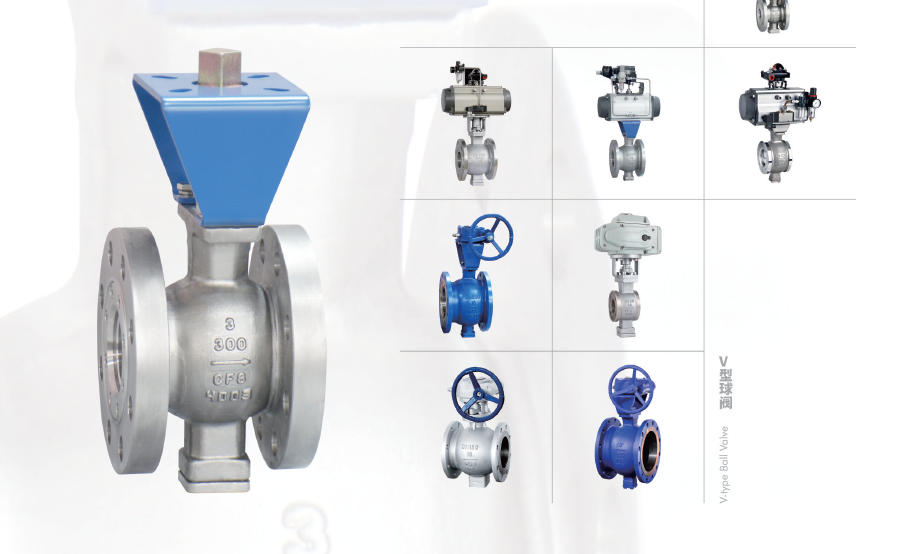
V-Port Ball Valve Working Principles and Selection
Fluid properties, operating pressures, and pipeline velocities determine the appropriate valve construction and trim geometry. Matching the opening angle, construction materials, and actuation method to system dynamics prevents cavitation damage while maintaining stable control.
V-Port Ball Valve Operating Principle and Flow Characteristics
The operating principle relies on quarter-turn rotary positioning to expose an increasingly larger opening as the ball rotates toward the open position. Fluid enters through the contoured notch, where the initial rotational travel reveals only the narrow tip of the V-shape, restricting flow to small, manageable rates. Continued rotation expands the opening area exponentially, creating a controlled transition from low flow to high capacity.
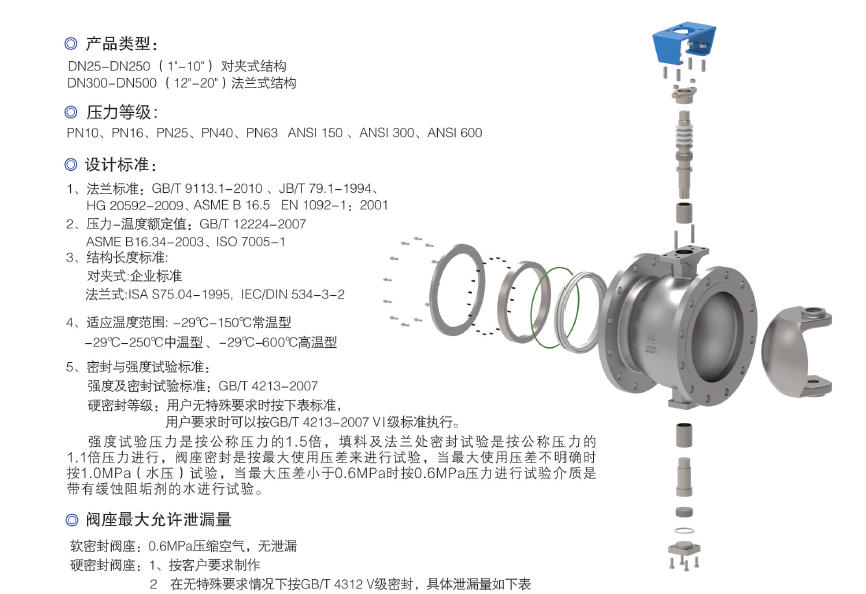
The contoured orifice geometry provides controlled expansion of the flow passage during rotation.
This orifice geometry generates an equal percentage flow characteristic, which means each equal increment of soupape stem rotation produces an equal percentage change in the existing flow rate. Systems with high pressure drops at low flow rates benefit from this relationship, as the valve provides fine resolution at low travel while retaining high flow capacity when fully opened. Modified linear profiles are also manufactured for systems that require direct proportionality between travel and volumetric throughput.
Notch Geometry
The contoured opening governs how flow area expands during rotation, allowing fine control during the early stages of opening.
Sealing Assembly
Rigid metal or resilient soft seats maintain tight contact against the ball surface to prevent leakage when the valve reaches full closure.
Rotary Drive Stem
The stem transfers rotational torque directly from manual levers or automated actuators, maintaining precise alignment under hydraulic forces.
Comparing V-Port Ball Valves with Standard and Segmented Designs
Standard full-port ball valves function primarily as on-off isolation devices, offering minimal control resolution because flow surges rapidly during the initial degrees of opening. Attempting to throttle with a standard round bore causes localized high velocities, turbulence, and seat erosion that quickly degrades shutoff capability. In contrast, the V-notch design cushions fluid entry and distributes pressure drop along the contour of the opening.
Quarter-turn rotary valves provide streamlined flow paths compared to conventional globe-style control valves.
Segmented control valves share similar rotary throttling concepts with V-port valves but use a partial sphere or curved plate mounted on trunnion bearings. Segmented models often provide a straight-through flow passage that minimizes clogging in pulp and paper or slurry processes. Standard V-port ball valves, however, generally offer bidirectional sealing options and simplified maintenance procedures in standard piping manifolds.
| Type de vanne | Throttling Precision | Solids Handling | Flow Profile Control |
| V-Port Ball Valve | Haut | Moderate to High | Equal percentage characteristic with smooth, stable modulation |
| Standard Ball Valve | Pauvre | Faible | Rapid nonlinear surge unsuitable for accurate process throttling |
| Segmented Control Valve | Haut | Haut | Straight-through shearing flow suitable for heavy fibrous media |
Engineering Criteria for Valve Sizing and Configuration
Specifying a V-port ball valve requires evaluating fluid dynamics, notch geometry, body construction, and pipeline connection types. A narrower V-angle provides fine resolution at low flow rates, making it suitable for chemical injection or low-volume dosing systems. Wider notch angles accommodate higher throughput capacities while maintaining balanced modulation throughout the middle and upper stages of stroke travel.
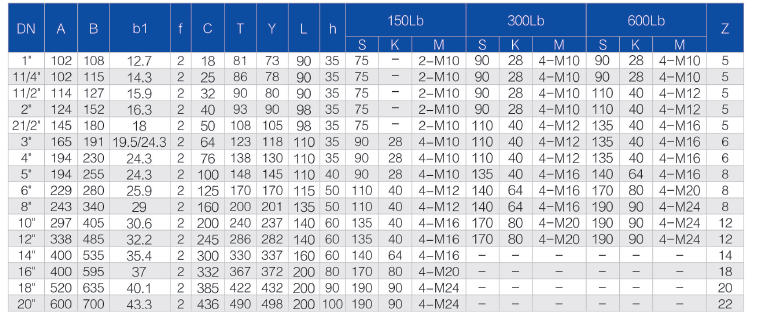
Automated positioners and pneumatic actuators enable precise valve positioning within distributed control loops.
Body material selection depends directly on the corrosiveness and temperature of the process fluid. Stainless steel alloys resist corrosion from acids, cleaning agents, and harsh chemicals, whereas carbon steel provides mechanical strength for high-pressure industrial utilities. End connections must match line specifications, with flanged ends simplifying removal, while socket weld and butt weld connections provide leak-free integrity in high-temperature or hazardous service lines. Pressure containment must conform to relevant standards, such as ASME Class 150 or higher ANSI classifications.
Actuator selection requires calculating the breakaway and dynamic torque of the valve under maximum shutoff differential pressure, adding safety margins to prevent stalling during high-velocity throttling.
Industrial Applications, Operational Advantages, and Limitations
V-port ball valves serve across chemical processing, water treatment, power generation, and paper manufacturing facilities. Their inherent shearing action allows the sharp edge of the V-notch to slice through fibrous materials, cellulose slurries, and suspended particulates without jamming between the ball and seat. This self-cleaning characteristic prevents buildup that typically impairs conventional globe control valves.

Self-cleaning shearing action makes these valves suitable for challenging fluid streams containing solids.
Despite their broad utility, rotary control valves present specific engineering limits. High pressure drops across the restricted notch can induce cavitation if downstream pressure falls below fluid vapor pressure, requiring hardened trim materials or downstream diffusers. Additionally, soft-seated configurations face temperature ceilings that necessitate metal-to-metal seating for elevated thermal cycles or abrasive media service.
Avantages
- Predictable equal percentage flow control across wide operating variations
- Clean shearing action prevents blockages in slurries and fibrous streams
- High flow capacity compared to globe valves of equivalent nominal size
Limites
- Susceptible to cavitation damage under severe single-stage pressure reductions
- Higher seat wear when operated continuously at micro-opening positions
- Metal-seated versions require higher actuator torque for tight closure
Frequently Asked Questions About V-Port Ball Valves
How does a V-port ball valve differ from a standard ball valve?
A V-port robinet à boisseau sphérique features a contoured notch that shapes the fluid stream gradually as the stem rotates. A standard ball valve uses a round cylindrical bore that creates rapid, non-linear flow surges unsuitable for steady modulation.
What flow characteristic does a V-port ball valve provide?
Most V-port ball valves exhibit an equal percentage flow characteristic, which provides small flow adjustments at low opening angles and larger adjustments when opened wider. Modified linear characteristics are also available for specific control loops.
Can a V-port ball valve handle slurries and suspended solids?
Yes, the geometric edge of the V-notch creates a mechanical shearing effect against the seat that cuts through fibers and resists particulate clogging. This makes the design practical for wastewater, paper pulp, and chemical slurries.
What materials are commonly specified for V-port valve bodies?
Stainless steel is commonly selected for corrosive chemicals and hygienic processing, while carbon steel serves standard high-strength utility lines. Seats are constructed from resilient polymers or hardened metals depending on temperature and abrasion levels.
Why does notch angle matter during valve selection?
The notch angle determines the rate of orifice expansion during rotation. Narrow angles provide fine low-flow resolution, while wider angles accommodate higher flow capacities within the same pipeline diameter.
Summary of V-Port Ball Valve Implementation
Selecting a V-port ball valve balances precision flow modulation with durable mechanical shutoff across demanding fluid handling systems. Evaluating media viscosity, pressure differentials, and seat materials helps maintain control stability while preventing premature trim wear. Proper integration with rotary actuators supports repeatable, automated control in industrial processing operations.