

What Is the Difference Between Full Port and Standard Porting?
Selecting the correct configuration depends on fluid properties, pumping head limits, allowable pressure losses, and physical space constraints within the installation. System requirements such as mechanical line pigging, slurry handling, and overall component budget dictate whether an unhindered flow path or a compact, economical valve body serves the application best.
Defining Full Port and Standard Porting in Fluid Systems
In mechanical piping systems, porting refers to the internal pathway through which liquids, gases, or slurries travel when a valve opens. The internal bore profile governs how fluid moves through the valve body, determining both friction resistance and volume throughput.
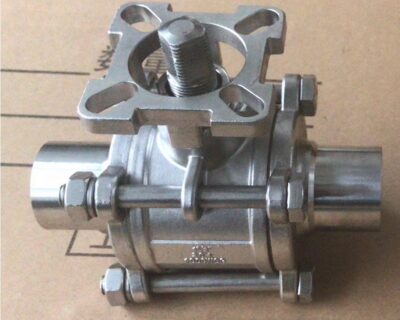
In a full port valve, often called a full bore valve, the spherical ball inside the valve housing has a hole bored straight through that matches the exact inside diameter of the adjoining pipe. When the ball rotates into the open position, the valve interior presents a continuous, straight tunnel. Because the internal diameter remains uniform, fluid flows straight through the assembly with minimal resistance, matching the friction level of an equivalent length of straight pipe.
A standard port valve, frequently categorized as a reduced port or regular port valve, contains a ball with an internal hole smaller than the inner diameter of the pipe. For example, a two-inch standard port ball valve typically features an internal passage equivalent to a one-and-a-half-inch pipe diameter. The fluid enters the valve body, encounters a funnel-like contraction, travels through the narrowed ball opening, and expands back outward upon exiting into the downstream line.
Full Port Construction
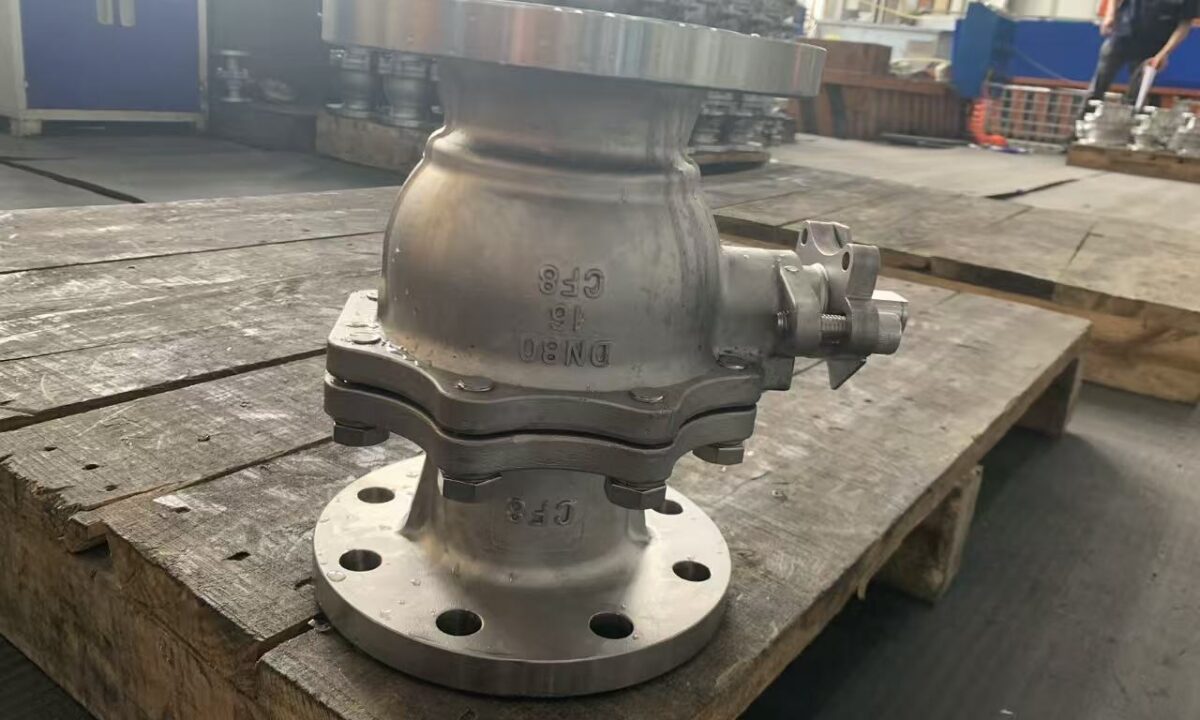
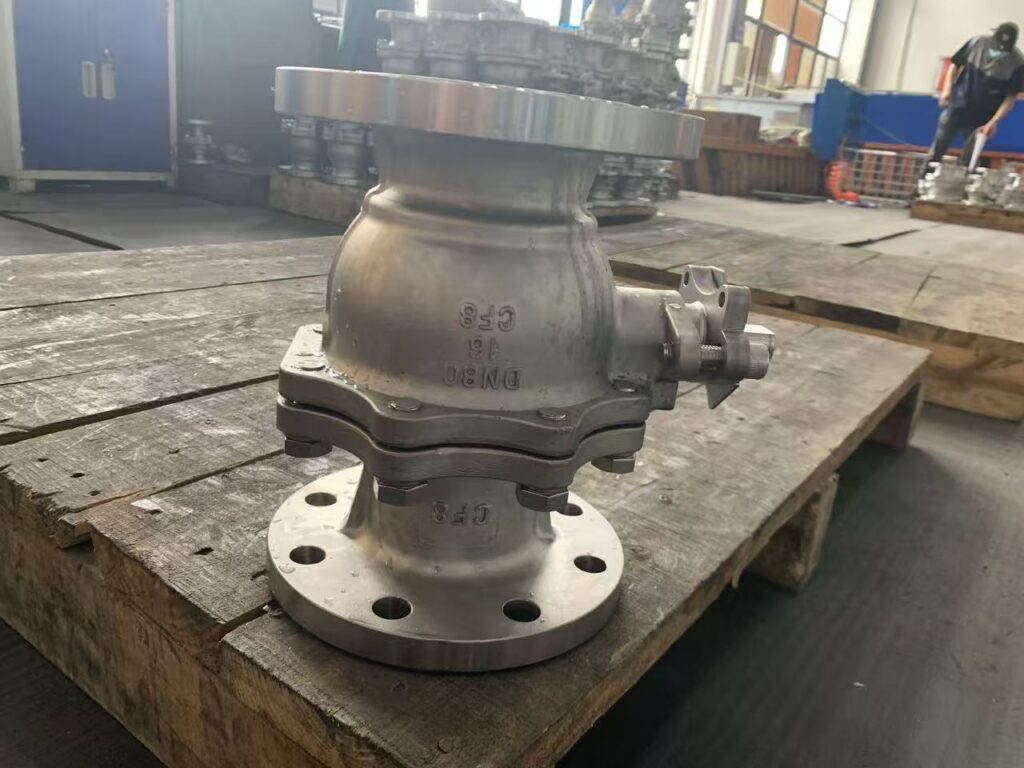
Full port valves require a larger ball, an expanded outer valve body, and heavier housing materials to accommodate the unrestricted passage.
Standard Port Construction
Standard port units use a smaller ball and a compact housing, which reduces total component weight and lowers raw material costs.
Flow Characteristics, Flow Paths, and Pressure Drops
The geometry of the internal flow path directly influences line velocity, fluid turbulence, and overall system pressure drop. Restricting fluid flow creates physical changes inside the piping that affect upstream pump performance and downstream process control.
When flow passes valve boundaries in a standard port design, the reduced cross-sectional area forces fluid to accelerate as it enters the bore. This acceleration causes a localized pressure drop across the valve seats. Once the stream exits into the wider downstream pipe, the sudden expansion produces eddy currents and localized turbulence. While low-viscosity fluids at modest flow velocities tolerate this restriction without notable disruption, high-velocity streams or viscous media suffer measurable energy losses that place higher demands on system pumps.
A full port ball valve preserves continuous laminar flow because the cross-sectional area remains completely stable throughout the connection. The absence of diameter changes prevents sudden velocity shifts, minimizing frictional drag and mechanical stress on the valve seats. Eliminating constriction also reduces the danger of cavitation, an event where rapid pressure drops vaporize liquid into microscopic bubbles that collapse violently and pit metal components.
Applications handling suspended solids, fibrous slurries, or thick mixtures benefit from full port designs because standard port shoulders create dead zones where particles drop out of suspension, accumulate, and cause clogging.
Industry Terminology Differences and Provider Standards
Terminology surrounding port configurations varies between valve manufacturers, engineering standards organizations, and industrial sectors. Understanding these alternate designations prevents specification errors during procurement and system design.
- Full Bore vs. Full Port: European standards and global oil and gas specifications frequently use full bore interchangeably with full port to describe an internal diameter matching standard pipe dimensions.
- Reduced Bore and Regular Port: In chemical processing and water distribution networks, providers often label standard port models as reduced bore, regular port, or short pattern valves.
- Venturi Port: Specialized heavy-industry pipelines sometimes employ venturi port valves, which feature smooth, tapered transitions leading into and out of an even smaller bore to recover static pressure efficiently.
- True Union Porting: Thermoplastic valve manufacturers for commercial water treatment and aquatics use true union terminology, where standard porting reflects reduced flow through solvent-weld sockets.
In telecommunications and utility management, the word porting refers to transferring accounts, phone numbers, or operational control between carriers or software environments rather than fluid passage. In that context, a full port transfers an entire multi-line trunk or complete account block, whereas standard or partial porting transfers only selected individual lines. While the mechanical and communications fields share the root vocabulary, mechanical piping systems define porting entirely through physical bore diameter and fluid flow paths.
Scope, Requirements, Timelines, Costs, and Limitations Compared
Evaluating full port and standard port options requires balancing initial procurement expenditures against ongoing operating demands, installation limits, and maintenance practices. The structural differences between configurations create distinct operational trade-offs across several engineering parameters.
| Evaluation Metric | Full Port Valve | Standard Port Valve | Operational Impact and Notes |
| Alcance | Unrestricted Flow | Reduced Flow | Full port maintains the line diameter while standard port reduces it. |
| Space Needs | Larger Envelope | Compact Design | Standard port valves fit into tighter piping manifolds and skids. |
| Valve Weight | Heavier Body | Lighter Body | Heavier full port valves may require supplemental structural pipe supports. |
| Actuation Torque | Higher Torque | Lower Torque | Standard port units allow smaller, less expensive pneumatic or electric actuators. |
| Pigging Ability | Fully Compatible | Non-Compatible | Mechanical pipeline inspection pigs cannot pass standard port restrictions. |
| Relative Cost | Higher Expense | Lower Expense | Standard port saves raw material costs across large-scale installations. |
| Pressure Loss | Negligible | Measurable | Standard port units cause minor pressure drops that increase with fluid velocity. |
| Lead Times | Standard Supply | Standard Supply | Both patterns are widely stocked, though large full port sizes may have longer runs. |
The comparative data highlights that standard port valves provide significant economic and weight benefits whenever flow restrictions are acceptable. However, systems requiring mechanical cleaning tools or minimal friction losses necessitate the larger physical profile of full port units.
Information to Confirm Before Selecting a Port Configuration
System designers and facility operators must verify several mechanical variables before finalizing a valve specification. Overlooking operational requirements can lead to premature seat wear, pump cavitation, or maintenance bottlenecks.
Confirm the maximum allowable pressure drop across the entire piping run. In gravity-fed lines or low-head pumping systems, even a minor restriction from a standard port valve can reduce downstream delivery rates below acceptable process parameters. Conversely, high-pressure utility water networks absorb standard port pressure drops without disrupting operations.
Review the cleaning and inspection methodology planned for the pipeline. Lines in oil, gas, sanitary, and municipal wastewater sectors frequently utilize pipeline inspection gauges, known as pigs, to scrape sediment, inspect pipe wall integrity, or purge remaining media. Mechanical pigs cannot negotiate the stepped internal diameter of a standard port valve, making full port ball valves mandatory for pigged segments.
Verify whether the process fluid carries abrasive solids or crystals. Fluid accelerating through the reduced orifice of a standard port valve increases erosive wear on the ball face and valve seat rings, shortening component service life.

Practical Guidance for Choosing the Right Option
Selecting between full port and standard port valves involves weighing operational efficiency against installation cost. Aligning valve architecture with specific service demands keeps capital costs controlled while maintaining process stability.
Full Port Strengths
- Eliminates restriction, supporting maximum flow volume and lower pumping power.
- Permits mechanical pigging, line scrapers, and internal inspection equipment.
- Reduces turbulence and erosive wear when transporting slurries and particulates.
Standard Port Strengths
- Reduces purchase costs through smaller ball and housing casting sizes.
- Offers lower component weight, simplifying pipeline support requirements.
- Requires less operating torque, allowing smaller, cost-effective actuators.
Choose full port valves for critical suction lines leading into centrifugal pumps, where restricting intake flow could cause vapor formation and damaging pump cavitation. They are also standard choices for high-viscosity products like resins, syrups, crude oils, and wastewater sludges, where unrestricted paths prevent clogs.
Specify standard port valves for general utility services, including plant air lines, cooling water loops, steam distribution, and clean gaseous fuels. In these systems, fluid velocity remains within modest ranges, and the minor pressure drop produced by the reduced orifice does not hinder system performance. The savings on valve purchase costs, combined with lighter piping loads, make standard porting the standard industry choice for non-critical flow paths.

Preguntas frecuentes
Does a standard port valve cause significant pressure drop?
A standard port valve creates a minor pressure drop that remains negligible in low-velocity and clean liquid lines. In high-velocity systems or lines transporting thick fluids, the restriction causes measurable pressure drops that require higher pumping energy.
Can pigs pass through standard port ball valves?
Standard port ball valves cannot accommodate mechanical pipeline pigs because the internal opening is narrower than the pipe diameter. The leading edge of the pig will jam against the internal shoulder, causing pipeline blockages or damaging the valve.
Why are standard port valves less expensive than full port valves?
Standard port valves require less metal during manufacturing because the spherical ball and external body castings are smaller. The reduced material volume lowers manufacturing, machining, and shipping expenses.
When is a full port valve required by code or design?
Full port valves are specified when lines undergo mechanical pigging, carry abrasive slurries, or feed pump suction inlets where intake restrictions could cause cavitation. Engineering designs also require them when system pressure loss budgets cannot tolerate additional friction.
How does port size affect actuator sizing?
Port size alters actuator sizing because full port valves contain larger balls that generate higher frictional torque against seat seals. Standard port valves use smaller balls with lower operating torque, allowing smaller and less expensive pneumatic or electric actuators.
Summary of Port Selection
The difference between full port and standard porting centers on balancing hydraulic efficiency against component cost and physical envelope size. Full port ball valves provide an unrestricted flow path that prevents pressure drop and accommodates mechanical line cleaning, making them ideal for heavy slurries, pump suctions, and pigged pipelines. Standard port valves deliver a lighter, economical alternative for utility lines, plant air, and clean fluid distribution where minor pressure drops do not impact overall system performance.