


Guía de selección de válvulas de mariposa: asiento, disco, desplazamiento, conexión final y accionamiento.
Introducción
Butterfly valves are among the most widely used valves in modern industrial piping systems. Known for their compact design, lightweight construction, fast operation, and cost efficiency, butterfly valves are commonly used in water treatment, HVAC, chemical processing, marine systems, oil and gas, and power generation industries.
However, selecting the right butterfly valve involves more than simply choosing the correct size. Engineers must carefully evaluate several key factors, including seat material, disc design, valve offset type, end connection, and actuation method. Each selection directly affects sealing performance, durability, operating torque, maintenance requirements, and overall system reliability.
This guide explains the most important considerations when choosing a butterfly valve and helps engineers select the best configuration for their specific applications.
What Is a Butterfly Valve?
A butterfly valve is a quarter-turn rotational valve used to start, stop, or regulate fluid flow. The valve uses a rotating disc mounted on a shaft to control the flow through the pipeline.
When the disc rotates parallel to the flow, the valve opens fully. When rotated perpendicular to the flow, the valve closes.
Butterfly valves offer several advantages:
- Compact structure
- Lightweight design
- Fast opening and closing
- Low installation cost
- Minimal maintenance
- Suitable for large pipe diameters
Because of these benefits, butterfly valves are often preferred over gate or globe valves in large-scale piping systems.
Understanding Butterfly Valve Seat Selection
The seat is one of the most critical components of a butterfly valve because it directly affects sealing performance, temperature resistance, and chemical compatibility.
Selecting the wrong seat material can lead to leakage, premature wear, or system failure.
1. Resilient Seats
Resilient-seated butterfly valves use elastomer materials to provide bubble-tight sealing.
Common seat materials include:
EPDM (Ethylene Propylene Diene Monomer)
Suitable for:
- Water
- HVAC systems
- Mild chemicals
- Cooling systems
Ventajas:
- Excellent weather resistance
- Good flexibility
- Cost-effective
Limitations:
- Not suitable for hydrocarbons or oils
NBR (Nitrile Rubber)
Suitable for:
- Oil
- Fuel
- Compressed air
Ventajas:
- Good oil resistance
- Durable sealing performance
Limitations:
- Limited high-temperature capability
PTFE (Teflon)
Suitable for:
- Corrosive chemicals
- Acid applications
- High-purity systems
Ventajas:
- Excellent chemical resistance
- Low friction
Limitations:
- Higher cost
- Less elastic than rubber seats
2. Metal Seats
Metal-seated butterfly valves are designed for:
- High temperatures
- Abrasive media
- Steam service
- High-pressure systems
Ventajas:
- Longer service life in harsh conditions
- Better fire safety
- Improved wear resistance
Limitations:
- Higher torque requirements
- Slightly lower sealing performance compared to soft seats
Metal-seated designs are commonly used in power plants, refineries, and chemical processing facilities.
Disc Material Selection
The valve disc is constantly exposed to the process fluid, making material selection extremely important.
Common Disc Materials
Ductile Iron
Used for:
- Water systems
- General industrial service
Ventajas:
- Economical
- Strong mechanical properties
Acero inoxidable
Used for:
- Corrosive environments
- Food processing
- Chemical systems
Ventajas:
- Excellent corrosion resistance
- Hygienic performance
Aluminum Bronze
Used for:
- Seawater applications
- Marine systems
Ventajas:
- Good corrosion resistance against saltwater
Hastelloy and Exotic Alloys
Used for:
- Highly aggressive chemicals
- Extreme process conditions
Ventajas:
- Superior chemical resistance
The disc material must always be compatible with both the fluid and operating temperature.
Understanding Butterfly Valve Offset Designs
Butterfly valves are commonly categorized by their offset geometry. Offset design significantly influences sealing performance, torque, and valve lifespan.
1. Concentric Butterfly Valves
In concentric designs:
- The shaft passes through the center of the disc
- The disc rotates within a resilient seat
Characteristics:
- Simple design
- Economical
- Suitable for low-pressure service
Applications:
- Water treatment
- HVAC
- General utility systems
Limitations:
- Continuous seat contact increases wear
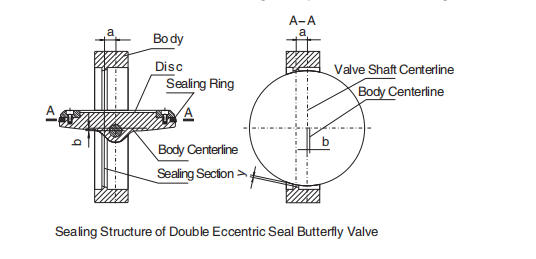
2. Double Offset Butterfly Valves
Double offset valves feature:
- Shaft offset from the disc center
- Shaft offset from the pipeline centerline
Ventajas:
- Reduced seat friction
- Lower operating torque
- Longer seat life
Applications:
- Higher pressure systems
- Moderate temperature service
- Industrial process control
These valves are widely used in oil and gas and chemical industries.
3. Triple Offset Butterfly Valves
Triple offset valves add a third geometric offset that creates a cam-like sealing action.
Ventajas:
- Zero friction sealing
- Metal-to-metal sealing capability
- Excellent high-temperature performance
- Bubble-tight shutoff
Applications:
- Steam systems
- LNG service
- High-temperature applications
- Critical isolation service
Triple offset butterfly valves are ideal for severe service environments.
Choosing the Right End Connection
Butterfly valves are available with several connection types. The correct selection depends on pipeline design, pressure class, maintenance requirements, and installation conditions.
Tipo de oblea
Wafer butterfly valves fit between pipe flanges using bolts that pass through the entire assembly.
Ventajas:
- Lightweight
- Compact
- Cost-effective
Applications:
- Low- to medium-pressure systems
Limitations:
- Limited dead-end service capability
Lug Type
Lug-style valves include threaded inserts for bolting directly to each flange.
Ventajas:
- Easier maintenance
- Supports dead-end service
- Simplified pipeline isolation
Applications:
- Industrial processing systems
Double-Flanged Type
Double-flanged butterfly valves have flanges on both sides of the valve body.
Ventajas:
- Strong mechanical stability
- Suitable for larger pipe sizes
- Better alignment in heavy-duty systems
Applications:
- Water transmission pipelines
- Power plants
- Large industrial systems
Butterfly Valve Actuation Options
Actuation determines how the valve is operated. The correct actuator improves efficiency, automation capability, and operational safety.
1. Manual Actuation
Manual butterfly valves use:
- Lever handles
- Gear operators
Ventajas:
- Simple operation
- Low cost
- Minimal maintenance
Applications:
- Small valves
- Infrequent operation
2. Pneumatic Actuation
Pneumatic actuators use compressed air for valve operation.
Ventajas:
- Fast response
- Reliable automation
- Suitable for hazardous environments
Applications:
- Industrial automation
- Chemical plants
- Oil and gas facilities
3. Electric Actuation
Electric actuators use electric motors for valve control.
Ventajas:
- Precise positioning
- Easy remote operation
- Compatible with control systems
Applications:
- HVAC automation
- Water treatment plants
- Remote facilities
4. Hydraulic Actuation
Hydraulic actuators use pressurized fluid for high-force operation.
Ventajas:
- High torque output
- Reliable for large valves
Applications:
- Offshore platforms
- High-pressure systems
- Heavy industrial operations
Key Factors to Consider When Selecting a Butterfly Valve
Before finalizing valve selection, engineers should evaluate:
Fluid Characteristics
Consider:
- Corrosiveness
- Abrasiveness
- Viscosity
- Cleanliness
Presión y temperatura
Ensure materials and seat design can withstand operating conditions.
Flow Control Requirements
Determine whether the valve is used for:
- Isolation
- Throttling
- Automated process control
Maintenance Accessibility
Select a valve design that supports efficient servicing and replacement.
Estándares de la industria
Verify compliance with standards such as:
- API
- ANSI
- ISO
- AWWA
- ASME
Common Butterfly Valve Applications
Butterfly valves are used across many industries, including:
- Water treatment plants
- HVAC systems
- Fire protection systems
- Chemical processing
- Oil and gas pipelines
- Marine applications
- Food and beverage processing
- Power generation
Their versatility makes them one of the most practical valve solutions for large-diameter piping systems.
Conclusión
Selecting the correct butterfly valve requires careful evaluation of seat materials, disc construction, offset geometry, end connections, and actuation methods. Every component influences valve performance, durability, sealing reliability, and operational efficiency.
Resilient-seated concentric valves may be ideal for water systems, while triple offset metal-seated valves are better suited for high-temperature and critical industrial applications.
By understanding the relationship between process conditions and valve design, engineers can make informed decisions that improve safety, reduce maintenance costs, and maximize system reliability over the long term.
Frequently Asked Questions (FAQ) About Butterfly Valve Selection
1. What is a butterfly valve used for?
A butterfly valve is used to start, stop, or regulate fluid flow in a piping system. It is commonly used in water treatment, HVAC, chemical processing, oil and gas, marine, and power generation applications because of its compact design and fast operation.
2. Why are butterfly valves popular in industrial systems?
Butterfly valves are widely used because they offer:
- Lightweight construction
- Compact size
- Low installation cost
- Quick quarter-turn operation
- Minimal maintenance
- Good performance in large pipe sizes
These advantages make them a cost-effective solution for many flow control applications.
3. What is the difference between resilient-seated and metal-seated butterfly valves?
Resilient-Seated Butterfly Valves
- Use rubber or PTFE seats
- Provide bubble-tight shutoff
- Suitable for low- and medium-temperature service
- Common in water and HVAC systems
Metal-Seated Butterfly Valves
- Use metal-to-metal sealing
- Designed for high temperatures and abrasive media
- Common in steam, refinery, and power plant applications
4. Which seat material is best for butterfly valves?
The best seat material depends on the application:
| Seat Material | Best For |
|---|---|
| EPDM | Water, HVAC, cooling systems |
| NBR | Oil, fuel, compressed air |
| PTFE | Corrosive chemicals |
| Metal Seat | High temperature and abrasive service |
Always verify chemical compatibility and temperature limits before selection.
5. What is the difference between concentric, double offset, and triple offset butterfly valves?
Concentric Butterfly Valve
- Shaft centered in the disc
- Economical design
- Suitable for low-pressure service
Double Offset Butterfly Valve
- Reduced seat friction
- Lower torque
- Better for higher pressure applications
Triple Offset Butterfly Valve
- Zero-friction sealing design
- Excellent for high-temperature and critical isolation service
- Often uses metal seating
6. When should I use a triple offset butterfly valve?
Triple offset butterfly valves are ideal for:
- Steam systems
- LNG applications
- High-pressure pipelines
- High-temperature service
- Critical shutoff applications
They provide excellent sealing reliability and long service life in severe operating conditions.
7. What are the common butterfly valve end connections?
The most common end connections include:
Tipo de oblea
- Lightweight and compact
- Installed between flanges
Lug Type
- Supports dead-end service
- Easier maintenance
Double-Flanged Type
- Strong mechanical support
- Suitable for large-diameter pipelines
The best choice depends on pipeline design and maintenance requirements.
8. How do I choose the right butterfly valve actuator?
The selection depends on automation needs and operating conditions.
Manual Actuation
Best for small valves and infrequent operation.
Pneumatic Actuation
Best for fast automation and hazardous environments.
Electric Actuation
Best for remote control and precise positioning.
Hydraulic Actuation
Best for large valves requiring high torque.
9. Can butterfly valves be used for throttling?
Yes. Butterfly valves can regulate flow, especially high-performance designs. However, continuous throttling at small openings may increase disc wear and turbulence.
For highly precise control, globe valves are sometimes preferred.
10. What industries commonly use butterfly valves?
Butterfly valves are widely used in:
- Water treatment
- HVAC systems
- Oil and gas
- Chemical processing
- Marine applications
- Food and beverage plants
- Power generation
- Fire protection systems
11. What are the advantages of butterfly valves compared to gate valves?
Butterfly valves generally offer:
- Smaller footprint
- Faster operation
- Lower weight
- Lower installation cost
- Better suitability for large pipe diameters
However, gate valves may provide lower pressure drop in fully open conditions.
12. Are butterfly valves suitable for high-pressure applications?
Yes, but the valve design matters.
- Concentric butterfly valves are usually limited to lower pressures.
- Double offset and triple offset valves are designed for higher-pressure industrial systems.
Always check the valve pressure rating before selection.
13. What materials are commonly used for butterfly valve discs?
Common disc materials include:
- Ductile iron
- Stainless steel
- Aluminum bronze
- Duplex stainless steel
- Hastelloy
Material selection depends on fluid compatibility, corrosion resistance, and operating temperature.
14. How do butterfly valves reduce installation costs?
Butterfly valves are lighter and more compact than many other valve types, reducing:
- Transportation costs
- Structural support requirements
- Installation labor
- Space requirements
This makes them especially economical for large-diameter systems.
15. What factors should be considered when selecting a butterfly valve?
Key selection factors include:
- Fluid type
- Pressure and temperature
- Corrosion resistance
- Flow control requirements
- End connection type
- Seat material
- Actuation method
- Industry standards compliance
Proper evaluation helps ensure long-term performance and reliability.
16. How long do butterfly valves typically last?
Service life depends on:
- Operating conditions
- Media type
- Valve material
- Maintenance practices
- Frequency of operation
Properly selected and maintained butterfly valves can provide many years of reliable service.
17. Can butterfly valves handle corrosive chemicals?
Yes. Butterfly valves with PTFE seats and corrosion-resistant disc materials such as stainless steel or Hastelloy are commonly used in chemical processing applications.
Always confirm chemical compatibility before installation.
18. What causes butterfly valve leakage?
Common causes include:
- Seat wear
- Disc damage
- Incorrect installation
- Excessive pressure
- Debris buildup
- Improper actuator adjustment
Regular inspection and maintenance help prevent leakage problems.
19. Are butterfly valves suitable for vacuum service?
Some butterfly valves can operate under vacuum conditions, especially high-performance or triple offset designs. Proper seat and sealing selection is important for maintaining vacuum integrity.
20. How do I know which butterfly valve is best for my application?
The best butterfly valve depends on the specific process conditions, including:
- Media type
- La calificación de presión
- Rango de temperatura
- Required shutoff performance
- Automation needs
- Budget considerations
Consulting valve manufacturers or engineering specialists can help ensure proper valve selection.