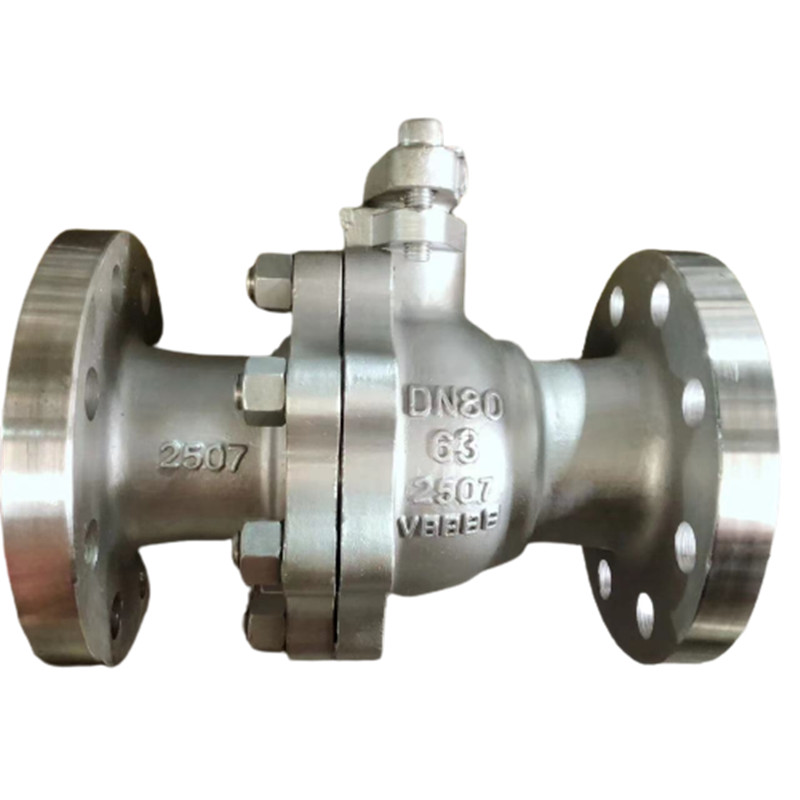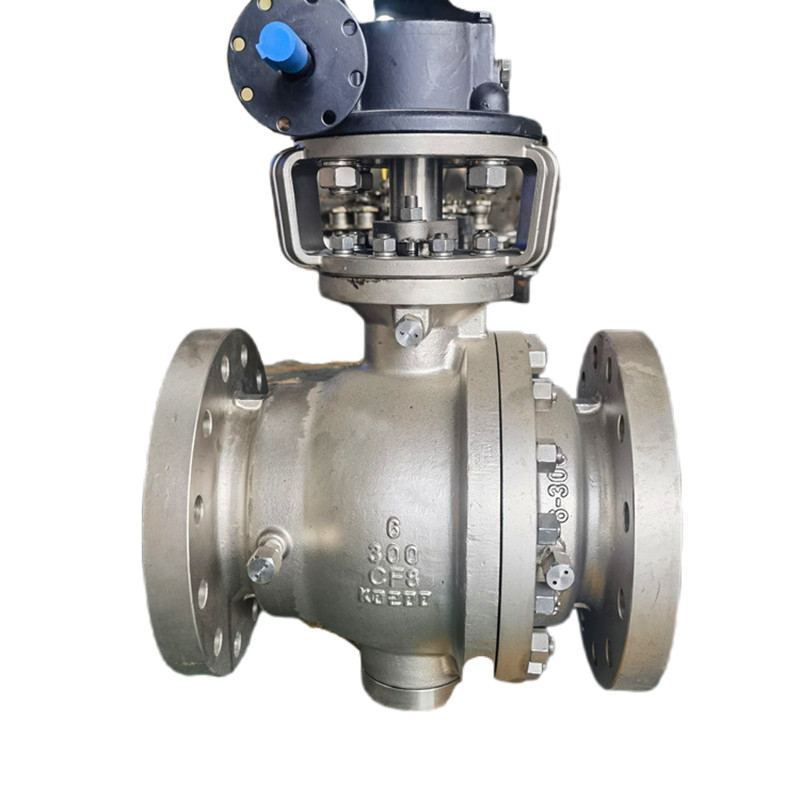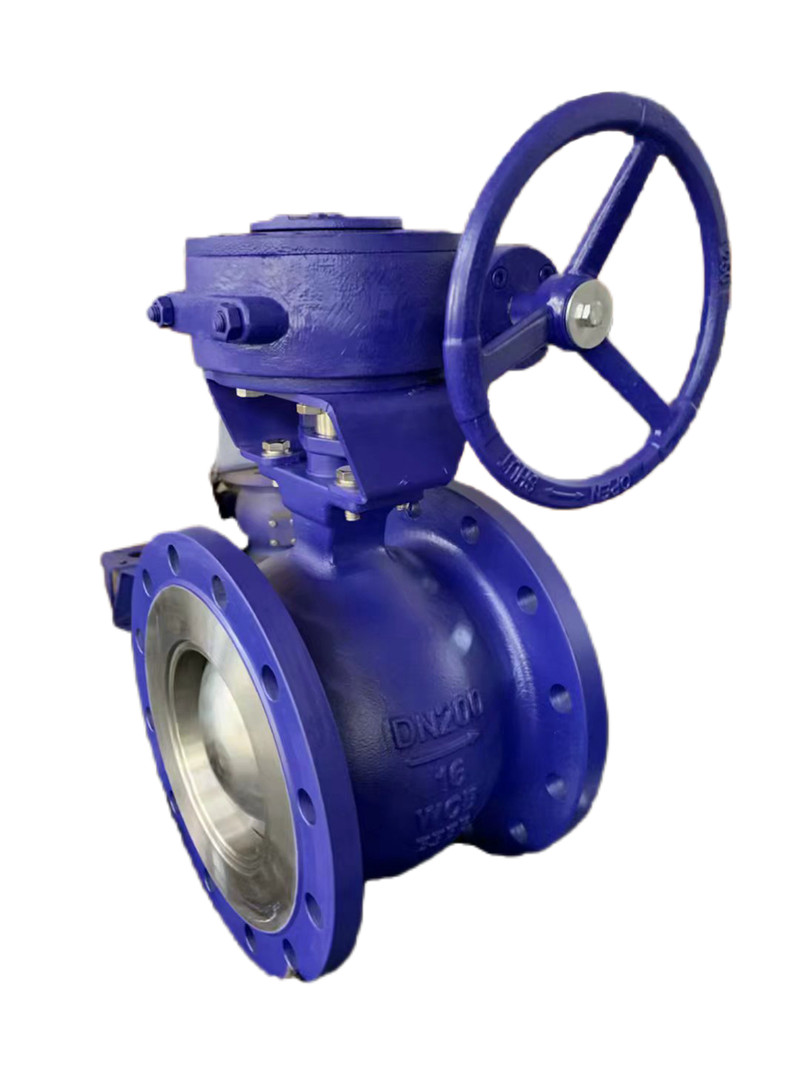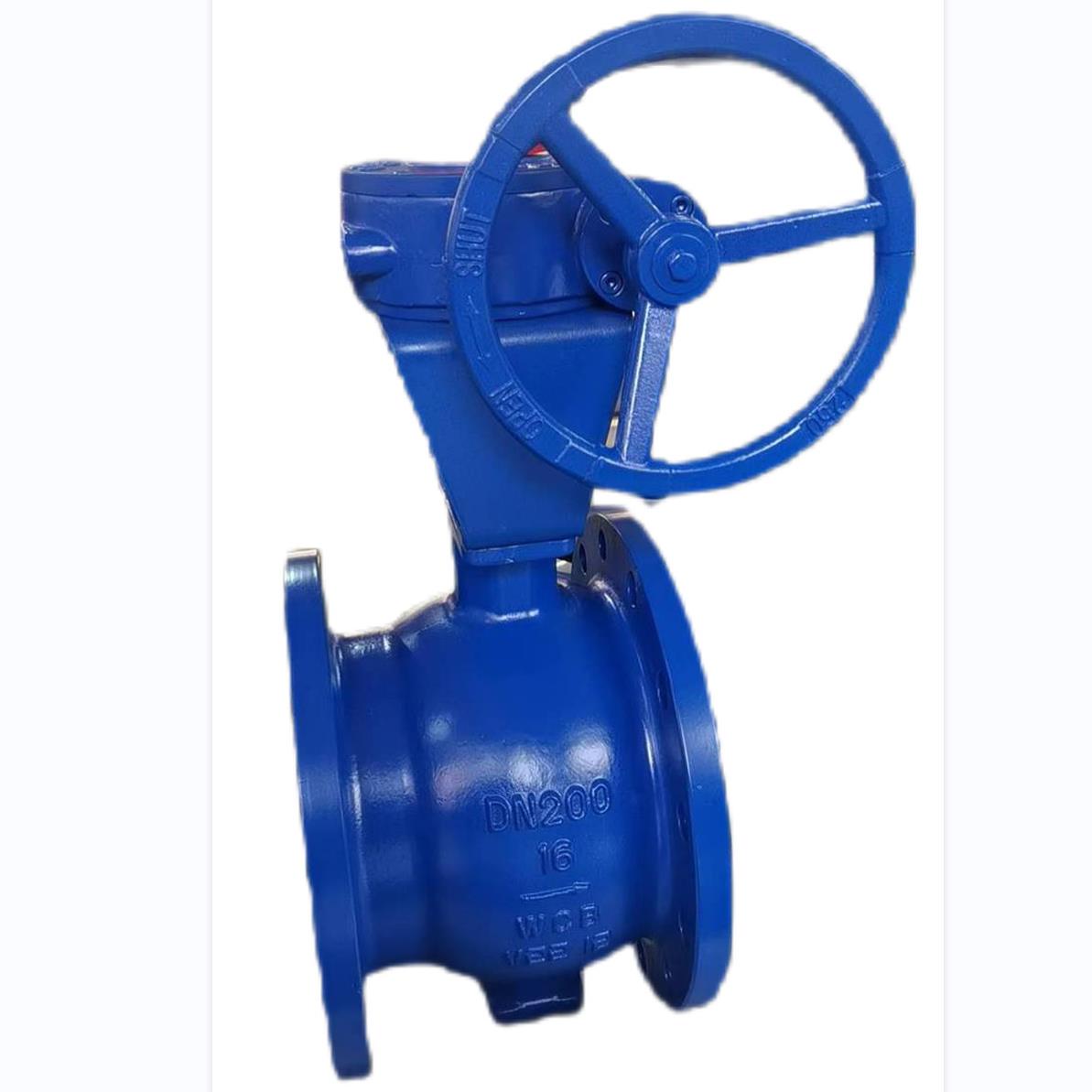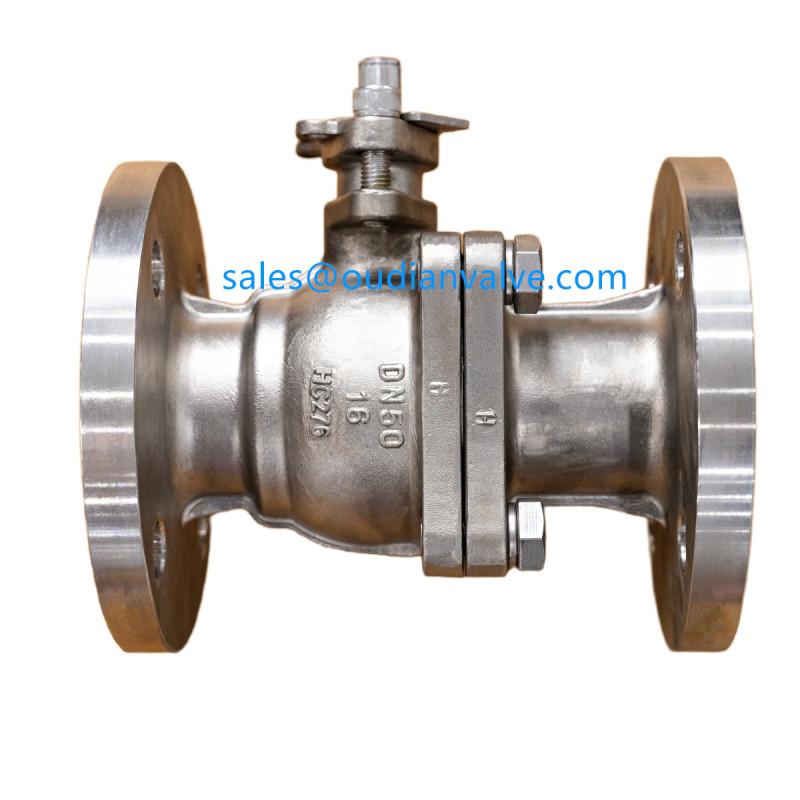
HC276 Floating Ball Valve, DN50, PN16
Explore the HC276 Floating Ball Valve DN50 PN16, manufactured from Hastelloy C276 für corrosion-resistant industrial fluid control. Anfrage technical specifications Und a quotation für your application.
HC276 Floating Ball Valve, Hastelloy C276, DN50, PN16
Produktübersicht
Der HC276 Floating Ball Valve, DN50, PN16 is an industrial flow control valve manufactured from Hastelloy C276, a nickel-chromium-molybdenum alloy known for its excellent corrosion resistance in a wide range of aggressive chemical environments.
Designed for reliable shut-off performance, the floating ball valve uses line pressure to press the ball against the downstream seat, helping achieve tight sealing under suitable operating conditions. Its compact structure, quarter-turn operation, and corrosion-resistant alloy construction make it a practical solution for demanding industrial fluid handling systems.
With a nominal diameter of DN50 and a nominal pressure rating of PN16, this valve is suitable for compatible piping systems requiring dependable on-off control. The actual pressure and temperature limits depend on the valve design, body and seat materials, applicable standards, and operating medium.
Key Features and Benefits
- Hastelloy C276 Construction: Offers excellent resistance to many corrosive chemicals, including various acids, chlorides, and oxidizing or reducing media, depending on concentration and operating conditions.
- Floating Ball Design: Uses differential pressure to assist sealing between the ball and valve seats.
- Quarter-Turn Operation: Enables quick opening and closing with a 90-degree rotation.
- Compact Valve Structure: Supports straightforward integration into industrial piping systems.
- Industrial Shut-Off Performance: Designed for on-off flow control in compatible service conditions.
- Corrosion-Resistant Materials: Helps improve service life and reduce maintenance requirements in demanding chemical environments.
Technical Specifications
| Parameter | Specification |
|---|---|
| Produktname | Schwimmendes Kugelventil |
| Model / Material Grade | HC276 |
| Gehäusematerial | Hastelloy C276 |
| Nominal Size | DN50 (2 inches) |
| Nominal Pressure | PN16 |
| Ventiltyp | Schwimmendes Kugelventil |
| Operating Principle | Quarter-Turn |
| Main Function | On-Off Flow Control |
| Typical Applications | Chemical Processing, Acid Handling, Corrosive Fluid Systems |
| End Connection | To Be Confirmed |
| Operation Type | To Be Confirmed |
| Design Standard | To Be Confirmed |
| Testing Standard | To Be Confirmed |
Note: Final material specifications, connection dimensions, pressure-temperature ratings, and applicable standards should be confirmed against the manufacturer’s approved datasheet.
Why Choose Hastelloy C276 for a Floating Ball Valve?
Hastelloy C276 is a nickel-based corrosion-resistant alloy containing chromium, molybdenum, and tungsten. It is widely used in chemical processing equipment where resistance to localized corrosion, pitting, crevice corrosion, and stress corrosion cracking is important.
Compared with conventional stainless steel grades, Hastelloy C276 can provide improved resistance in many aggressive chemical services. This makes it a candidate material for valve components exposed to challenging process fluids, although material selection must always consider the exact chemical composition, concentration, temperature, pressure, and exposure conditions.
For a DN50 floating ball valve, selecting Hastelloy C276 for the pressure-containing body and other wetted components can help address corrosion-related reliability concerns in suitably designed systems.
Typical Applications
The HC276 Floating Ball Valve DN50 PN16 may be considered for the following applications, subject to chemical compatibility verification:
- Chemical Processing Plants: Corrosive process fluids and chemical transfer lines.
- Acid Handling Systems: Selected acid services where Hastelloy C276 is compatible with the operating conditions.
- Pharmaceutical and Specialty Chemical Manufacturing: Process lines requiring corrosion-resistant wetted materials.
- Pollution Control Equipment: Selected corrosive gas treatment and liquid scrubbing systems.
- Industrial Fluid Transfer: Isolation of compatible aggressive liquids in process piping networks.
The suitability of the valve should be verified for each specific medium and operating condition before installation.
How to Select the Right HC276 Floating Ball Valve
When specifying a Hastelloy C276 floating ball valve, buyers and engineers should evaluate the following factors:
- Operating Medium: Identify the fluid, chemical concentration, impurities, and potential corrosive contaminants.
- Pressure and Temperature: Confirm that the valve’s rated operating envelope meets the actual service requirements.
- Wetted Materials: Verify the material of the ball, stem, seats, seals, and other wetted components rather than relying on the body material alone.
- End Connections: Confirm whether the installation requires flanged, threaded, or other connection types.
- Sealing Requirements: Select suitable seat and seal materials based on temperature, chemical compatibility, and leakage requirements.
- Applicable Standards: Confirm the required design, dimensional, inspection, and pressure-testing standards.
Frequently Asked Questions
What is an HC276 Floating Ball Valve?
An HC276 Floating Ball Valve is a quarter-turn shut-off valve manufactured with Hastelloy C276 alloy components. It is designed for controlling the flow of compatible fluids, particularly in applications where corrosion resistance is a major material-selection requirement.
What does DN50 PN16 mean?
DN50 indicates a nominal valve size of 50 mm, approximately corresponding to NPS 2. PN16 denotes a nominal pressure class of 16 bar under the applicable rating system. The permissible working pressure varies with temperature, design, materials, and relevant standards.
Why use Hastelloy C276 instead of stainless steel?
Hastelloy C276 generally provides superior resistance to many aggressive chemical environments compared with common stainless steel grades. It may be preferred where conventional stainless steel is insufficient, but the correct material depends on the actual chemical service conditions.
Is Hastelloy C276 suitable for acid service?
Hastelloy C276 is resistant to many acidic environments, but its suitability depends on the specific acid, concentration, temperature, contaminants, and exposure conditions. Chemical compatibility should be verified before selecting the valve.
Can this valve be used for high-pressure applications?
This product is specified as PN16. Its suitability for a particular pressure and temperature must be confirmed using the manufacturer’s pressure-temperature rating and technical documentation. A PN16 designation alone does not establish suitability for all operating conditions.
Abschluss
Der HC276 Floating Ball Valve, Hastelloy C276, DN50, PN16 is designed for industrial shut-off applications where corrosion resistance and dependable operation are important. Its nickel-based alloy construction and floating ball mechanism make it a potential solution for compatible chemical processing and corrosive fluid handling systems.
For accurate valve selection and quotation, provide the operating medium, chemical concentration, operating temperature, working pressure, end connection, seat material, and applicable standards. These details help ensure that the selected valve configuration meets the requirements of the intended service.