


Valve End Connection Type: NPT vs Flanged vs Socket Weld
System operating conditions, structural vibration, piping material compatibility, and regulatory codes dictate the appropriate connection choice. Evaluating initial installation labor alongside long-term leak containment prevents premature joint failure and unplanned plant shutdowns. The following sections analyze the mechanical behavior, trade-offs, and design parameters of these three primary connection styles.
Principles of NPT Threaded Connections
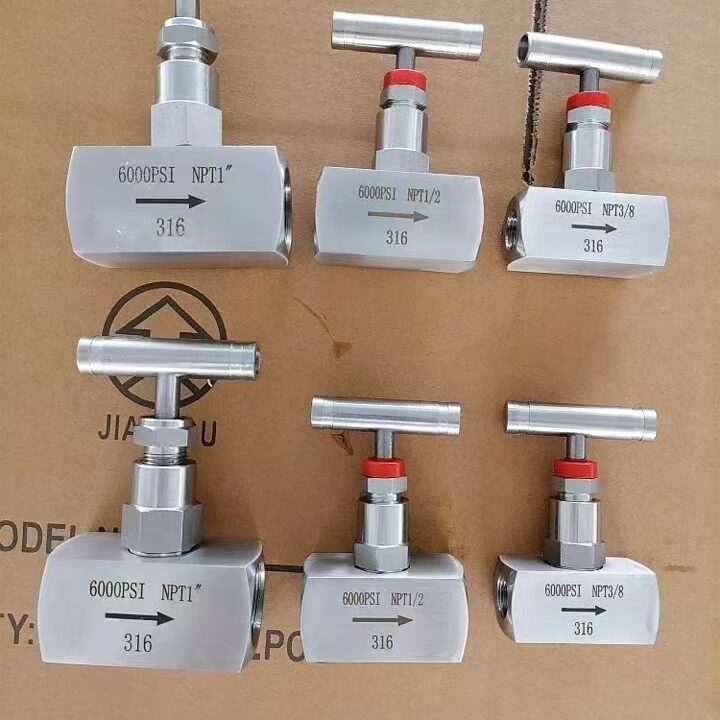
National Pipe Taper connections rely on machined tapered threads on both the valve body and mating pipe to form a mechanical joint. As the external male thread threads into the female valve port, the narrowing taper profile forces the flanks of the thread crests and roots together. This mechanical interference creates the primary structural connection between the pipe and the valve body.
Because spiral leak paths remain along the thread roots even under high tightening torque, threaded joints require a thread sealant. Polytetrafluoroethylene tape or anaerobic thread paste fills the microscopic gaps between the mating threads to produce a fluid-tight seal. The sealant also acts as an assembly lubricant, preventing galling between stainless steel or alloy metal surfaces during makeup.
Threaded connections remain common in small-bore utility piping systems handling water, instrument air, low-pressure steam, and inert gases. However, threading removes metal from the pipe wall, reducing the effective pressure boundary thickness and fatigue resistance under cyclical mechanical bending.
Advantages
- Fast assembly using standard hand tools without specialized hot-work permits.
- Compact profile suited for tight skids and confined piping runs.
- Low upfront fitting cost with wide component availability across alloy and bronze grades.
Limitations
- Elevated risk of thread galling and crevice corrosion in aggressive chemical services.
- Susceptible to joint relaxation and leakage under severe vibration or thermal cycling.
- Piping disassembly requires cutting the pipe or rotating complete line segments unless unions are installed.
Mechanical Characteristics of Flanged Connections
Flanged valve connections use bolted perimeter rings that compress an engineered gasket between the valve end and a matching pipe flange. The bolted assembly transfers mechanical clamping load directly to the gasket surface, creating a continuous boundary that prevents fluid migration. Because the flange joint does not rely on thread deformation or permanent fusion, it allows repeated assembly and disassembly.
Flange faces are produced in raised face, flat face, and ring-type joint configurations depending on pressure class and fluid characteristics. Raised face flanges concentrate bolt preload onto a smaller gasket area to increase seating stress, while ring-type joint profiles use metallic rings in precision-machined grooves for extreme pressures. Bolting patterns, flange thickness, and gasket dimensions follow standardized industry design rules to support uniform mechanical performance across piping classes.
Flanged construction is standard for intermediate to large-diameter process lines across oil refining, power generation, chemical processing, and municipal water treatment. The bolt preload must remain balanced across all studs through controlled torque procedures to prevent uneven gasket compression and subsequent joint weepage.
- Supports non-destructive valve removal for seat inspection, body refurbishment, or line cleaning.
- Accommodates large pipe diameters and substantial fluid flow rates without excessive joint stress.
- Allows transitions between dissimilar pipe materials through insulating gasket kits that mitigate galvanic corrosion.
- Provides compatibility across butterfly valves, ball valves, globe designs, and check valves.
Design and Function of Socket Weld Connections
Socket weld connections incorporate an internal recessed socket into the valve port where a plain-end pipe seats prior to welding. A structural fillet weld is deposited around the external circumference of the valve hub and pipe, creating a permanent, continuous metallic joint. The welded joint consolidates the valve and pipe into an uninterrupted pressure boundary that withstands elevated internal pressures.
Proper fit-up requires pulling the pipe back slightly from the bottom of the socket pocket before laying the root pass. This gap prevents the expanding pipe from exerting axial stress against the valve body as heat transfers through the metal during welding. Omitting this expansion gap creates severe residual stress that can crack the fillet weld or distort internal valve seat geometry.
Socket welds serve critical utility and process lines where mechanical joints pose unacceptable leakage risks. Common installations include high-pressure steam distribution, combustible gas transport, thermal fluid loops, and toxic chemical headers. Because the joint forms a permanent metallic seal, replacing the valve requires mechanical cutting of the pipe.

Failing to establish a mechanical expansion gap prior to welding causes severe thermal expansion cracking at the weld root. Verify the pipe withdrawal distance according to project fabrication standards before completing the fillet weld.
Sealing Mechanisms and Leakage Susceptibility
Each connection type manages internal hydraulic pressures, mechanical bending moments, and thermal cycles through different sealing dynamics. Threaded NPT joints rely on thread interference and chemical pastes, making them susceptible to weepage when system temperatures fluctuate. As heating and cooling cause differential expansion between male and female threads, sealant compounds degrade, hardening or washing out over operational cycles.
Flanged connections distribute sealing stress over a broad gasket contact surface held under tension by high-strength studs. Flange leaks generally stem from thermal relaxation of the bolting, improper bolt torque sequences, piping misalignment, or gasket degradation caused by chemical attack. Implementing periodic torque verification and selecting resilient spiral-wound or Kammprofile gaskets reduces joint relaxation in cyclical process applications.
Socket welded ends produce a monolithic joint that resists mechanical vibration, water hammer, and thermal fatigue better than mechanical joints. However, the internal crevice between the pipe exterior and the socket pocket creates a stagnation zone susceptible to crevice corrosion in sour, caustic, or chloride-bearing fluids. If corrosive media penetrates this void, root-pass cracking can occur without outward visual indication until complete joint failure develops.
Mechanical Seal Risks
Threaded and flanged joints depend on elastomeric, paste, or composite seals that degrade over time under temperature extremes. Mechanical movement and structural vibration loosen threaded fittings and relax flange stud tension, increasing fugitive emission rates.
Welded Joint Risks
Welded connections eliminate external gasket leak paths but introduce vulnerability to internal crevice attack and weld porosity. Inadequate welder technique or lack of post-weld heat treatment can produce stress-corrosion cracking along the heat-affected zone.
Installation Procedures and Inline Maintenance
Installation requirements vary considerably among these connections, affecting project schedules, required craft labor, and field equipment costs. Threaded installations require minimal tooling, utilizing pipe threaders, wrenches, and thread compounds to complete joints rapidly. However, final orientation of the valve handwheel or actuator is difficult to align with precision because tightening must stop within a specific rotational sector to prevent over-torquing.
Flanged installations require accurate piping alignment, square flange faces, and uniform bolt tensioning across the circumference. Crews must maintain parallelism between mating flanges to avoid pinching the gasket or inducing bending stresses on the valve neck. In exchange for rigorous alignment demands, flanged valves offer straightforward maintenance, allowing technicians to unbolt the valve and extract it from the line without disturbing adjacent pipe spools.
Socket welding demands certified welders, formal hot-work safety procedures, and pre-weld line cleaning. Internal valve components, such as soft elastomeric seats in ball valves or butterfly valves, must be disassembled or shielded during welding to prevent thermal destruction. Once welded in line, servicing requires three-piece valve designs that swing out from the center section, or complete cutting and refabrication of the pipe spool.

- Inspect mating pipe ends and valve ports for surface gouges, thread damage, or socket burrs before fit-up.
- Establish proper clearance and alignment, confirming pipe depth, flange parallelism, or socket expansion gaps.
- Execute the mechanical tightening or welding protocol following approved torque sequences or qualified weld procedures.
- Perform non-destructive examination or pressure testing to confirm structural containment prior to line commissioning.
Piping System Compatibility and Valve Sizing
Valve end selection corresponds directly with nominal pipe size and pipe wall schedule. Threaded connections are restricted to small-bore piping systems because manual makeup torque becomes impractical on larger pipe diameters. Threading heavy wall pipe also requires specialized dies, while thin-walled tubing or light schedule pipe lacks sufficient wall thickness to cut standard thread depths.
Socket weld ends are similarly concentrated in small-bore lines where high structural rigidity is essential. In these smaller sizes, socket welding eliminates the internal weld burn-through and spatter associated with butt welding, keeping the flow stream clean. As pipe sizes expand into intermediate and large diameters, socket weld fittings become excessively heavy, and full-penetration butt welds or bolted flanges replace them.
Flanged connections dominate intermediate and large-diameter headers across all major valve categories. Large ball valves, plug valves, and globe valves incorporate integral cast or forged flanges to handle fluid momentum and seismic loading. Butterfly valves frequently employ wafer or lugged bodies clamped between pipe flanges, minimizing face-to-face dimensions while retaining the structural benefits of flanged piping systems.
Matching the valve end connection to the pipe schedule is critical for pressure containment. Threading reduces the effective wall thickness of schedule forty pipe, whereas socket weld valves accommodate heavy schedule eighty and schedule one-sixty lines without joint reduction.
Pressure Ratings and Thermal Limitations
Process pressure and operating temperature establish definitive boundaries for valve end suitability. Threaded joints are generally restricted to moderate operating pressures and non-extreme temperature envelopes. High thermal fluctuations cause differential expansion rates between the valve body and mating pipe, compromising the thread sealant and prompting fugitive leaks.
Flanged connections accommodate wide operating conditions spanning low-pressure cooling water to high-pressure steam headers. Standard pressure classes categorize flanged components according to material yield strength and allowable pressure across thermal gradients. As operating temperatures increase, the permissible pressure rating decreases, requiring higher flange classes or specialized alloy fasteners to prevent joint creep.
Socket weld connections excel in severe service environments subject to intense thermal shock, high vibration, and elevated design pressures. Forged steel socket weld valves maintain high structural integrity where mechanical connections might work loose over time. However, their use remains restricted in cryogenic service or cyclic thermal shock applications where the internal socket pocket can concentrate stress or trap stagnant condensates.
Severe Operating Service
- High operating pressures and mechanical line vibration.
- Flammable, lethal, or volatile organic chemical transport.
- Elevated temperature steam and heat-transfer fluid loops.
- Permanent pipeline routing with minimal maintenance needs.
Utility and Moderate Service
- Low-pressure plant water, compressed air, and drain lines.
- Frequent component replacement and planned line modifications.
- Systems operating within stable ambient temperature ranges.
- Facilities prioritizing fast, flame-free mechanical installation.
Material Costs and Lifecycle Economics
Evaluating connection costs requires balancing initial valve purchase prices against total installation labor and lifetime maintenance expenses. Threaded valves carry the lowest acquisition cost and demand the least expensive assembly tooling. However, recurring maintenance costs rise over time if minor leaks require regular sealant reapplication, union disassembly, or line isolation.
Flanged valves represent a higher initial capital expenditure due to casting weight, flange machining, and required mounting hardware. Each flanged connection requires two matching pipe flanges, a gasket, and a full set of studs and nuts, multiplying hardware procurement costs. Despite this initial outlay, flanged connections lower operational downtime by allowing rapid valve replacement or off-site reconditioning without pipe reconstruction.
Socket weld valves fall between threaded and flanged options in initial purchase cost, but require specialized field labor. Certified welding, non-destructive joint examination, and protective measures for valve internals during installation drive up fabrication costs. Long-term economics remain favorable in high-integrity systems where preventing a single leak justifies the initial welding investment.
NPT Economy
Lowest initial hardware and installation expense. Maintenance expenses escalate if persistent leaks require line shutdowns or piping replacements.
Flanged Economy
Highest initial material and assembly cost. Substantially lowers future maintenance downtime through fast inline replacement and servicing.
Socket Weld Economy
Moderate valve cost combined with high specialized labor expenses. Yields low ongoing maintenance costs by minimizing joint leakage over the facility lifecycle.
Connection Comparison and Performance Matrix
Direct comparison of technical parameters aids engineers in selecting the optimal valve end connection for specific system designs. Operating envelope, service medium, maintenance frequency, and piping geometry determine the mechanical balance between threaded, flanged, and socket weld ends. The following matrix summarizes key operational attributes across standard process and utility criteria.
| Feature | NPT Threaded | Flanged Bolted | Socket Welded | Operational Consideration |
| Joint Type | Mechanical taper | Gasketed bolted | Fillet welded | Welded joints provide permanent containment while flanged joints allow routine disassembly. |
| Sealing Method | Sealant paste | Compressed gasket | Fusion weld | Thread sealants degrade over thermal cycles whereas metallic welds resist thermal degradation. |
| Disassembly Ease | Moderate effort | Fast removal | Requires cutting | Flanged valves facilitate off-site shop reconditioning and valve testing during plant turnarounds. |
| Hot Work Needed | None | Flange welding | Mandatory | Socket welding requires hot-work permitting and internal soft-seat protection during fabrication. |
| Vibration Strength | Low resistance | Moderate resistance | High resistance | Socket welds resist loosening from mechanical vibration and pressure pulsation in severe service. |
| Fugitive Emissions | Higher risk | Controlled risk | Negligible risk | Welded joints prevent environmental release of volatile, hazardous, or toxic chemical media. |
Engineering Selection Guide and Code Compliance
Selecting valve end connections requires alignment with recognized piping codes, facility engineering specifications, and safety standards. American National Standards Institute and American Society of Mechanical Engineers codes govern wall thickness, pressure ratings, and fabrication methods across process facilities. Adhering to these standards verifies that the chosen connection withstands design pressure, seismic forces, and thermal loads.
Use NPT threaded valves for low-risk, small-diameter utility systems where fluid release carries minimal environmental or safety hazards. Typical applications include cooling water loops, low-pressure compressed air, instrument manifolds, and non-hazardous drains. Avoid threaded connections in piping subjected to cyclic mechanical fatigue, severe temperature swings, or corrosive chemicals prone to crevice attack.
Specify flanged valves for intermediate and large-diameter headers, systems requiring regular decontamination, and equipment manifolds requiring periodic valve changeouts. Flanged connections are ideal for isolating pumps, vessels, and meters where modular maintenance minimizes operational downtime. For small-diameter lines operating under high pressure, high temperature, or carrying hazardous media, select socket weld valves to achieve durable leak containment.

Verify that final valve selection complies with applicable ASME B31 piping codes, material compatibility guidelines, pressure-temperature ratings, and manufacturer specifications prior to procurement.
Frequently Asked Questions
Why is an expansion gap required when installing socket weld valves?
An expansion gap prevents the pipe from bottoming out against the valve socket during the welding process. Without this clearance, thermal expansion of the pipe induces high stress in the fillet weld, leading to weld cracking and internal seat distortion. Fabricators typically withdraw the pipe slightly from the socket base before depositing the root weld.
Can PTFE tape and liquid pipe dope be used together on NPT threads?
Using PTFE tape and paste sealant together is an accepted practice when applied correctly in industrial utility piping. The tape fills primary thread tolerances while the paste lubricates the threads and seals minor microscopic voids. However, excessive application must be avoided to prevent sealant extrusion into the process flow stream where it can clog downstream equipment.
What causes flanged valve connections to develop leaks over time?
Flanged joint leaks most often result from uneven bolt torque, thermal cycling, piping misalignment, or gasket relaxation. As operating temperatures fluctuate, bolts can stretch or relax, decreasing the compressive load required to seat the gasket. Regular inspection and controlled tightening procedures reduce the frequency of flanged joint weepage.
Why are socket weld connections rarely used on large pipe sizes?
Socket weld connections become impractical on large pipe diameters due to excessive fitting weight and the difficulty of maintaining uniform thermal expansion clearances. In larger sizes, butt-welded or flanged joints provide superior structural integrity, easier radiographic inspection, and reduced material mass. Socket welds are therefore concentrated primarily in small-bore piping systems.
How does pipe wall thickness affect the choice between threaded and welded ends?
Cutting threads into a pipe removes metal and decreases the structural wall thickness, which lowers the maximum allowable operating pressure of the assembly. Thin-walled pipes cannot accommodate thread cutting and must be joined using welding or mechanical compression fittings. Socket welding preserves the full pipe wall thickness, making it suitable for high-pressure schedules.
Summary of Connection Distinctions
Choosing between NPT, flanged, and socket weld end connections involves balancing structural leak integrity, initial labor, and future maintenance access. Threaded connections suit small-bore, low-pressure utility lines requiring rapid assembly, while flanged valves provide modular access and high reliability across large process systems. Socket weld connections deliver permanent, high-strength containment for demanding small-bore services where fluid release poses unacceptable operational risks.